An easy way to retrieve two specimens with one snare
Song Su, Zimeng Wang, Yawei Bi, Longsong Li, Nanjun Wang, Enqiang Linghu, Ningli Chai

Abstract
Genes, proteins, chemicals, diseases, species, mutations and cell lines named across the full text — each resolved to its canonical identifier and authoritative record.
Click any figure to enlarge with its caption.
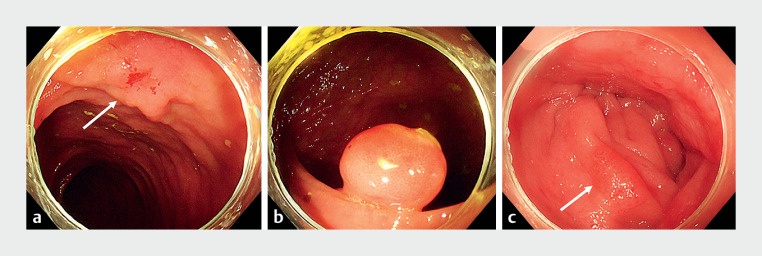 Fig. 1
Peer Reviews
No public reviews on file for this paper yet. If you reviewed it on a platform where reviews are public (OpenReview, ICLR, NeurIPS, ICML), you can paste yours below so the community can read it here.
Videos
No videos yet. Explain this paper in a talk, walkthrough, or lecture? Add one.
Taxonomy
TopicsColorectal Cancer Screening and Detection · Gastric Cancer Management and Outcomes · Colorectal Cancer Surgical Treatments
Endoscopic resection of multiple colonic polyps is very common in clinical practice. Successful retrieval of the specimens enables histopathologic evaluation of polyp tissue, which helps determine complete eradication, subsequent management, and endoscopic surveillance interval 1 2 . However, some specimens may not be extracted by aspiration. In this situation, repeat colonoscope insertion for retrieval of multiple specimens is not only time consuming, but also carries additional risks and discomfort, especially when retrieving polyps in the ascending or transverse colon. Moreover, the process of searching for specimens can at times be extremely frustrating and further prolong the operation time. Herein, we report an easy way to simultaneously retrieve two specimens with one snare, which can reduce the number of repeat colonoscope insertions.
A 67-year-old man with a 2.5-cm laterally spreading tumor ( Fig. 1 a ) in the transverse colon, and multiple polyps in the hepatic flexure and ascending colon, was referred to our center. The polyps were 0.5–1.2 cm in diameter, and included a 1.0-cm spherical polyp ( Fig. 1 b ) and 1.2-cm flat polyp ( Fig. 1 c ). Under sedation, the patient underwent successful endoscopic mucosal resection of the polyps, and all but two specimens (the spherical and flat polyps described above) were retrieved by aspiration. After an hour-long endoscopic submucosal dissection (ESD) procedure for the laterally spreading tumor, and retrieval of the specimen, we reinserted the colonoscope to retrieve the polyp specimens. However, it took a frustratingly long time to find the spherical specimen. Considering the greater risk and discomfort associated with further extending the operation time, as well as the risk that the clips sealing the ESD wound may be dislodged by the colonoscope, we managed to simultaneously retrieve the two specimens with one snare. In brief, we first used the snare to grasp one of the specimens, while the spherical polyp was pulled into the cap. Then, the snare with the specimen was pulled tightly, producing a seal over the cap and preventing the spherical specimen from falling out. Subsequently, with colonoscope withdrawal, the two specimens were successfully retrieved together ( Video 1 ).
Endoscopy images. a Laterally spreading tumor (arrow). b Spherical polyp. c Flat polyp (arrow).
An easy way to retrieve two specimens with one snare, which helps to reduce the number of repeat colonoscope insertions and associated risks.Video 1
Techniques for simultaneous retrieval of multiple specimens have been scarcely documented. This case demonstrates the usefulness and feasibility of retrieving two specimens simultaneously with a single snare. This very small innovation helps to save time and reduce the risks associated with repeat colonoscopy, and is particularly suitable for lesions in the right colon.
Endoscopy_UCTN_Code_TTT_1AQ_2AC
The reference list from the paper itself. Each links out to its DOI / PubMed record.
- 1Rutter MD East J Rees CJ British Society of Gastroenterology/Association of Coloproctology of Great Britain and Ireland/Public Health England post-polypectomy and post-colorectal cancer resection surveillance guidelines Gut 20206920122310.1136/gutjnl-2019-31985831776230 PMC 6984062 · doi ↗ · pubmed ↗
- 2Rex DK Boland CR Dominitz JA Colorectal cancer screening: recommendations for physicians and patients from the U.S. Multi-Society Task Force on Colorectal Cancer Am J Gastroenterol 20171121016103028555630 10.1038/ajg.2017.174 · doi ↗ · pubmed ↗