CRISPR/Cas9-mediated mutation of FERULATE 5-HYDROXYLASE enhances adsorption capacity of lignocellulose-based porous carbon from paper mulberry
Yue Xu, Yingping Cao, Wanju Zhang, Wen Kong, Rui Li, Yuchen Liu, Yu Wang, Zhenying Wu, Xiaochun Qin, Feng He, Chunxiang Fu

Abstract
Genes, proteins, chemicals, diseases, species, mutations and cell lines named across the full text — each resolved to its canonical identifier and authoritative record.
Click any figure to enlarge with its caption.
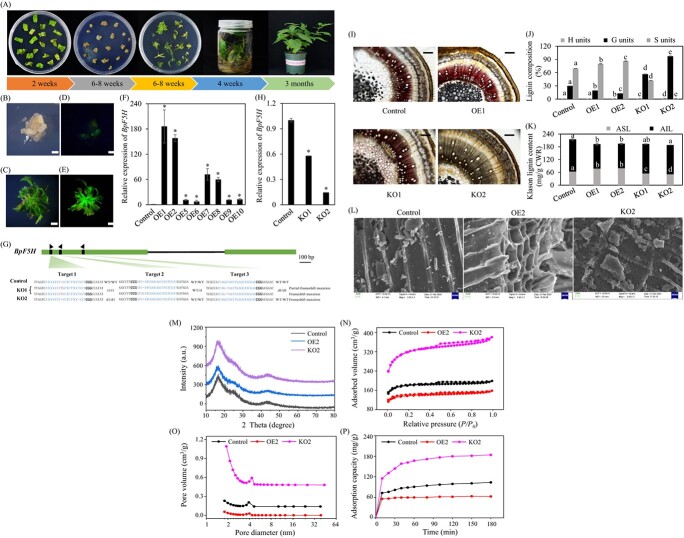 Figure 1
- —Qingdao New Energy Shandong Laboratory of KeyProjects Programs
- —Natural Science Foundation of Shandong Province, China
- —National Natural Science Foundation of China10.13039/501100001809
- —Taishan Scholar Program of Shandong
Peer Reviews
No public reviews on file for this paper yet. If you reviewed it on a platform where reviews are public (OpenReview, ICLR, NeurIPS, ICML), you can paste yours below so the community can read it here.
Videos
No videos yet. Explain this paper in a talk, walkthrough, or lecture? Add one.
Taxonomy
TopicsBiofuel production and bioconversion · Advanced Cellulose Research Studies · Catalysis for Biomass Conversion
Dear Editor,
Paper mulberry (Broussonetia papyrifera, 2n = 2x = 26) is a fast-growing ornamental tree known for its significant ecological, economic, forage, and medicinal values, and is cultivated or naturalized across tropical and subtropical regions worldwide [1]. Pruning is one of the most important cultural practices for maintaining paper mulberry plants. This horticultural waste provides large amounts of lignocellulosic biomass, which can be utilized for producing high value-added carbon materials [2]. The lignin polymers of paper mulberry are rich in syringyl (S) units followed by guaiacyl (G) units and traces of p-hydroxyphenyl (H) units, bonded through various C-O (e.g. β-O-4, α-O-4, and 4-O-5) and C-C (e.g. β-β and β-5,5-5) linkages [3]. In recent years, the production of porous carbon materials from lignocellulosic biomass has gained attention due to its cost-effectiveness, high value, sustainability, and renewable nature [4]. However, the effect of lignin composition on the porous structure of biocarbon materials remains largely unknown. Encouragingly, recent studies indicate that genetic manipulation of lignin is an efficient strategy in advancing lignin valorization technology in woody plants [5]. Thus, we produced paper mulberry materials with distinct lignin compositions through the overexpression and CRISPR/Cas9-mediated gene editing of the crucial gene responsible for S lignin biosynthesis. The impact of G and S units on the porosity and adsorption capacity of paper mulberry-derived porous carbons was comprehensively evaluated.
The ferulate-5-hydroxylase (F5H) gene encodes a crucial enzyme in the conversion of G to S monolignol [6]. To modulate the biosynthesis of S units in lignin, the F5H gene in paper mulberry was identified and cloned (Supplementary Data Fig. S1), and a total of 10 independent transgenic paper mulberry lines overexpressing BpF5H (BpF5H_OE) were generated using a highly efficient Agrobacterium-mediated transgenic system (Fig. 1A–E; Supplementary Data Fig. S2). Quantitative real-time PCR (qRT–PCR) analysis revealed a significant 7- to 186-fold increase of BpF5H expression level in the BpF5H_OE transgenic lines compared with the control plants (Fig. 1F; Supplementary Data Table S1). Additionally, a gene editing system was established in paper mulberry. Among 19 transgenic-positive lines, 15 lines were mutated at the target sites of BpF5H (Supplementary Data Table S2). The editing efficiency among the different target sites ranged from 22.0% for target site 2 to 62.0 and 68.0% for target sites 3 and 1, respectively (Supplementary Data Table S2). Sequencing data revealed the editing types of representative homozygous/biallelic mutation lines KO1 and KO2, with no detection of the wild-type allele at the target site of BpF5H (Fig. 1G). Interestingly, the biallelic mutation line BpF5H_KO1 exhibited a full frame shift allele (1-bp insertion at both sgRNA1 and sgRNA2) and a partial frame shift allele (1-bp insertion at sgRNA1 and 1-bp deletion at sgRNA3) (Fig. 1G; Supplementary Data Fig. S3; Supplementary Data Table S2). Furthermore, the qRT–PCR analysis demonstrated a modest reduction (42.2%) of BpF5H expression level in BpF5H_KO1*,* while a sharper reduction in transcript abundance of BpF5H was observed in BpF5H_KO2 (Fig. 1H).
Two transgenic lines (BpF5H_OE1 and BpF5H_OE2) with 186- and 158-fold higher BpF5H expression levels and two biallelic mutation lines (BpF5H_KO1 and BpF5H_KO2) were selected for further investigation. Cross-sections of the internodes from control, BpF5H_OE, and BpF5H_KO plants were stained with Mäule reagent. The intensity of red coloration is a good indicator of the amount of S units. Maüle staining showed a change from brown in the control internode to burgundy red around vascular bundles in the BpF5H_OE1 internode, indicating an increase in S units. In contrast, the brownish coloration became lighter in BpF5H_KO1 and had almost disappeared in BpF5H_KO2, revealing a substantial reduction in S units (Fig. 1I). Lignin composition analysis further unveiled a 15–24% increase in S units and a 35–57% decrease in G units in BpF5H_OE lines compared with control plants (Fig. 1J). No S units were detected in BpF5H_KO2, characterized as a complete loss of function in BpF5H. In contrast, BpF5H_KO1 exhibited a 39% reduction in S units, suggesting the BpF5H gene with a partial frame shift still retains functionality in the biosynthesis of S monolignol (Fig. 1J). Due to the BpF5H mutation, BpF5H_KO1 and BpF5H_KO2 produced ~1.9-fold and 3.3-fold more G units than control plants, respectively (Fig. 1J). Klason lignin content analysis demonstrated reduced total lignin contents in both BpF5H_OE and BpF5H_KO plants compared with control plants, consistent with changes in acid-insoluble lignin contents (Fig. 1K). Additionally, acid-soluble lignin contents were increased in the BpF5H_OE lines but decreased in the BpF5H_KO lines (Fig. 1K). These results align with previous observations that S lignin-enriched wood materials dissolve and depolymerize rapidly in 72% sulfuric acid [7].
To investigate the influence of S units on the performance of lignocellulosic biomass-based pyrolysis materials, porous carbon samples were prepared from the control, BpF5H_OE, and BpF5H_KO plants through carbonization at 700°C for 2 h. Scanning electron microscopy analysis revealed a significantly increased number of pits in the carbonized cell walls of the BpF5H_KO2 compared with the control and BpF5H_OE2 samples (Fig. 1L). Additionally, the X-ray diffraction pattern assay showed an increased broad diffraction peak around 17° in BpF5H_KO2, indicating a higher degree of amorphous structure (Fig. 1M). Generally, all porous carbons derived from paper mulberry exhibited combined characteristics of type IV isotherms with a hysteresis loop (Fig. 1N). Notably, BpF5H_KO2-derived porous carbon displayed the highest N_2_ adsorption capacity, with a significant increase in adsorbed volume at a relative pressure <0.05, suggesting the presence of a greater number of micropores (Fig. 1O; Supplementary Data Table S3). The pore size distribution assay demonstrated a substantial increase in the volume of micropores in BpF5H_KO2-derived porous carbon, with the surface area reaching 1000.87 m^2^/g, the highest among all samples (Fig. 1O). In comparison, the BpF5H_OE2-derived porous carbon exhibited fewer micropores and a smaller adsorbed volume (Fig. 1N and O). When exposed to methyl orange (MO) solution, the BpF5H_KO2-derived porous carbon exhibited an absorption capacity of nearly 180 mg/g after 3 h, which was 2-fold higher than that of the control sample (Fig. 1P). As anticipated, a lower absorption capacity (62.6 mg/g after 3 h) was observed in the BpF5H_OE2-derived porous carbon. In our work, the effect of F5H mutation in paper mulberry on the characteristics of the adsorbent surface, such as the charge and functional groups, has yet to be examined but deserves additional investigation in the future. Previous studies have indicated that the branched G units exhibit a higher affinity for various molecules, including cellulase and MO, than linear S units [7]. Consequently, the increased branched G lignin, rather than the linear S lignin, may contribute to the enhanced porosity and total adsorption volume of the porous carbon material prepared from BpF5H_KO plants, improving its adsorption capacity for MO. Additionally, the heterogeneity and complexity of lignin impact the selectivity and yield during the conversion of lignocellulosic biomass to value-added chemicals [8]. The increased G units resulting from F5H mutation in paper mulberry wood may negatively alter the selective scission of cross-linked C-C and C-O bonds in the BpF5H_KO lignins. Thus, the BpF5H_OE lignins with reduced G units and increased S units are still valuable materials for generating lignocellulosic biomass-based high-value chemicals with low cost.
In summary, employing the recently developed CRISPR/Cas9-mediated gene editing technology [9, 10] we generated a BpF5H mutant and altered the biosynthesis of S and G lignins in paper mulberry, leading to increased adsorption capacity of adsorbate molecules in their corresponding porous carbon. These findings underscore the potential of F5H as a promising target for developing high-value germplasm through lignin bioengineering not only in paper mulberry and but also in other wood species.
The reference list from the paper itself. Each links out to its DOI / PubMed record.
- 1Peng X, Liu H, Chen P. et al.A chromosome-scale genome assembly of paper mulberry (Broussonetia papyrifera) provides new insights into its forage and papermaking usage. Mol Plant. 2019;12:661–7730822525 10.1016/j.molp.2019.01.021 · doi ↗ · pubmed ↗
- 2Mergbi M, Galloni M, Aboagye D. et al.Valorization of lignocellulosic biomass into sustainable materials for adsorption and photocatalytic applications in water and air remediation. Environ Sci Pollut Res. 2023;30:74544–7410.1007/s 11356-023-27484-2PMC 1029344137227629 · doi ↗ · pubmed ↗
- 3Ralph J, Lapierre C, Boerjan W. Lignin structure and its engineering. Curr Opin Biotechnol. 2019;56:240–930921563 10.1016/j.copbio.2019.02.019 · doi ↗ · pubmed ↗
- 4Aboagye D, Djellabi R, Medina F. et al.Radical-mediated photocatalysis for lignocellulosic biomass conversion into value-added chemicals and hydrogen: facts, opportunities and challenges. Angew Chem Int Ed Engl. 2023;62:e 20230190937162030 10.1002/anie.202301909 · doi ↗ · pubmed ↗
- 5De Meester B, Vanholme R, Mota T. et al.Lignin engineering in forest trees: from gene discovery to field trials. Plant Commun. 2022;3:10046536307984 10.1016/j.xplc.2022.100465 PMC 9700206 · doi ↗ · pubmed ↗
- 6Li X, Weng JK, Chapple C. Improvement of biomass through lignin modification. Plant J. 2008;54:569–8118476864 10.1111/j.1365-313X.2008.03457.x · doi ↗ · pubmed ↗
- 7Yasuda S, Ota K. Chemical structures of sulfuric acid lignin – Pt. X. Reaction of syringylglycerol-ß-syringyl ether and condensation of syringyl nucleus with guaiacyl lignin model compounds in sulfuric acid. Holzforschung. 1987;41:59–65
- 8Andhalkar V, Foong S, Kee S. et al.Integrated biorefinery design with techno-economic and life cycle assessment tools in polyhydroxyalkanoates processing. Macromol Mater Eng. 2023;308:2300100