Fully automated viability and toxicity screening—A reliable all‐in‐one attempt
Victoria Liedtke, Romano Weiss, Anastasia Skifov, Stefan Rödiger, Lysann Schenk

TL;DR
A new automated method using fluorescence microscopy and open-source software quickly and reliably screens cell viability and toxicity in cancer cell lines.
Contribution
A fast, cost-efficient, and reliable all-in-one assay for proliferation and cytotoxicity screening using automated fluorescence microscopy and open-source analysis.
Findings
LEDGF depletion reduces proliferation and chemosensitivity in cancer cells across multiple lines.
LEDGF depletion increases DNA double strand breaks, indicated by elevated 𝛾H2AX foci.
The automated assay achieves 98% consistency compared to manual counting and requires no fixation or washing steps.
Abstract
The CRISPR/Cas9 technology is nowadays a common tool for genome editing to achieve new insights into, for example, diagnostics and therapeutics in cancer and genetic disorders. Cell proliferation and anticancer drug response studies are widely used to evaluate the impact of editing. However, these assays are often time‐consuming, expensive, and reproducibility is an issue. To overcome this, we developed a fast and cheap assay that combines a fully automated multispectral fluorescence microscopy platform with a nuclei staining and open‐source software analysis. Here, we generated different LEDGF/p75 model cell lines to validate the effect on proliferation and chemosensitivity. Therefore, a fast protocol for an optimized all‐in‐one attempt for cytotoxicity screenings and proliferation analysis of adherent cells in a 96‐well plate format was established using differential staining with…
Genes, proteins, chemicals, diseases, species, mutations and cell lines named across the full text — each resolved to its canonical identifier and authoritative record.
Click any figure to enlarge with its caption.
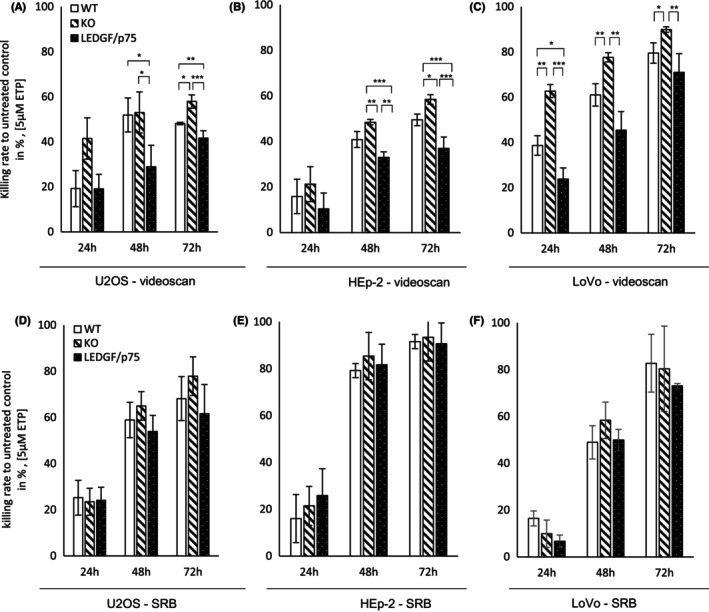 Figure 1
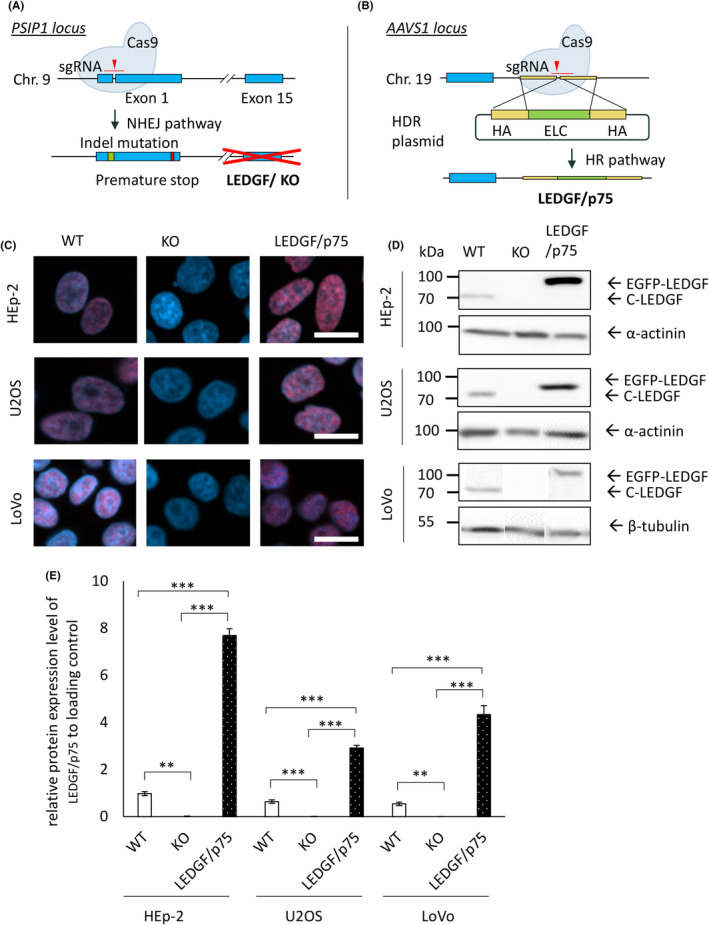 Figure 2
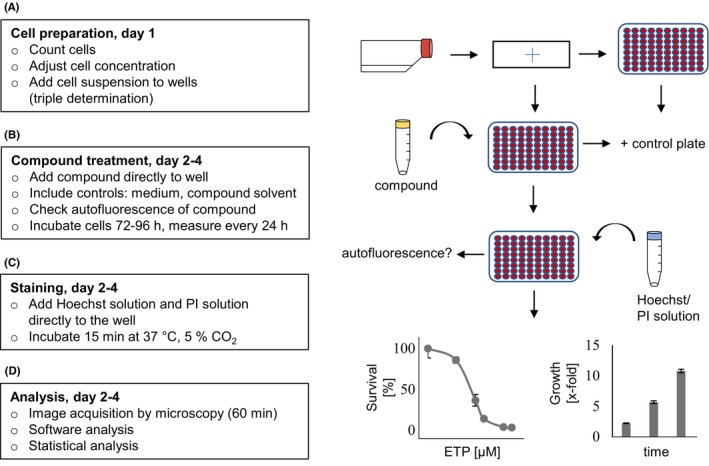 Figure 3
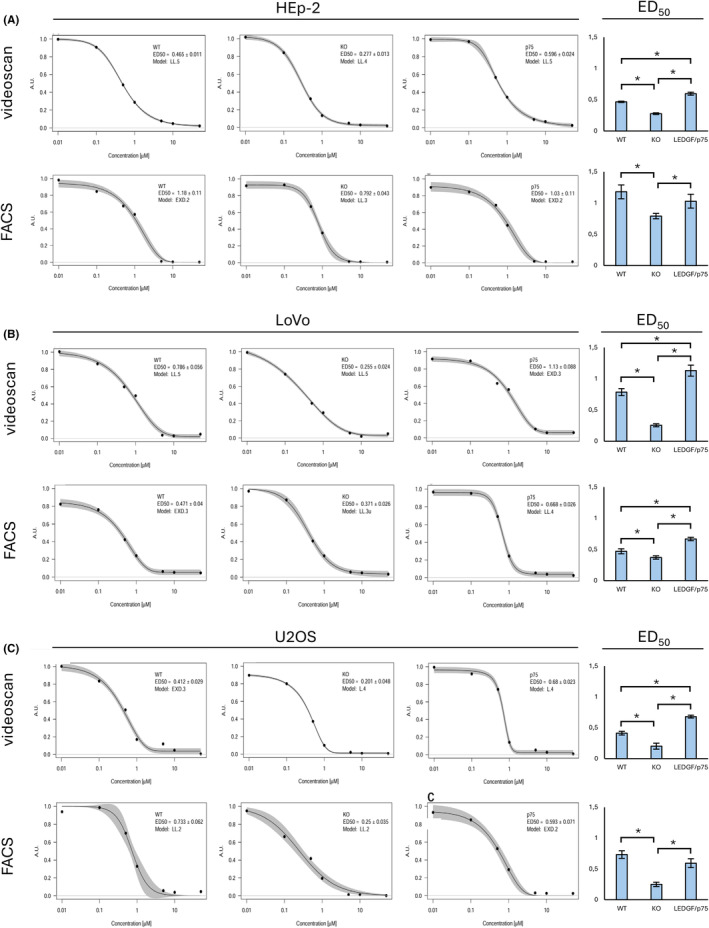 Figure 4
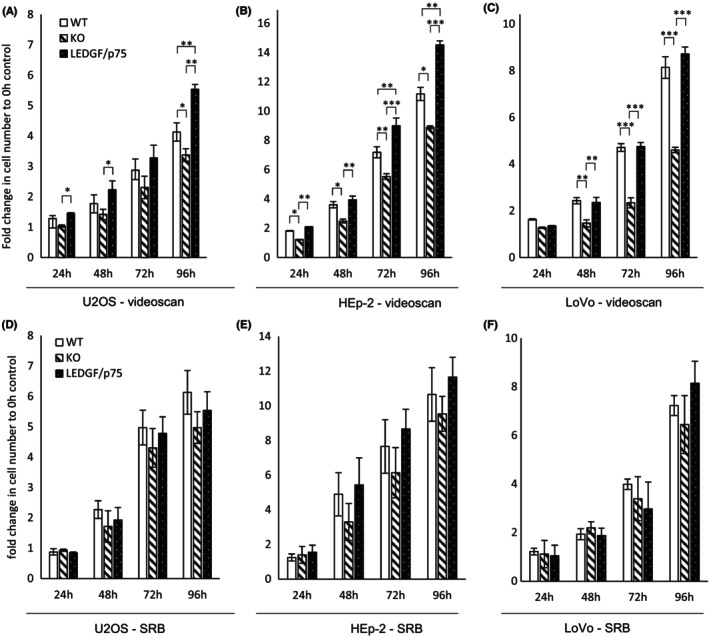 Figure 5
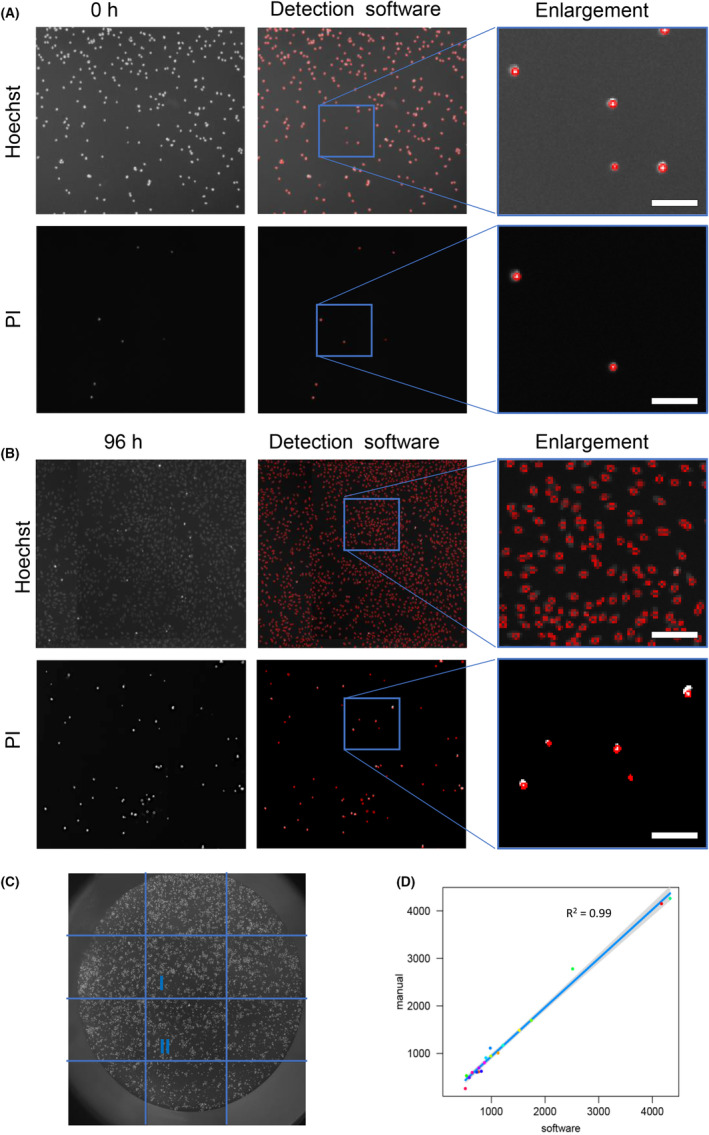 Figure 6
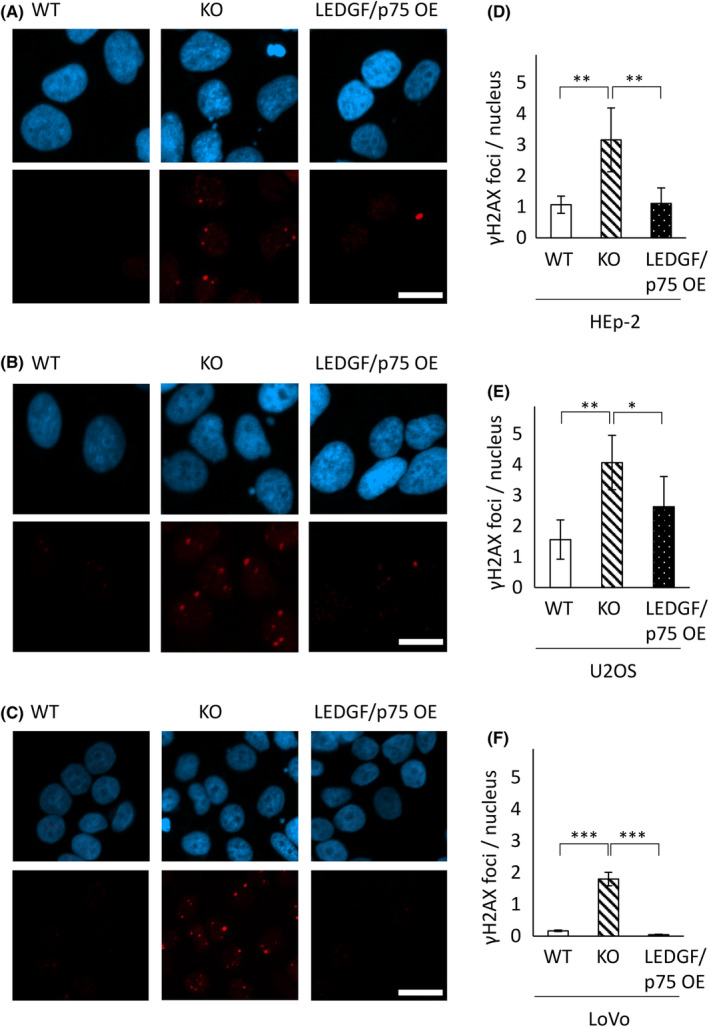 Figure 7
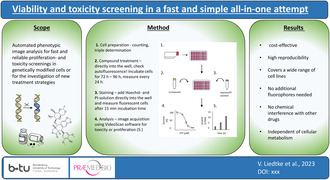 Figure 8
Peer Reviews
No public reviews on file for this paper yet. If you reviewed it on a platform where reviews are public (OpenReview, ICLR, NeurIPS, ICML), you can paste yours below so the community can read it here.
Videos
No videos yet. Explain this paper in a talk, walkthrough, or lecture? Add one.
Taxonomy
TopicsCRISPR and Genetic Engineering · Advanced biosensing and bioanalysis techniques · Virus-based gene therapy research