Identification and analyses of exonic and copy number variants in spastic paraplegia
Anum Shafique, Ayesha Nadeem, Faiza Aslam, Humera Manzoor, Muhammad Noman, Elizabeth Wohler, P. Dane Witmer, Nara Sobreira, Sadaf Naz

TL;DR
This study identifies new genetic variants linked to hereditary spastic paraplegia in three families from Punjab, highlighting the genetic diversity of the condition.
Contribution
The study reports novel ultra-rare loss-of-function variants in SPG11, DDHD2, and AP4B1 associated with spastic paraplegia.
Findings
A homozygous deletion in SPG11 was found in one family, correlating with complex movement disorders.
Nonsense and frameshift variants in DDHD2 and AP4B1 were identified in two other families.
All variants were ultra-rare and likely lead to transcript degradation via nonsense-mediated decay.
Abstract
Hereditary spastic paraplegias are a diverse group of degenerative disorders that are clinically categorized as isolated; with involvement of lower limb spasticity, or symptomatic, where spastic paraplegia is complicated by further neurological features. We sought to identify the underlying genetic causes of these disorders in the participating patients. Three consanguineous families with multiple affected members were identified by visiting special schools in the Punjab Province. DNA was extracted from blood samples of the participants. Exome sequencing was performed for selected patients from the three families, and the data were filtered to identify rare homozygous variants. ExomeDepth was used for the delineation of the copy number variants. All patients had varying degrees of intellectual disabilities, poor speech development, spasticity, a wide-based gait or an inability to walk…
Genes, proteins, chemicals, diseases, species, mutations and cell lines named across the full text — each resolved to its canonical identifier and authoritative record.
Click any figure to enlarge with its caption.
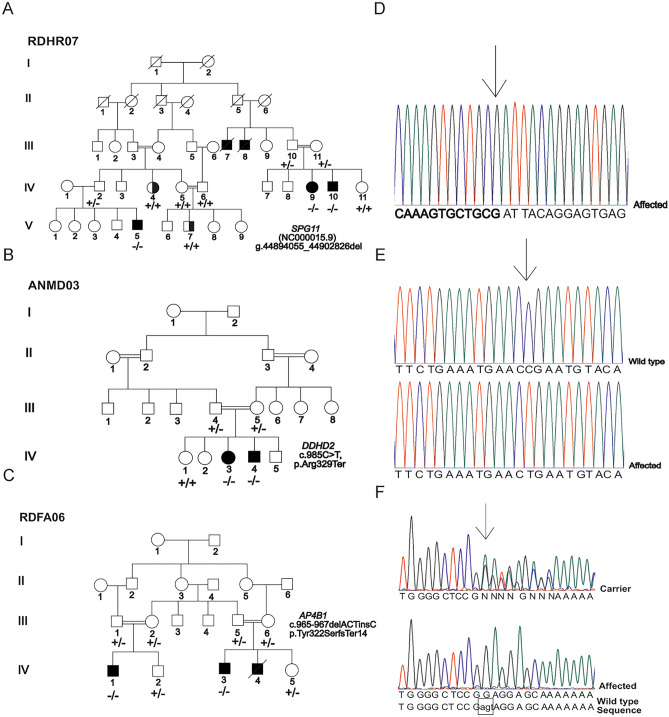 Figure 1
Peer Reviews
No public reviews on file for this paper yet. If you reviewed it on a platform where reviews are public (OpenReview, ICLR, NeurIPS, ICML), you can paste yours below so the community can read it here.
Videos
No videos yet. Explain this paper in a talk, walkthrough, or lecture? Add one.
Taxonomy
TopicsHereditary Neurological Disorders · Neurogenetic and Muscular Disorders Research · Neurological diseases and metabolism