What you don’t know can’t hurt you: Retro-cues benefit working memory regardless of prior knowledge in long-term memory
Vanessa M. Loaiza, Hiu Wah Cheung, David T. Goldenhaus-Manning

TL;DR
This study shows that prior knowledge influences working memory, and retro-cues help focus attention regardless of the type of information being processed.
Contribution
The study demonstrates that retro-cues improve working memory performance independently of long-term memory knowledge.
Findings
Retro-cues improved performance in working memory tasks regardless of the shape type.
Fewer abstract shapes were needed to match the performance of concrete shapes.
Double retro-cues required attention switching but still showed performance benefits.
Abstract
Knowledge stored in long-term memory (LTM) impacts working memory (WM) overall, but it is unclear whether LTM facilitates focusing or switching attention in WM. We addressed this question using the retro-cue paradigm: Briefly presented arrays of individually calibrated numbers of shapes (concrete or abstract) were followed by a blank retention interval (no-cue) or a retro-cue to focus participants’ attention to the to-be-probed shape. Experiment 3 included double retro-cue trials that required participants to switch their attention to a different shape. Participants recalled the color (Experiments 1) or location (Experiment 2) of the probed shape, or recognized the target shape among two other options (Experiment 3). Confirming the overall LTM effect on WM, fewer abstract shapes were needed to match the performance of concrete shapes during the calibration phase. Most importantly,…
Genes, proteins, chemicals, diseases, species, mutations and cell lines named across the full text — each resolved to its canonical identifier and authoritative record.
Click any figure to enlarge with its caption.
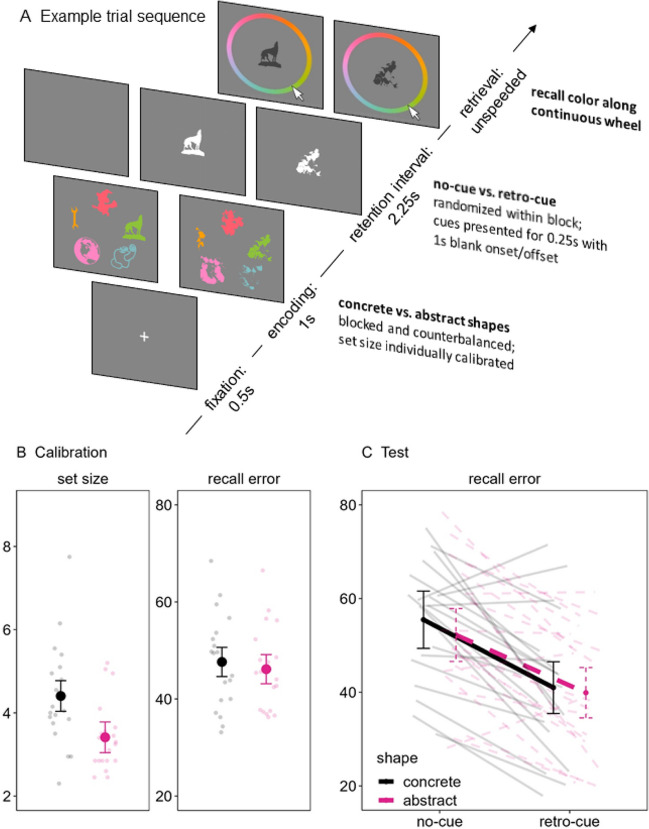 Figure 1
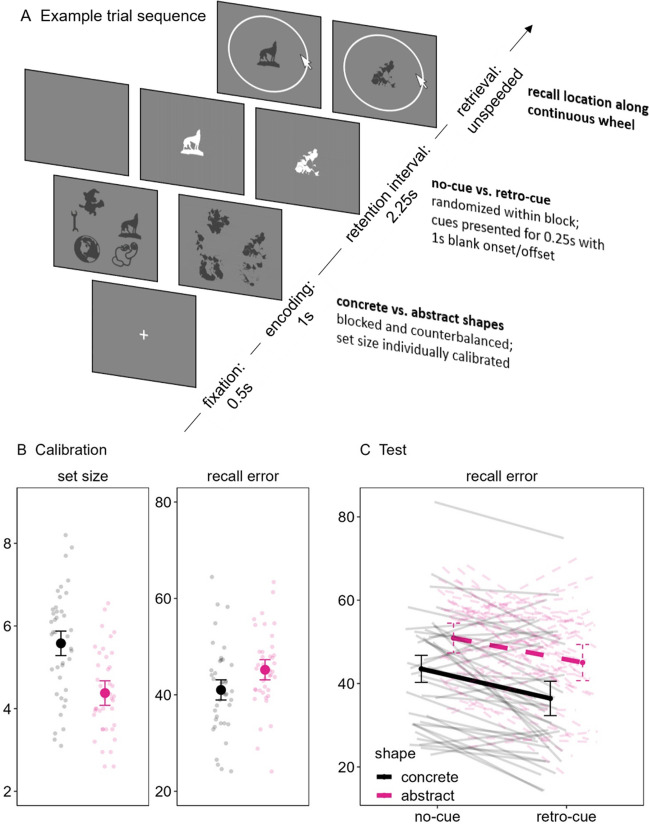 Figure 2
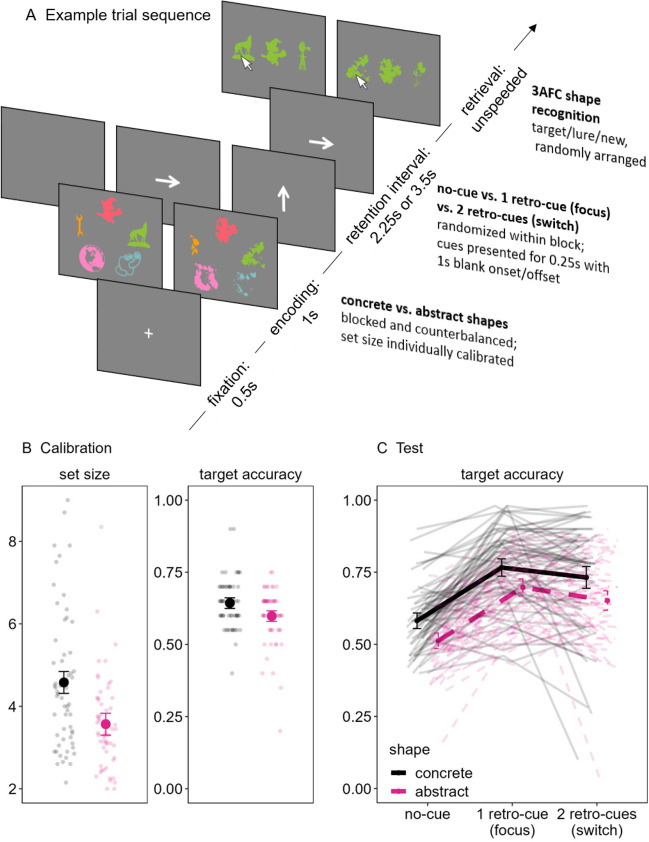 Figure 3
Peer Reviews
No public reviews on file for this paper yet. If you reviewed it on a platform where reviews are public (OpenReview, ICLR, NeurIPS, ICML), you can paste yours below so the community can read it here.
Videos
No videos yet. Explain this paper in a talk, walkthrough, or lecture? Add one.
Taxonomy
TopicsRadiation Detection and Scintillator Technologies