Role of FFAR3 in ketone body regulated glucagon-like peptide 1 secretion
Sara MT. Persson, Anna Casselbrant, Aiham Alarai, Erik Elebring, Lars Fändriks, Ville Wallenius

TL;DR
This study explores how ketone bodies block GLP-1 hormone release through a receptor called FFAR3 in gut cells, which could lead to new diabetes treatments.
Contribution
The study identifies FFAR3 as a key receptor through which ketone bodies inhibit GLP-1 secretion, offering a novel target for diabetes therapies.
Findings
FFAR3 expression in gut cells is significantly influenced by diet, especially high-fat diets.
Ketone bodies inhibit GLP-1 secretion via FFAR3 and the Gαi/o signaling pathway in enteroendocrine cells.
The number of enteroendocrine cells is affected by diet in normal weight individuals but not in obese subjects.
Abstract
Roux-en-Y gastric bypass (RYGB) is an effective treatment for obesity, resulting in long-term weight loss and rapid remission of type 2 diabetes mellitus. Improved glucagon-like peptide 1 (GLP-1) levels is one factor that contributes to the positive effects. Prior to RYGB, GLP-1 response is blunted which can be attributed to intestinal ketogenesis. Intestinal produced ketone bodies inhibit GLP-1 secretion in enteroendocrine cells via an unidentified G-protein coupled receptors (GPCRs). A possible class of GPCRs through which ketone bodies may reach are the free fatty acid receptors (FFARs) located at the basolateral membrane of enteroendocrine cells. To evaluate FFAR3 expression in enteroendocrine cells of the small intestine under different circumstances, such as diet and bariatric surgery, as well as explore the link between ketone bodies and GLP-1 secretion. FFAR3 and…
Genes, proteins, chemicals, diseases, species, mutations and cell lines named across the full text — each resolved to its canonical identifier and authoritative record.
Click any figure to enlarge with its caption.
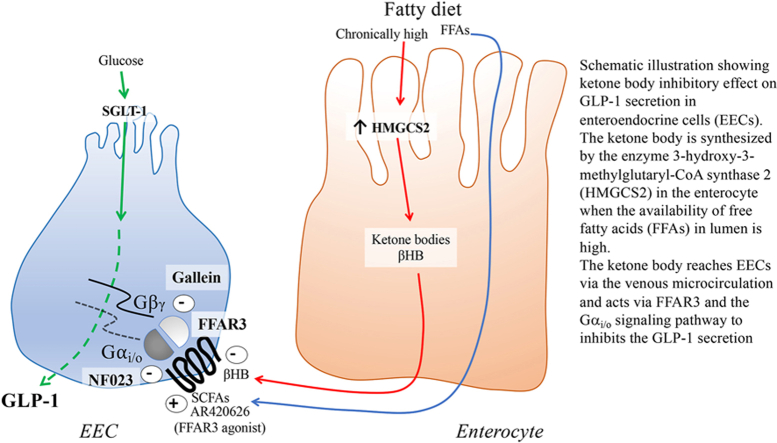 Figure 1
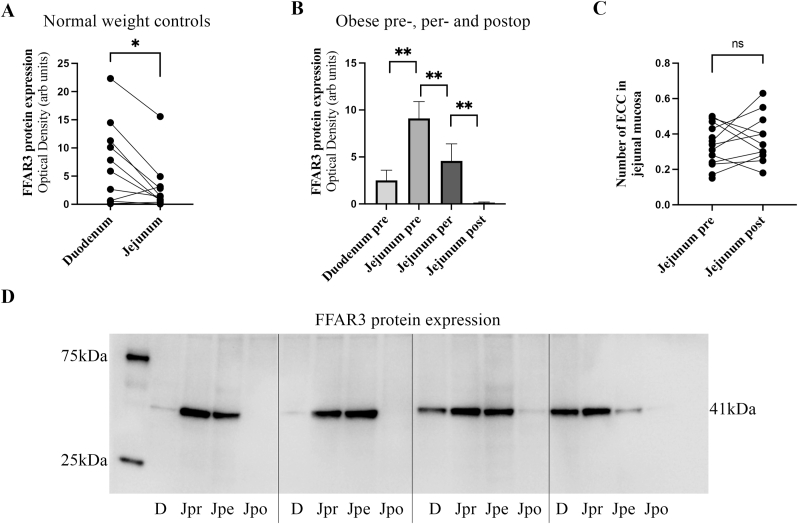 Figure 2
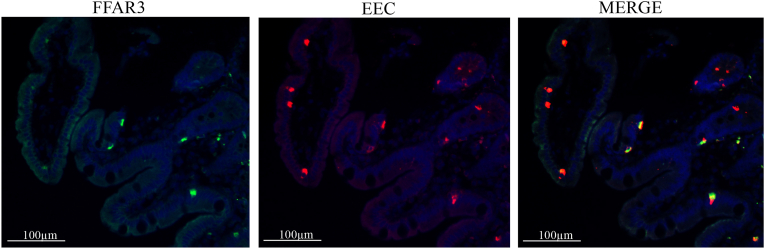 Figure 3
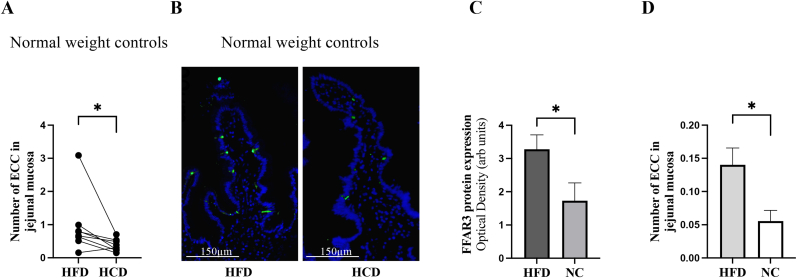 Figure 4
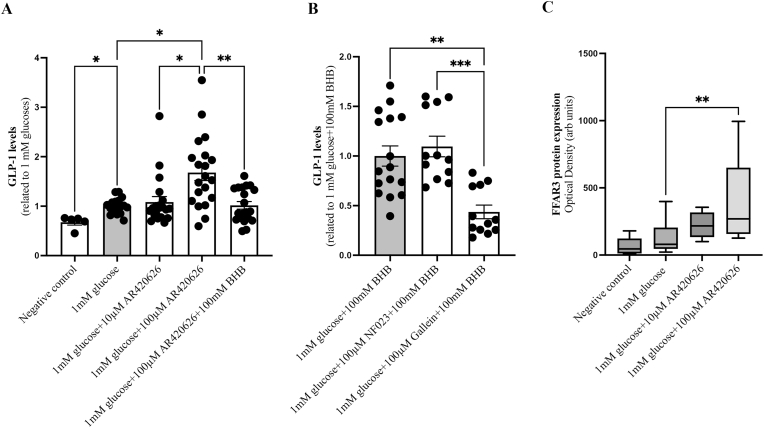 Figure 5
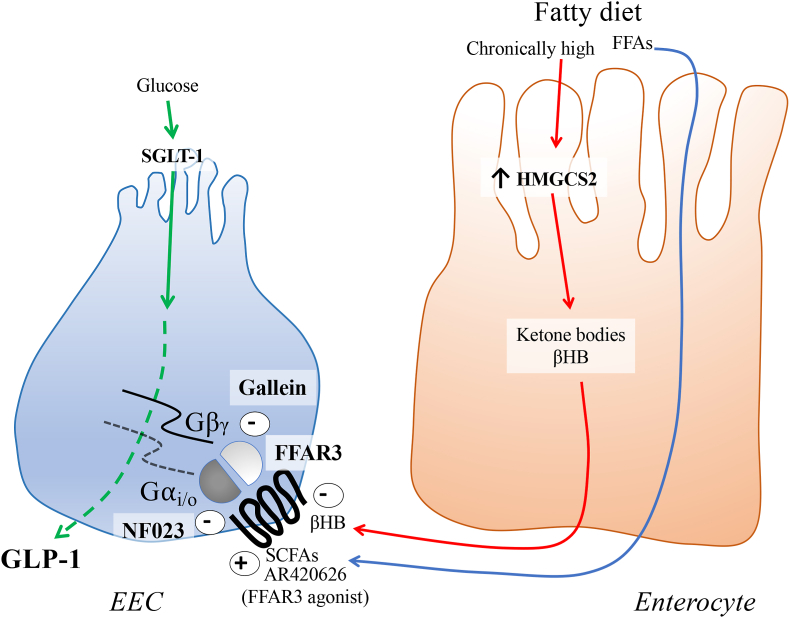 Figure 6
Peer Reviews
No public reviews on file for this paper yet. If you reviewed it on a platform where reviews are public (OpenReview, ICLR, NeurIPS, ICML), you can paste yours below so the community can read it here.
Videos
No videos yet. Explain this paper in a talk, walkthrough, or lecture? Add one.
Taxonomy
TopicsDiet and metabolism studies · Diabetes Treatment and Management · Diet, Metabolism, and Disease