GnRH agonist early follicular challenge test as a predictor of ovarian response in antagonist cycles for fertility preservation
Gil M. Yerushalmi, Sarit Avraham, Alon Kedem, Michal Youngster, Jonathan Barkat, Ohad Baruchin, Itai Gat, Odelia Yaakov, Yariv Gidoni, Ariel Hourvitz

TL;DR
This study shows that a GnRH agonist test early in the cycle can predict how well a woman's ovaries will respond during fertility preservation IVF.
Contribution
The study introduces a new early follicular GnRH agonist test to predict ovarian response in GnRH antagonist cycles for fertility preservation.
Findings
GAST E3 levels and E3/E2 ratio correlated linearly with the number of mature cryopreserved oocytes.
GAST E3 levels below 384 pmol/l indicate a 58.6% risk of retrieving fewer than 5 oocytes.
Younger patients with GAST E3 above 708 pmol/l have a 66% chance of retrieving more than 15 oocytes.
Abstract
The aim of our study was to evaluate if the response to follicular GnRH agonist (GnRHa) trigger be used to predict intracycle ovarian response in GnRH antagonist cycles among women undergoing fertility preservation IVF. We conducted a prospective study of 146 GnRH antagonist oocyte pickup (OPU) cycles to evaluate GnRHa stimulation test (GAST). On day 2 of the cycle, basal E2 were measured, followed by injection of 0.2 mg GnRHa as part of the initial ovarian stimulation. 12 h later blood sampling was repeated (GAST E3). E2 response was used as test parameter. The major outcome was the number of mature cryopreserved oocytes. We found a linear correlation between both GAST E3 level and GAST E3/E2 ratio and number of M2 oocytes. ROC curve analysis of GAST E3, GAST E3/E2 ratio, AFC and day 3 FSH for > 15 M2 and < 5 M2 oocytes was calculated. For GAST E3 levels obtaining < 5 M2 oocytes, an…
Genes, proteins, chemicals, diseases, species, mutations and cell lines named across the full text — each resolved to its canonical identifier and authoritative record.
Click any figure to enlarge with its caption.
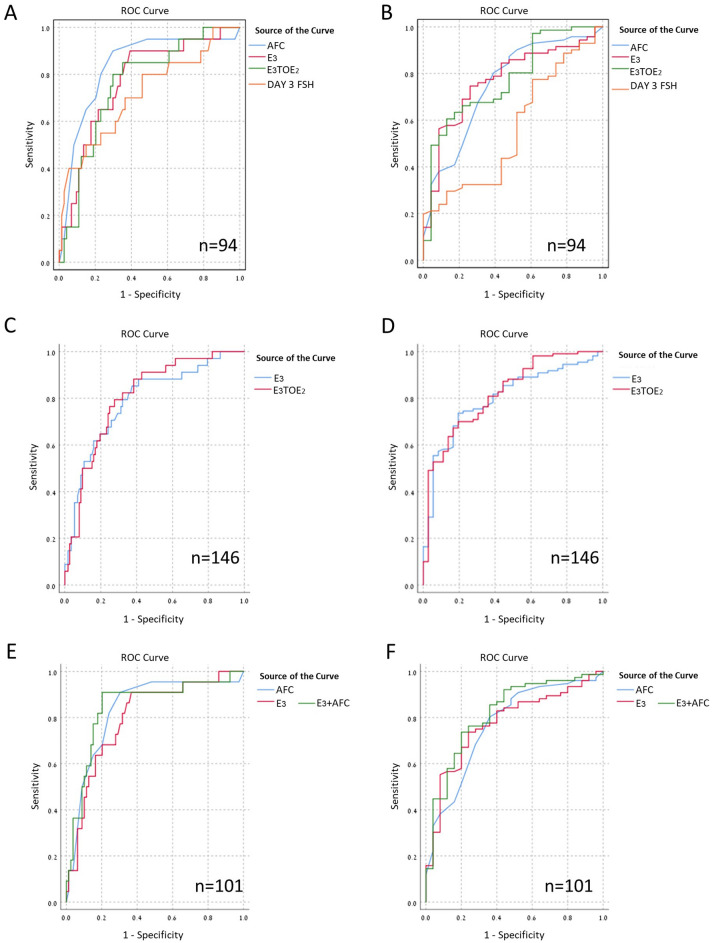 Figure 1
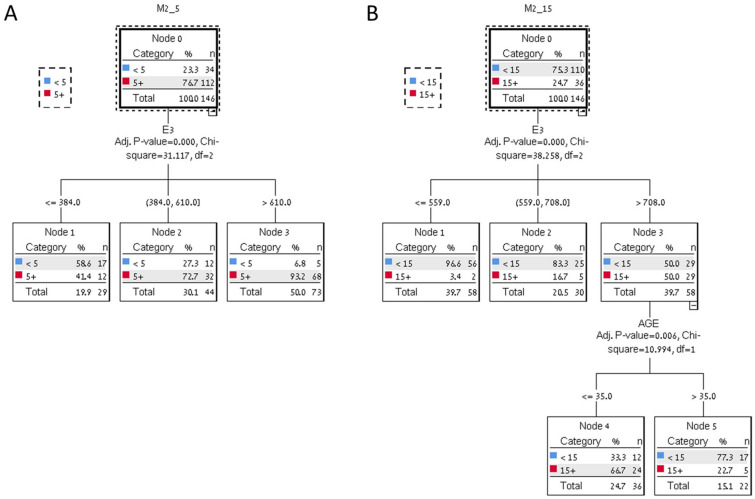 Figure 2
Peer Reviews
No public reviews on file for this paper yet. If you reviewed it on a platform where reviews are public (OpenReview, ICLR, NeurIPS, ICML), you can paste yours below so the community can read it here.
Videos
No videos yet. Explain this paper in a talk, walkthrough, or lecture? Add one.
Taxonomy
TopicsReproductive Biology and Fertility · Ovarian function and disorders · Assisted Reproductive Technology and Twin Pregnancy