When Ascites Is Not Ascites!
Mei Yang, Aboud Fahel, Thomas Pohlman, Ravi Donepudi, Sajid Zafar

TL;DR
This paper discusses a rare case where a patient's ascites-like symptoms were actually caused by a ruptured splenic artery aneurysm, highlighting the importance of accurate diagnosis.
Contribution
The novelty lies in presenting a rare differential diagnosis for ascites and emphasizing the role of interventional radiology in accurate identification.
Findings
Ascites-like symptoms can be caused by a ruptured splenic artery aneurysm.
Early diagnosis and intervention are critical to prevent fatal outcomes.
Interdisciplinary collaboration improves diagnostic accuracy in complex cases.
Abstract
Patients presenting with ascites should be properly evaluated to differentiate potential etiologies. Then, based on the evaluation, we can tailor more accurate treatment plans for patients. Cirrhosis is the most common cause, and others include cancer, heart failure, and, in our case, rarely a visceral artery rupture. Rupture of the splenic artery aneurysm can be lethal and should be considered as a possible differential in a patient with no previous history of heart failure, cancer, or cirrhosis. Our patient was identified after an initial misdiagnosis of possible ascites secondary to cirrhosis. However, input from an interventional radiologist led to proper identification and tailored management. Early treatment is crucial to prevent complications, including death.
Genes, proteins, chemicals, diseases, species, mutations and cell lines named across the full text — each resolved to its canonical identifier and authoritative record.
Click any figure to enlarge with its caption.
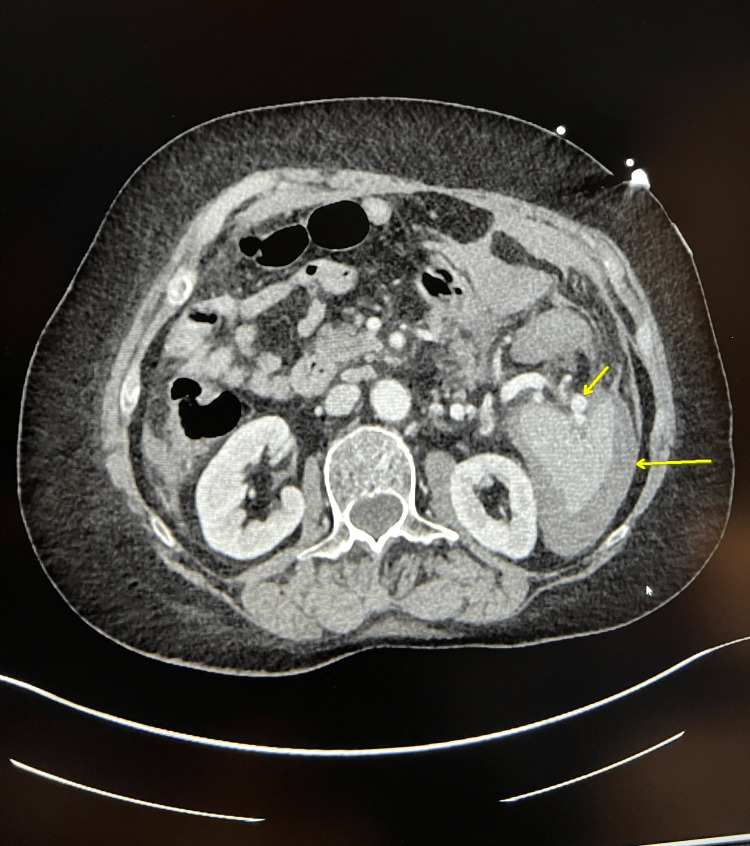 Figure 1
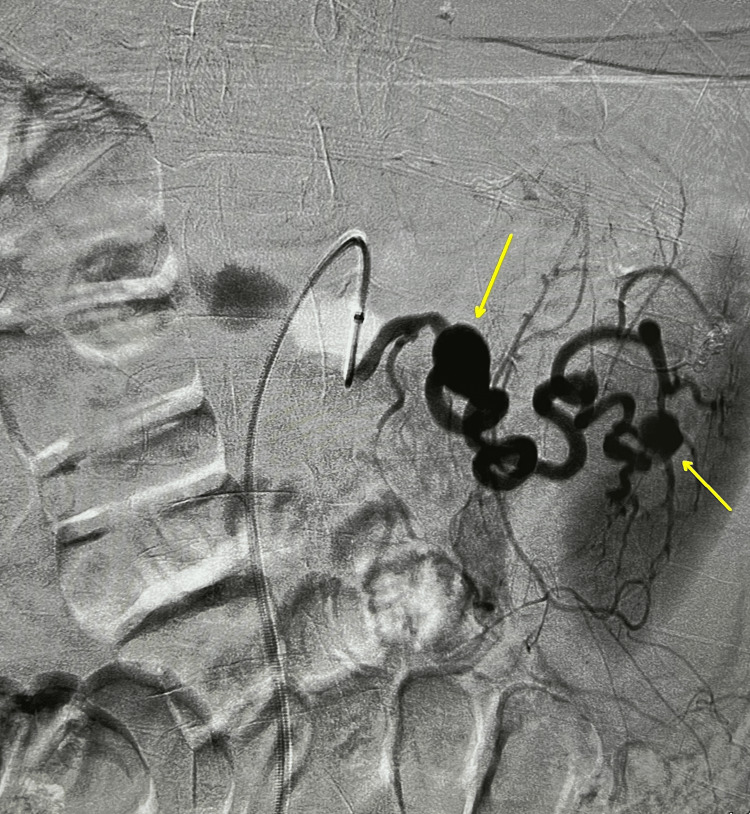 Figure 2
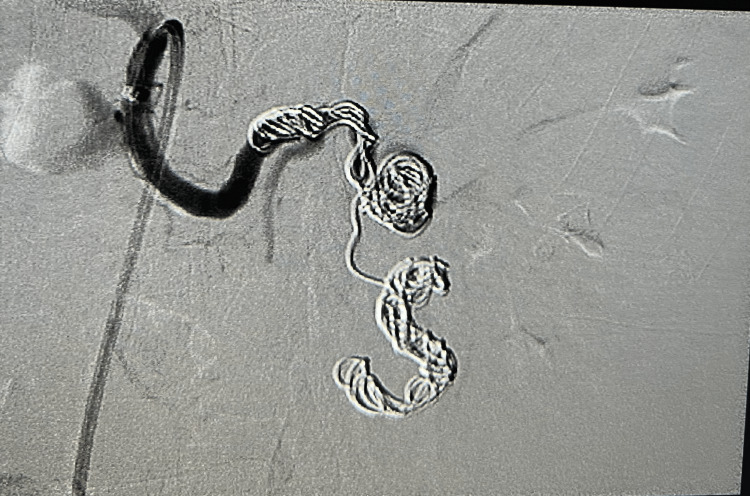 Figure 3
Peer Reviews
No public reviews on file for this paper yet. If you reviewed it on a platform where reviews are public (OpenReview, ICLR, NeurIPS, ICML), you can paste yours below so the community can read it here.
Videos
No videos yet. Explain this paper in a talk, walkthrough, or lecture? Add one.
Taxonomy
TopicsAbdominal vascular conditions and treatments · Liver Disease and Transplantation · Kawasaki Disease and Coronary Complications