Effects of Strigolactones on NLRP3 Activation, Nitrosative Stress, and Antioxidant Mox Phenotype: In Vitro and In Silico Evidence
Gizem Antika, Zeynep Özlem Cinar, Serhat Dönmez, Esma Seçen, Mehmet Özbil, Cristina Prandi, Tugba Boyunegmez Tumer

TL;DR
This study explores how strigolactone analogs affect inflammation and antioxidant responses in brain cells, both in experiments and through computer modeling.
Contribution
The study identifies specific strigolactone analogs that inhibit NLRP3 inflammasome and modulate antioxidant pathways in microglial cells.
Findings
Strigolactone analogs inhibit NLRP3-mediated IL-1β release in microglial cells.
EGO10 and IND show high potency in suppressing proinflammatory factors at low micromolar doses.
(S)-EGO10 has the highest binding affinity to iNOS, NLRP3, and Keap1 ligands among SL analogs.
Abstract
Phytohormones have significant roles in redox metabolism, inflammatory responses, and cellular survival mechanisms within the microenvironment of the mammalian brain. Herein, we identified the mammalian molecular targets of three representative strigolactone (SL) analogues structurally derived from apocarotenoids and the functional equivalent of plant hormones. All tested SL analogues have an inhibitory effect on NLRP3 inflammasome-mediated IL-1β release in murine microglial cells. However, IND and EGO10 became prominent among them due to their high potency at low micromolar doses. All SL analogues dose-dependently suppressed the release and expression of proinflammatory factors. For EGO10 and IND, IC50 values for iNOS-associated NO secretion were as low as 1.72 and 1.02 μM, respectively. In silico analyses revealed that (S)-EGO10 interacted with iNOS, NLRP3, and Keap1 ligands with the…
Genes, proteins, chemicals, diseases, species, mutations and cell lines named across the full text — each resolved to its canonical identifier and authoritative record.
Click any figure to enlarge with its caption.
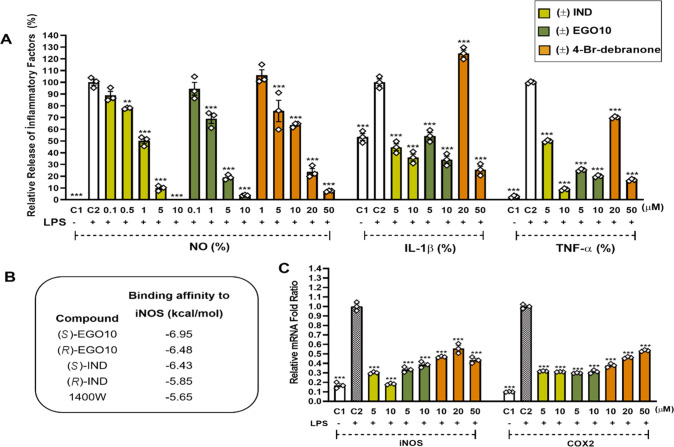 Figure 1
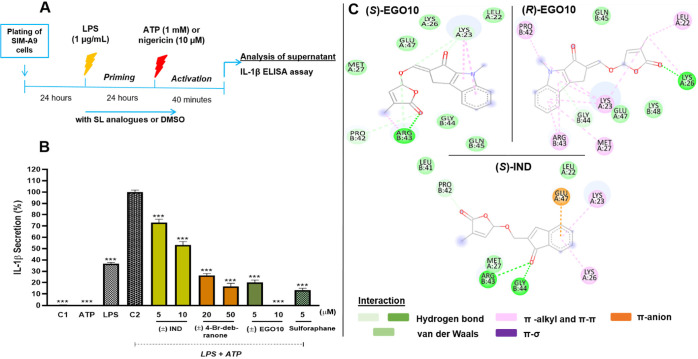 Figure 2
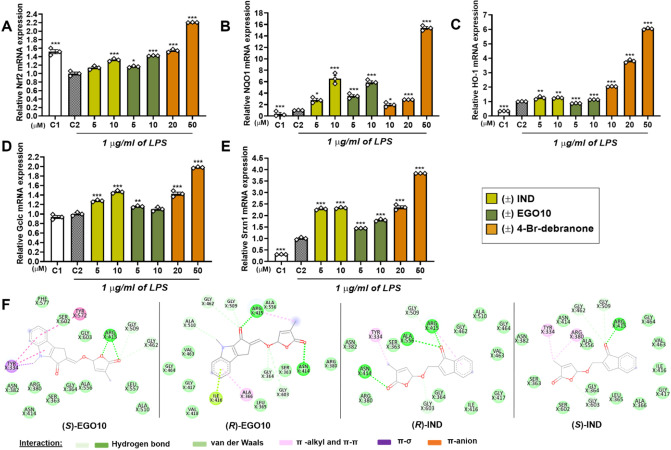 Figure 3
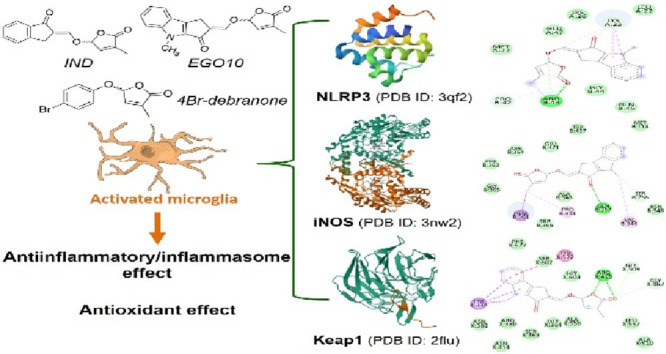 Figure 4
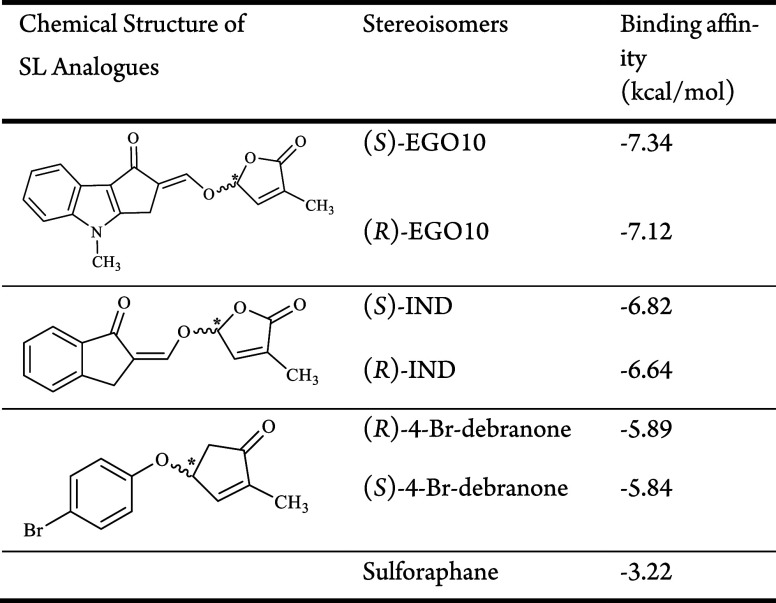 Figure 5
Peer Reviews
No public reviews on file for this paper yet. If you reviewed it on a platform where reviews are public (OpenReview, ICLR, NeurIPS, ICML), you can paste yours below so the community can read it here.
Videos
No videos yet. Explain this paper in a talk, walkthrough, or lecture? Add one.
Taxonomy
TopicsPlant Parasitism and Resistance · Plant and animal studies · Allelopathy and phytotoxic interactions