Unconsciously triggered cognitive conflict influences perceptual choice in active and sedentary individuals
Ruichen Jiang

TL;DR
This study shows that exercise helps people handle unconscious mental conflicts, affecting how they process visual cues and make decisions.
Contribution
The study reveals how unconscious visual stimuli interact and how exercise influences cognitive conflict resolution.
Findings
Active individuals showed significant behavioral and neurophysiological differences in processing subliminal stimuli.
Prime-flanker congruency and compatibility influenced specific ERP components like TP1, TN2, and TP3.
Exercise enhances the brain's ability to manage unconscious cognitive conflicts during early perceptual processing.
Abstract
People who regularly exercise and receive training perform better when actioning unconscious cognitive tasks. The information flow triggered by a single unconscious visual stimulus has been extensively investigated, but it remains unclear whether multiple unconscious visual stimuli interact. This study aimed to explore the relationship between three simultaneous subliminal arrow stimuli (pointing in same or different directions), focusing on how they interact with each other and the subsequent priming effect on the target arrow in active and sedentary groups. We used a priming paradigm combining flanker task to test the hypothesis. A total of 42 participants were recruited. Of these, 22 constituted the active group and 20 constituted the sedentary group. Behavioral data results revealed that the main effects of group and prime-target compatibility were significant. In the…
Genes, proteins, chemicals, diseases, species, mutations and cell lines named across the full text — each resolved to its canonical identifier and authoritative record.
Click any figure to enlarge with its caption.
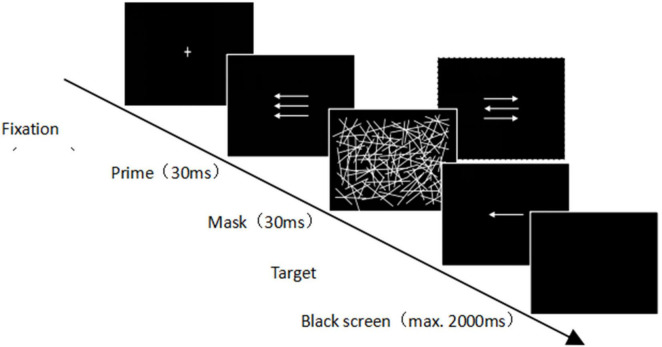 Figure 1
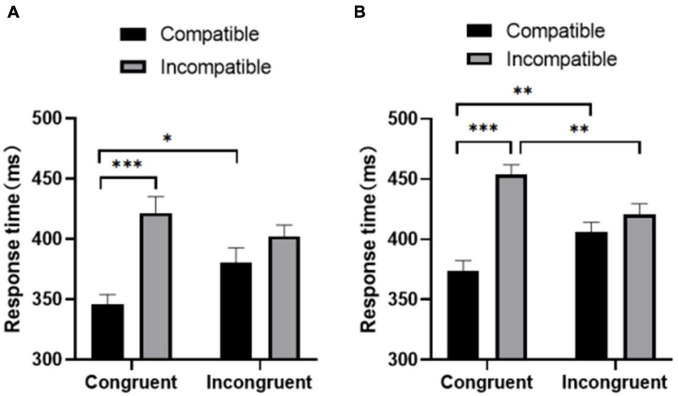 Figure 2
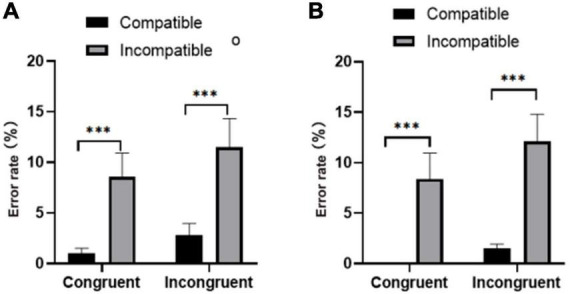 Figure 3
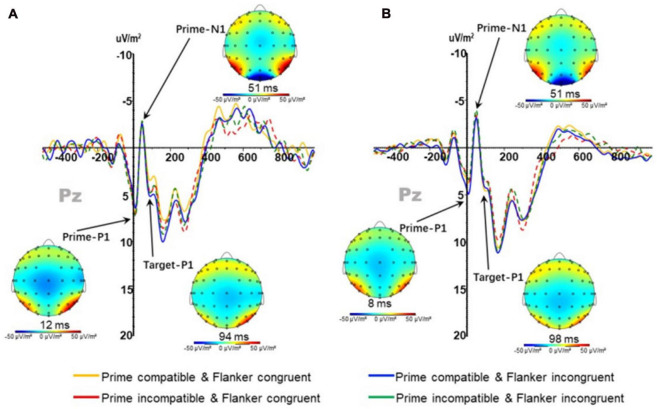 Figure 4
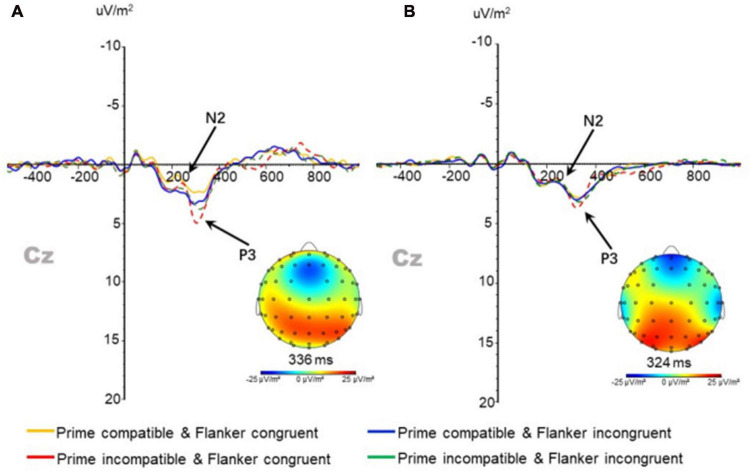 Figure 5
Peer Reviews
No public reviews on file for this paper yet. If you reviewed it on a platform where reviews are public (OpenReview, ICLR, NeurIPS, ICML), you can paste yours below so the community can read it here.
Videos
No videos yet. Explain this paper in a talk, walkthrough, or lecture? Add one.
Taxonomy
TopicsNeural and Behavioral Psychology Studies · EEG and Brain-Computer Interfaces · Visual perception and processing mechanisms