Integrating DNA/RNA microbe detection and host response for accurate diagnosis, treatment and prognosis of childhood infectious meningitis and encephalitis
Zhihao Xing, Hanfang Jiang, Xiaorong Liu, Qiang Chai, Zefeng Xin, Chunqing Zhu, Yanmin Bao, Hongyu Chen, Hongdan Gao, Dongli Ma

TL;DR
This study introduces a new mNGS pipeline that improves the diagnosis and prognosis of childhood infectious meningitis and encephalitis by detecting pathogens and host responses simultaneously.
Contribution
The novel contribution is an optimized mNGS pipeline that integrates DNA/RNA pathogen detection and host gene expression analysis in a single test for IM.
Findings
The pipeline detected RNA viruses and pathogens like Echovirus E30 and HHV-7 that conventional methods miss.
Antibiotic resistance genes in Escherichia coli, Acinetobacter baumannii, and Group B Streptococcus were identified.
Machine-learning models were built to detect sample contamination and predict poor prognosis in bacterial meningitis.
Abstract
Infectious meningitis/encephalitis (IM) is a severe neurological disease that can be caused by bacterial, viral, and fungal pathogens. IM suffers high morbidity, mortality, and sequelae in childhood. Metagenomic next-generation sequencing (mNGS) can potentially improve IM outcomes by sequencing both pathogen and host responses and increasing the diagnosis accuracy. Here we developed an optimized mNGS pipeline named comprehensive mNGS (c-mNGS) to monitor DNA/RNA pathogens and host responses simultaneously and applied it to 142 cerebrospinal fluid samples. According to retrospective diagnosis, these samples were classified into three categories: confirmed infectious meningitis/encephalitis (CIM), suspected infectious meningitis/encephalitis (SIM), and noninfectious controls (CTRL). Our pipeline outperformed conventional methods and identified RNA viruses such as Echovirus E30 and…
Genes, proteins, chemicals, diseases, species, mutations and cell lines named across the full text — each resolved to its canonical identifier and authoritative record.
Click any figure to enlarge with its caption.
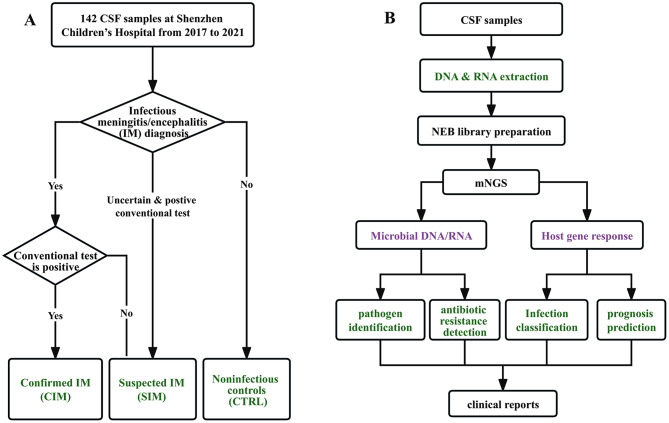 Figure 1
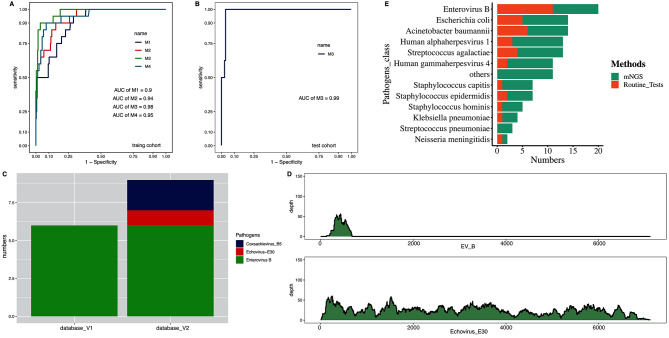 Figure 2
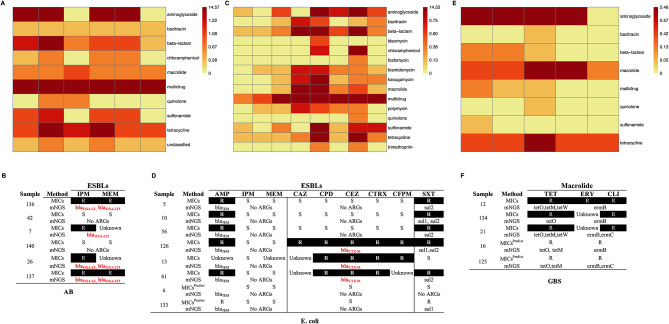 Figure 3
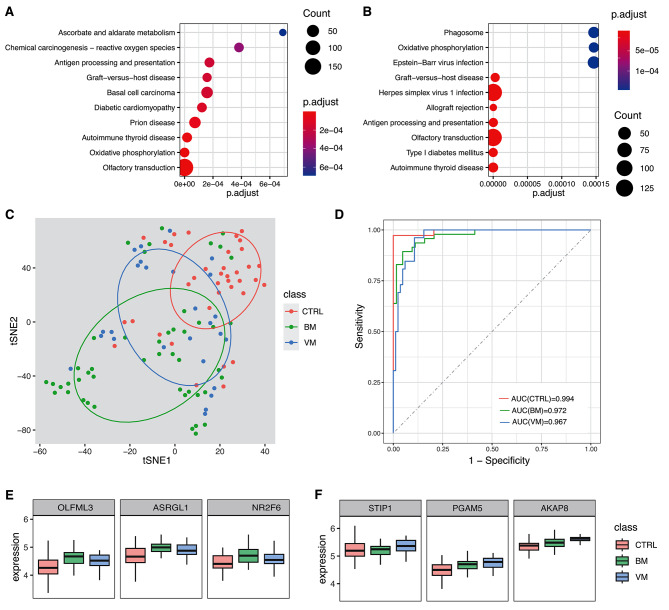 Figure 4
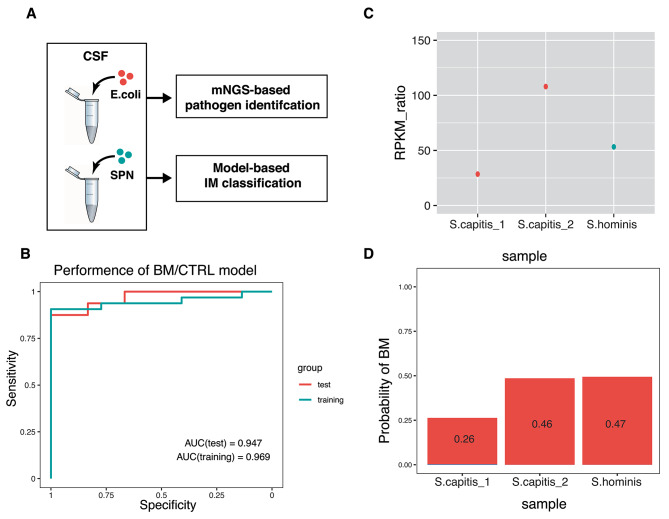 Figure 5
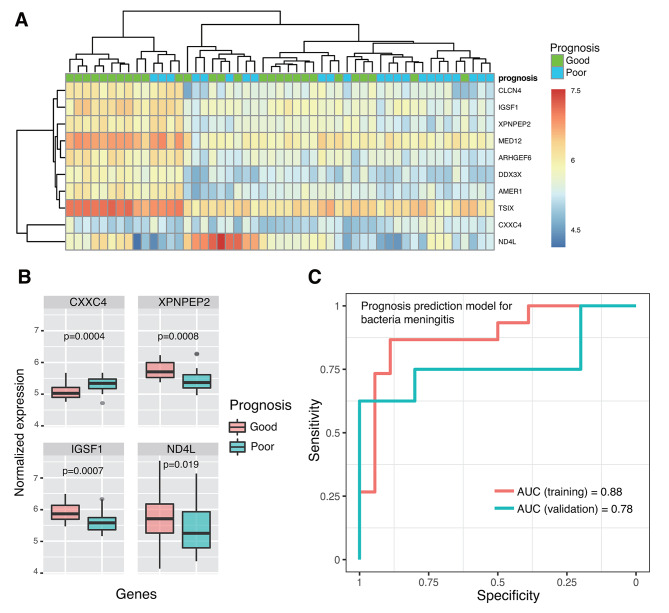 Figure 6
Peer Reviews
No public reviews on file for this paper yet. If you reviewed it on a platform where reviews are public (OpenReview, ICLR, NeurIPS, ICML), you can paste yours below so the community can read it here.
Videos
No videos yet. Explain this paper in a talk, walkthrough, or lecture? Add one.
Taxonomy
TopicsBacterial Infections and Vaccines · Whipple's Disease and Interleukins · Viral Infections and Immunology Research