Iron Sulfide Microspheres Supported on Cellulose-Carbon Nanotube Conductive Flexible Film as an Electrode Material for Aqueous-Based Symmetric Supercapacitors with High Voltage
Jincy Parayangattil Jyothibasu, You-Ching Tien, Zi-Ting Chen, Hongta Yang, Tzu Hsuan Chiang, Ahmed F. M. EL-Mahdy, Rong-Ho Lee

TL;DR
A new composite electrode material made of iron sulfide and cellulose-carbon nanotube films shows excellent performance in supercapacitors with high voltage and durability.
Contribution
A novel composite electrode material combining FeS2 microspheres with a cellulose-CNT conductive film is developed for high-voltage symmetric supercapacitors.
Findings
The RC/CNT/FeS2/PPy composite electrode achieved an areal capacitance of 6543.8 mF cm–2 at 1 mA cm–2.
The electrode retained 91.1% of its capacitance after 10,000 charge/discharge cycles.
A symmetric supercapacitor using this electrode delivered a maximum energy density of 329 μWh cm–2 and 86.2% capacitance retention after 10,000 cycles.
Abstract
Nanostructured iron disulfide (FeS2) was uniformly deposited on regenerated cellulose (RC) and oxidized carbon nanotube (CNT)-based composite films using a simple chemical bath deposition method to form RC/CNT/FeS2 composite films. The RC/CNT composite film served as an ideal substrate for the homogeneous deposition of FeS2 microspheres due to its unique porous architecture, large specific surface area, and high conductivity. Polypyrrole (PPy), a conductive polymer, was coated on the RC/CNT/FeS2 composite to improve its conductivity and cycling stability. Due to the synergistic effect of FeS2 with high redox activity and PPy with high stability and conductivity, the RC/CNT/FeS2/PPy composite electrode exhibited excellent electrochemical performance. The RC/CNT/0.3FeS2/PPy-60 composite electrode tested with Na2SO4 aqueous electrolyte could achieve an excellent areal capacitance of 6543.8…
Genes, proteins, chemicals, diseases, species, mutations and cell lines named across the full text — each resolved to its canonical identifier and authoritative record.
Click any figure to enlarge with its caption.
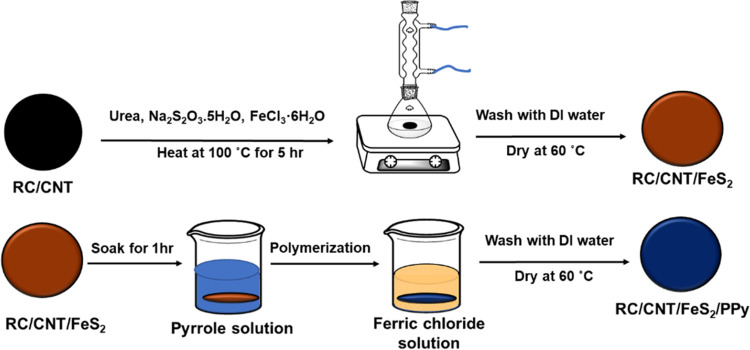 Figure 1
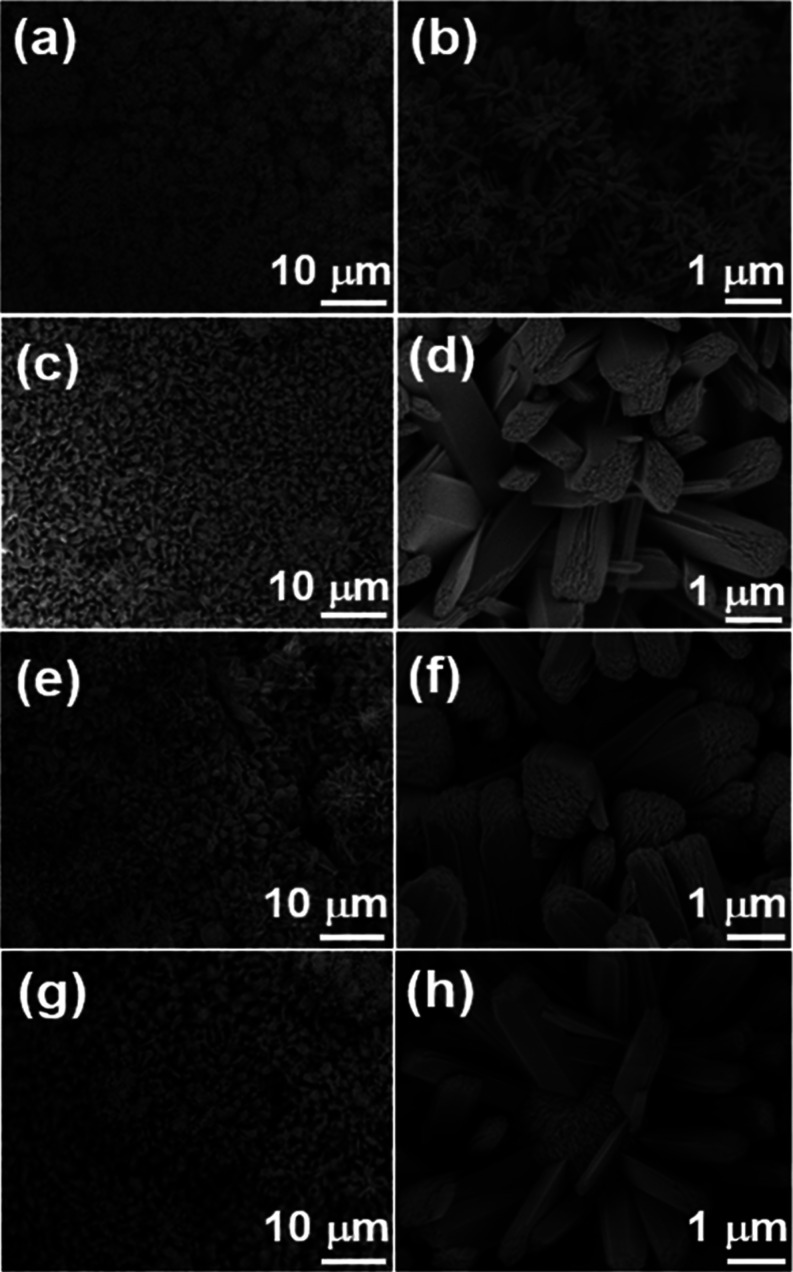 Figure 2
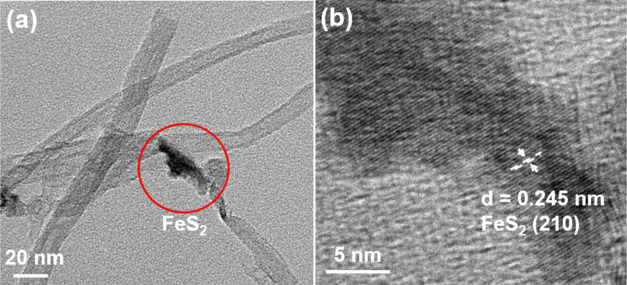 Figure 3
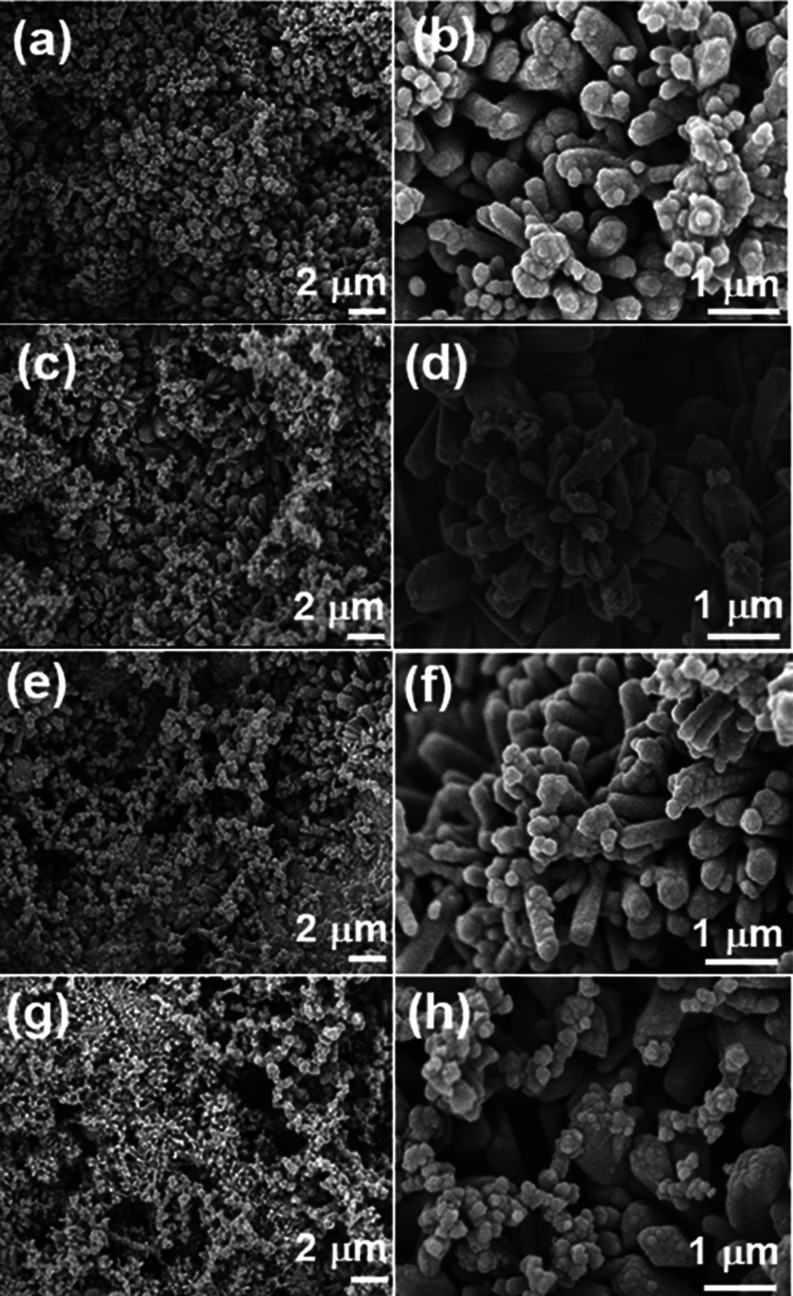 Figure 4
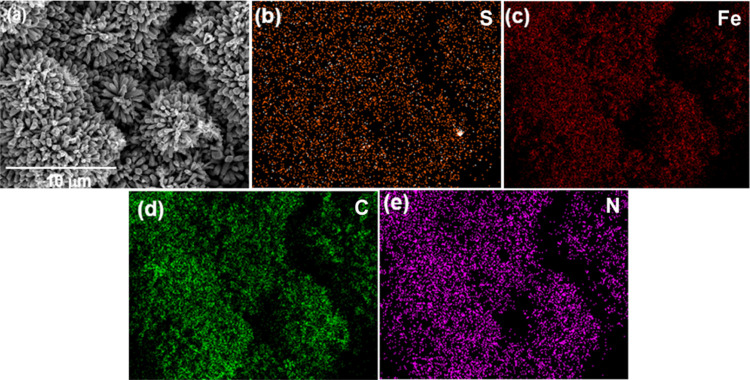 Figure 5
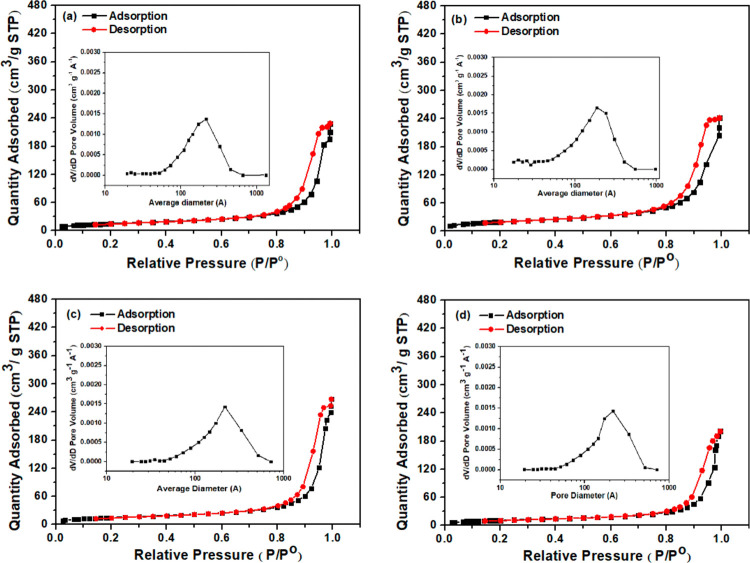 Figure 6
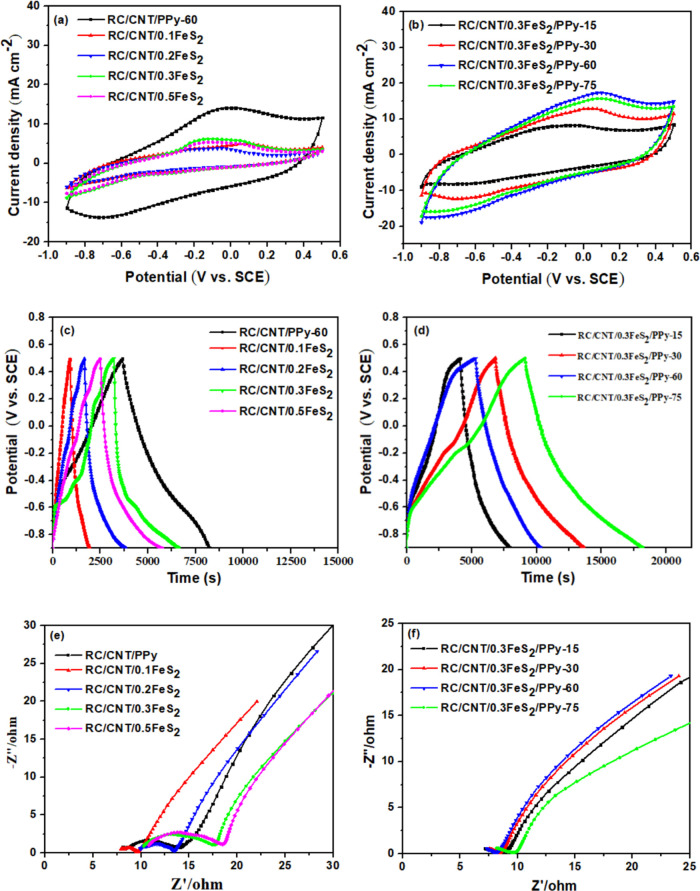 Figure 7
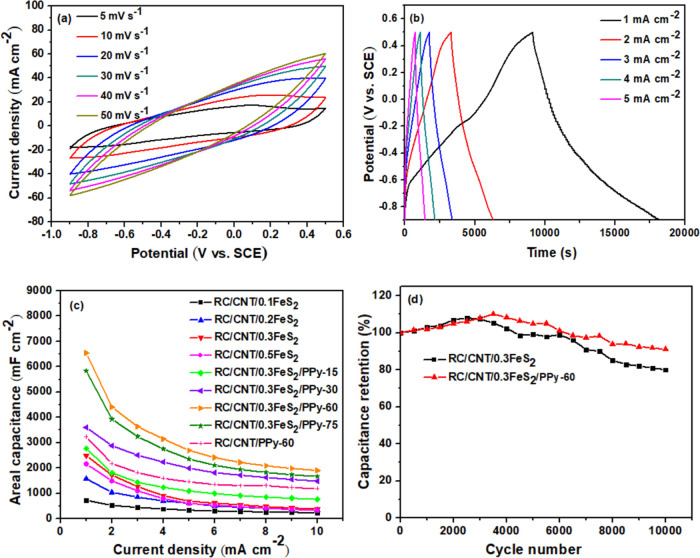 Figure 8
 Figure 9
 Figure 10
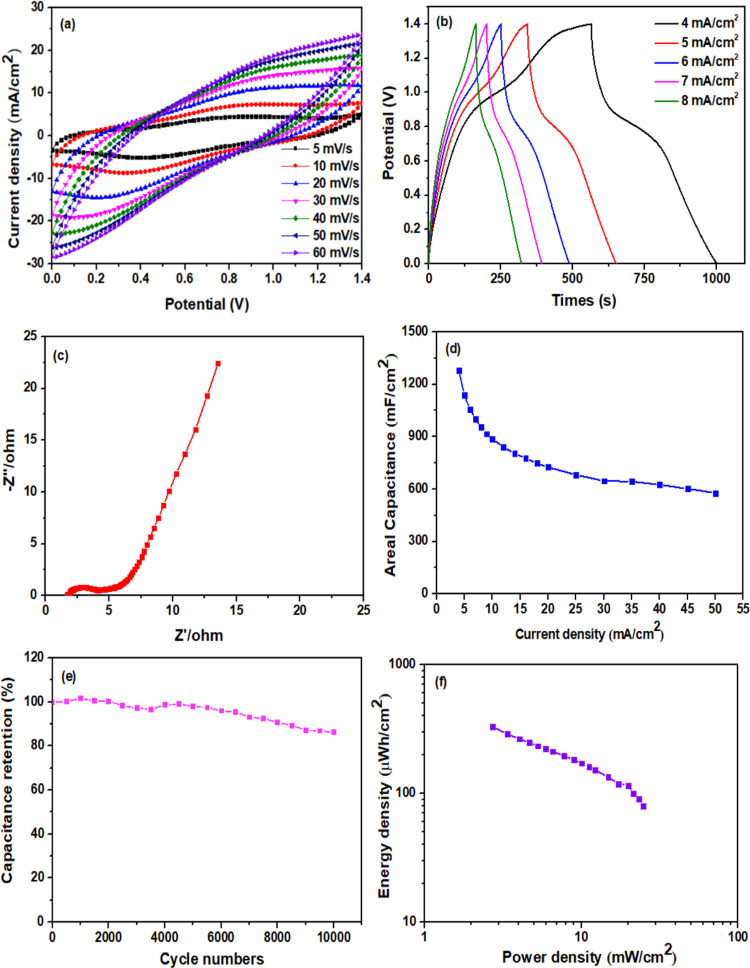 Figure 11
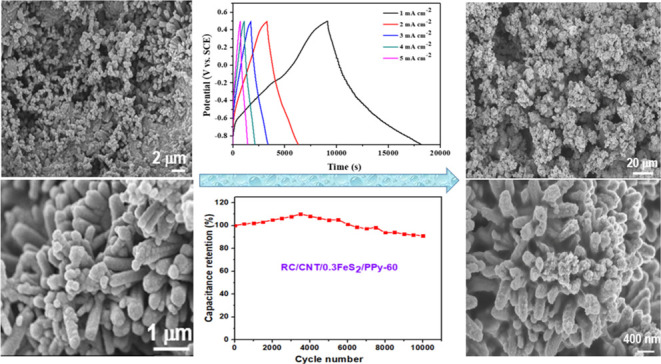 Figure 12
 Figure 13
 Figure 14
 Figure 15
 Figure 16
 Figure 17
 Figure 18
 Figure 19
Peer Reviews
No public reviews on file for this paper yet. If you reviewed it on a platform where reviews are public (OpenReview, ICLR, NeurIPS, ICML), you can paste yours below so the community can read it here.
Videos
No videos yet. Explain this paper in a talk, walkthrough, or lecture? Add one.
Taxonomy
TopicsSupercapacitor Materials and Fabrication · Membrane-based Ion Separation Techniques · Microbial Fuel Cells and Bioremediation