Awake craniotomy in patients with arteriovenous malformation: A systematic review and meta‑analysis
Arya Harikrishna, Stefanos Chatzidakis, Angela Ishak, Konstantinos Faropoulos, George Fotakopoulos, Vasiliki Epameinondas Georgakopoulou, Pagona Sklapani, Nikolaos Trakas, Andreas Yiallouris, Christina Iosif, Aris P. Agouridis, George Hadjigeorgiou

TL;DR
This study reviews the safety and effectiveness of awake craniotomy for removing brain arteriovenous malformations, finding it promising but needing more research.
Contribution
The paper provides the first systematic review and meta-analysis on awake craniotomy for AVM resection.
Findings
Awake craniotomy achieved a 93% complete resection rate for AVMs.
Post-operative complications were higher in more complex AVM cases (SMG III-V).
Long-term follow-up showed low complication rates, suggesting potential safety.
Abstract
The present systematic review aimed to identify all the available literature on awake craniotomy (AC) in patients with arteriovenous malformation (AVM) in order to evaluate its safety, risks, benefits and effectiveness. All available literature on AC in patients with AVM was collected and evaluated in an aim to provide a better understanding of its safety, associated risks and benefits. A systematic search for studies employing AC in patients with AVM was conducted using the PubMed, Scopus and ScienceDirect databases without restrictions on the year of publication, language, or study design, from inception up to May 30, 2021. A total of 11 studies published between 2004 and 2021 with 106 patients who underwent ACs were considered eligible. The rate of complete resection was 93% [95% confidence interval (CI), 82 to 100%; I2 0%]. The intraoperative complication rate was 21% (95% CI, 1 to…
Genes, proteins, chemicals, diseases, species, mutations and cell lines named across the full text — each resolved to its canonical identifier and authoritative record.
Click any figure to enlarge with its caption.
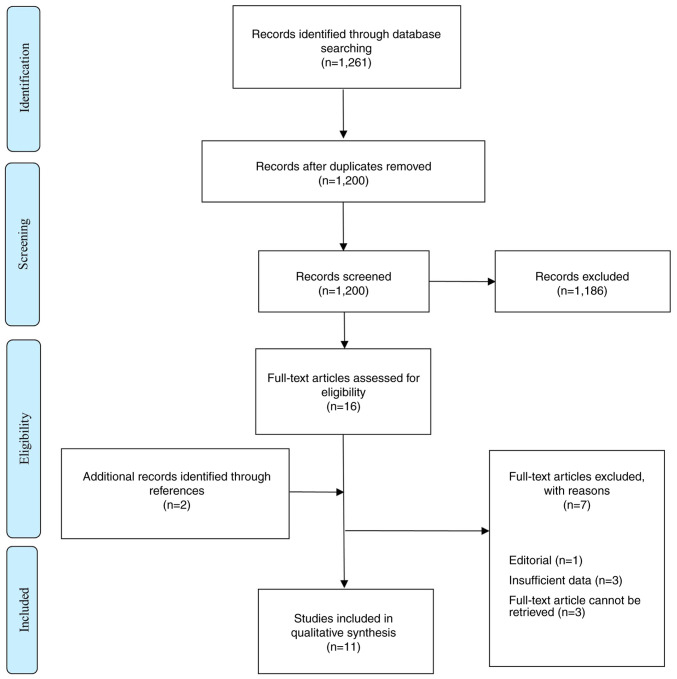 Figure 1
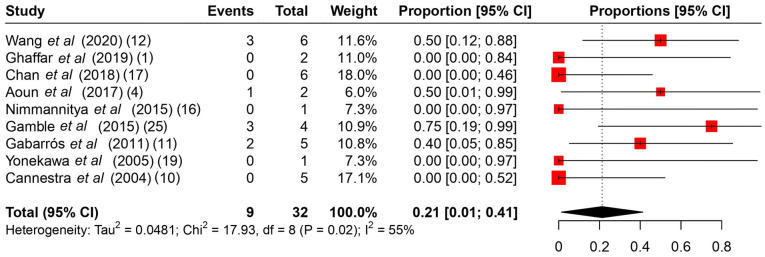 Figure 2
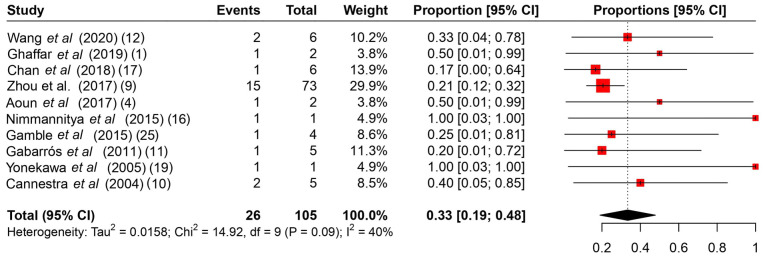 Figure 3
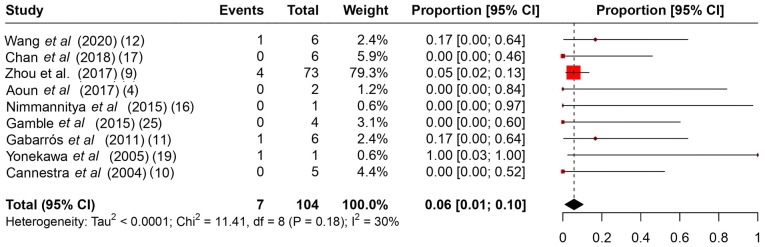 Figure 4
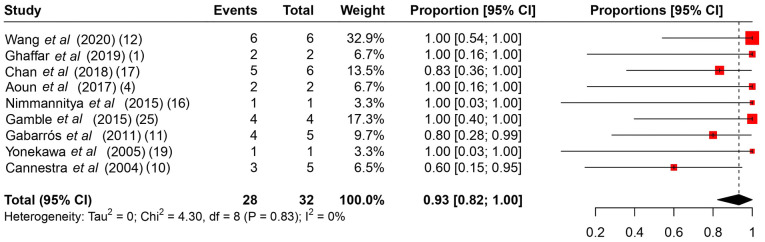 Figure 5
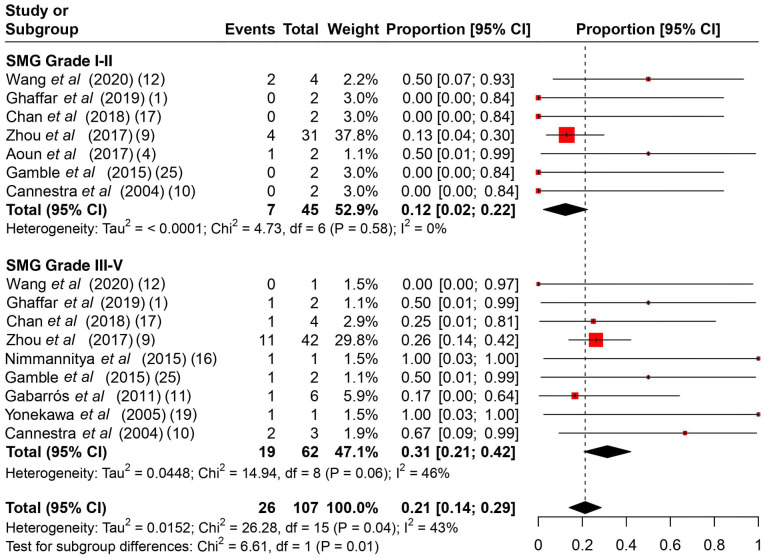 Figure 6
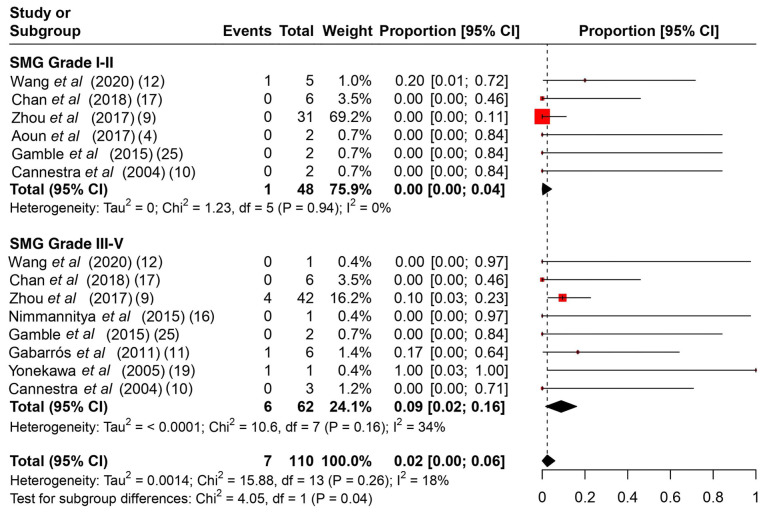 Figure 7
Peer Reviews
No public reviews on file for this paper yet. If you reviewed it on a platform where reviews are public (OpenReview, ICLR, NeurIPS, ICML), you can paste yours below so the community can read it here.
Videos
No videos yet. Explain this paper in a talk, walkthrough, or lecture? Add one.
Taxonomy
TopicsVascular Malformations Diagnosis and Treatment · Intracranial Aneurysms: Treatment and Complications · Meningioma and schwannoma management