Real-world evidence: Risdiplam in a patient with spinal muscular atrophy type I with a novel splicing mutation and one SMN2 copy
Kai Ma, Kaihui Zhang, Defang Chen, Chuan Wang, Mohnad Abdalla, Haozheng Zhang, Rujin Tian, Yang Liu, Li Song, Xinyi Zhang, Fangfang Liu, Guohua Liu, Dong Wang

TL;DR
This paper reports a case of a patient with spinal muscular atrophy type I who showed improvement after treatment with risdiplam, despite having only one SMN2 gene copy.
Contribution
The study is the first to report risdiplam treatment in a patient with only one SMN2 copy in a real-world setting.
Findings
The patient had a novel splice mutation in SMN1 that led to a mild clinical phenotype despite having only one SMN2 copy.
Risdiplam treatment resulted in significant clinical improvement in the patient over 7 months.
The mutation caused alternative splicing, which explains the milder SMA phenotype.
Abstract
Spinal muscular atrophy (SMA), which results from the deletion or/and mutation in the SMN1 gene, is an autosomal recessive neuromuscular disorder that leads to weakness and muscle atrophy. SMN2 is a paralogous gene of SMN1. SMN2 copy number affects the severity of SMA, but its role in patients treated with disease modifying therapies is unclear. The most appropriate individualized treatment for SMA has not yet been determined. Here, we reported a case of SMA type I with normal breathing and swallowing function. We genetically confirmed that this patient had a compound heterozygous variant: one deleted SMN1 allele and a novel splice mutation c.628-3T>G in the retained allele, with one SMN2 copy. Patient-derived sequencing of 4 SMN1 cDNA clones showed that this intronic single transversion mutation results in an alternative exon (e)5 3′ splice site, which leads to an additional 2…
Genes, proteins, chemicals, diseases, species, mutations and cell lines named across the full text — each resolved to its canonical identifier and authoritative record.
Click any figure to enlarge with its caption.
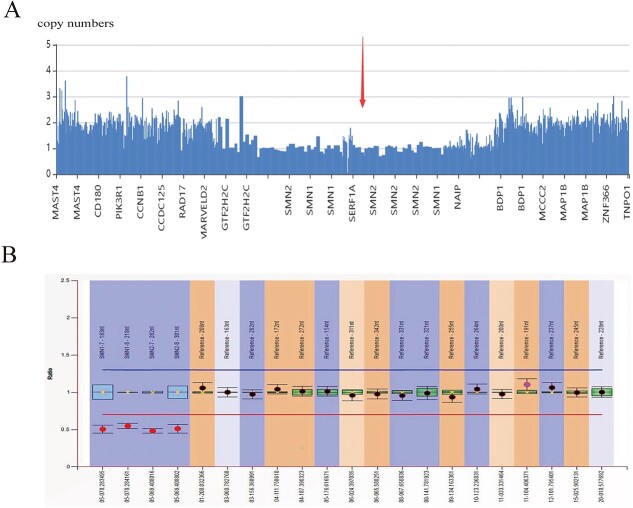 Figure 1
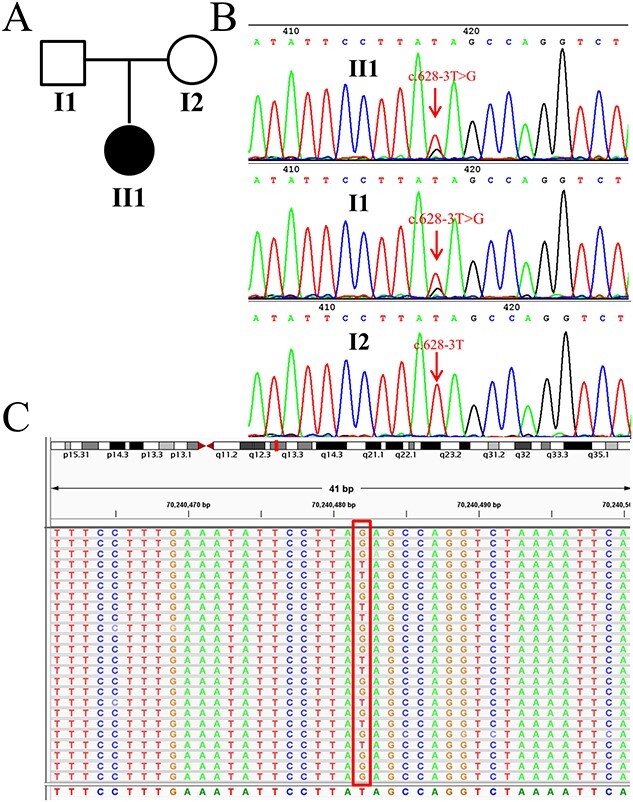 Figure 2
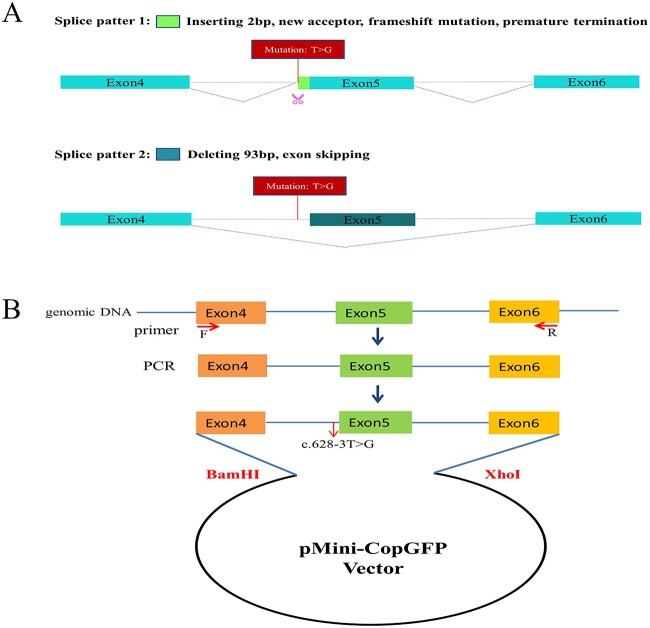 Figure 3
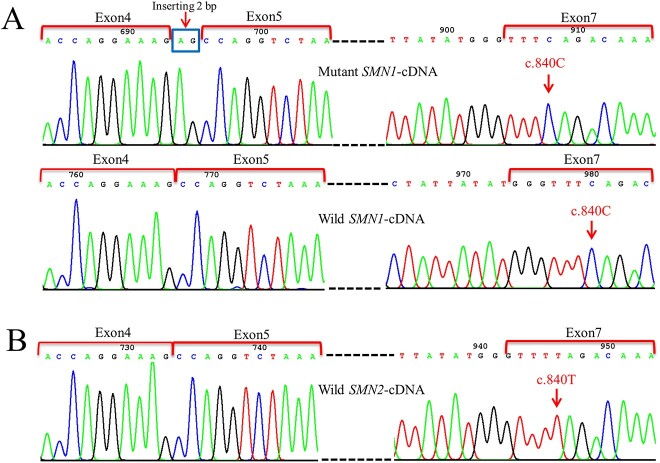 Figure 4
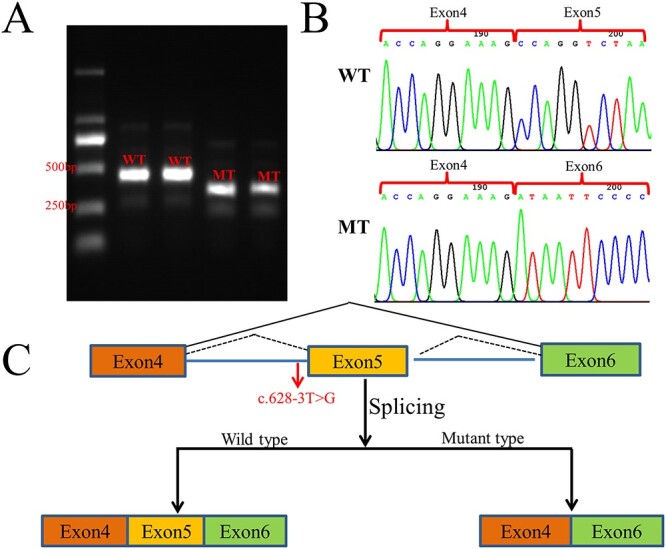 Figure 5
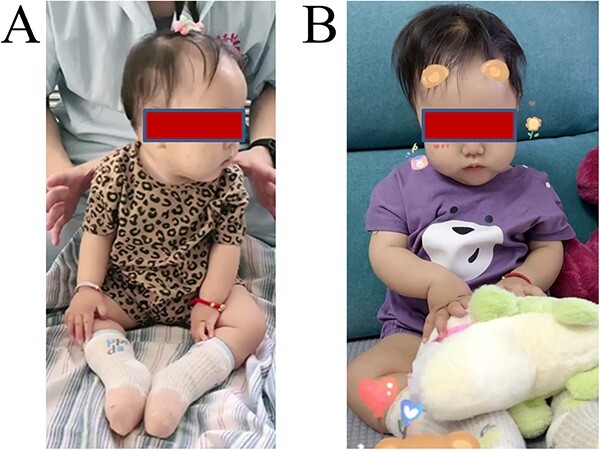 Figure 6
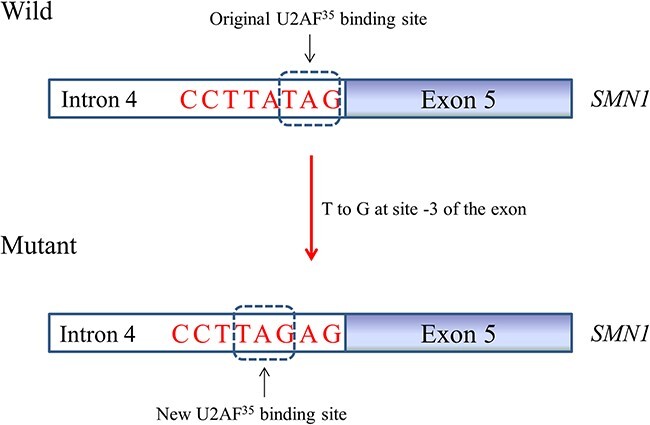 Figure 7
Peer Reviews
No public reviews on file for this paper yet. If you reviewed it on a platform where reviews are public (OpenReview, ICLR, NeurIPS, ICML), you can paste yours below so the community can read it here.
Videos
No videos yet. Explain this paper in a talk, walkthrough, or lecture? Add one.
Taxonomy
TopicsFamily and Disability Support Research