Magnetic resonance imaging‐based radiomics analysis for prediction of treatment response to neoadjuvant chemoradiotherapy and clinical outcome in patients with locally advanced rectal cancer: A large multicentric and validated study
TingDan Hu, Jing Gong, YiQun Sun, MengLei Li, ChongPeng Cai, XinXiang Li, YanFen Cui, XiaoYan Zhang, Tong Tong

TL;DR
This study shows that combining MRI scans with radiomics can help predict how well rectal cancer patients will respond to treatment and their long-term outcomes.
Contribution
A combined radiomics model using MRI and SVM was developed and validated across multiple centers for predicting treatment response in rectal cancer.
Findings
The combined model achieved an AUC of 0.799 in the training dataset for predicting good treatment response.
Patients predicted to have a good response had better disease-free survival according to Kaplan-Meier analysis.
The model was validated in two external and one prospective dataset, showing moderate performance.
Abstract
Our study investigated whether magnetic resonance imaging (MRI)‐based radiomics features could predict good response (GR) to neoadjuvant chemoradiotherapy (nCRT) and clinical outcome in patients with locally advanced rectal cancer (LARC). Radiomics features were extracted from the T2 weighted (T2W) and Apparent diffusion coefficient (ADC) images of 1070 LARC patients retrospectively and prospectively recruited from three hospitals. To create radiomic models for GR prediction, three classifications were utilized. The radiomic model with the best performance was integrated with important clinical MRI features to create the combined model. Finally, two clinical MRI features and ten radiomic features were chosen for GR prediction. The combined model, constructed with the tumor size, MR‐detected extramural venous invasion, and radiomic signature generated by Support Vector Machine (SVM),…
Genes, proteins, chemicals, diseases, species, mutations and cell lines named across the full text — each resolved to its canonical identifier and authoritative record.
Click any figure to enlarge with its caption.
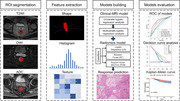 Figure 1
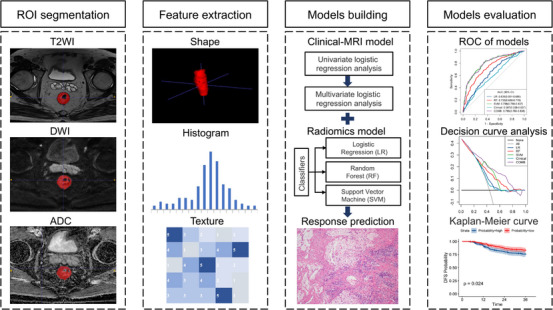 Figure 2
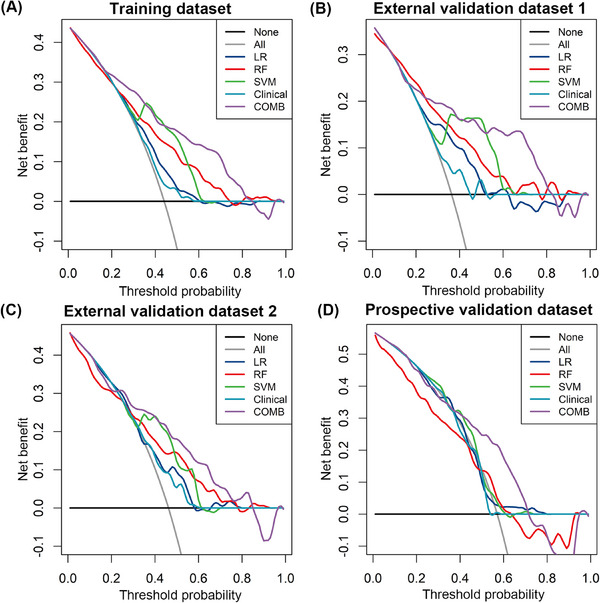 Figure 3
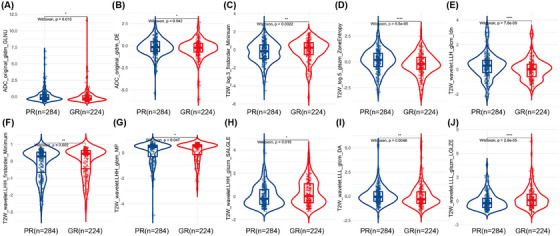 Figure 4
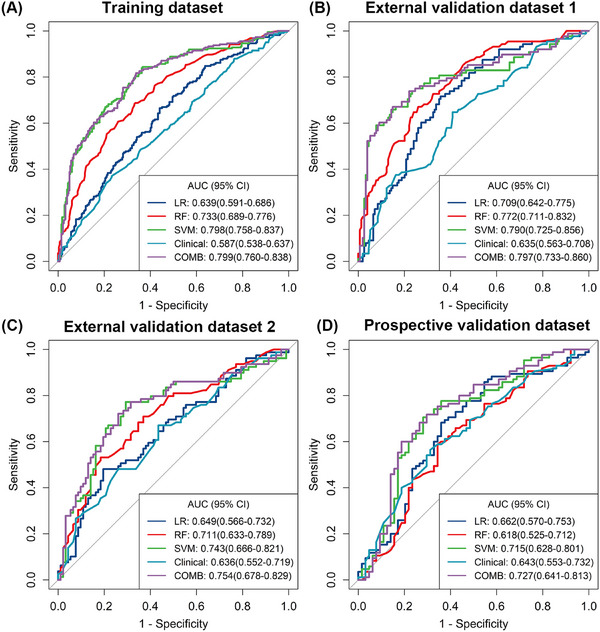 Figure 5
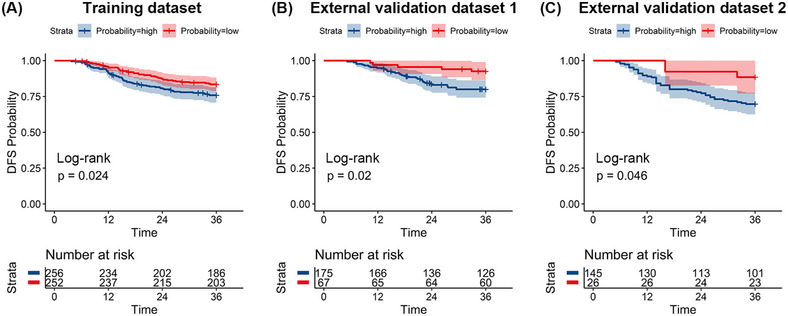 Figure 6
Peer Reviews
No public reviews on file for this paper yet. If you reviewed it on a platform where reviews are public (OpenReview, ICLR, NeurIPS, ICML), you can paste yours below so the community can read it here.
Videos
No videos yet. Explain this paper in a talk, walkthrough, or lecture? Add one.
Taxonomy
TopicsCardiovascular Effects of Exercise · Diabetic Foot Ulcer Assessment and Management · Muscle and Compartmental Disorders