Deletion of an immune evasion gene, steD, from a live Salmonella enterica serovar Typhimurium vaccine improves vaccine responses in aged mice
Jessica C. Allen, Shanaliz S. Natta, Shamima Nasrin, Franklin R. Toapanta, Sharon M. Tennant

TL;DR
Deleting the steD gene in a Salmonella vaccine improved immune responses in aged mice, suggesting a strategy to enhance vaccine effectiveness in older adults.
Contribution
Deleting the immune evasion gene steD improved vaccine immunogenicity in aged mice, offering a novel strategy for live attenuated vaccines.
Findings
steD mutants increased MHC-II levels and FliC-specific CD4+ T cells in aged mice.
CVD 1926 ΔsteD reduced bacterial counts in tissues after challenge compared to PBS.
CVD 1926 ΔsteD had higher seroconversion rates than CVD 1926 in aged mice.
Abstract
Non-typhoidal Salmonella (NTS) generally causes self-limiting gastroenteritis. However, older adults (≥65 years) can experience more severe outcomes from NTS infection. We have previously shown that a live attenuated S. Typhimurium vaccine, CVD 1926 (I77 ΔguaBA ΔclpP ΔpipA ΔhtrA), was immunogenic in adult but not aged mice. Here we describe modification of CVD 1926 through deletion of steD, a Salmonella effector responsible for host immune escape, which we hypothesized would increase immunogenicity in aged mice. Mel Juso and/or mutuDC cells were infected with S. Typhimurium I77, CVD 1926, and their respective steD mutants, and the MHC-II levels were evaluated. Aged (18-month-old) C57BL/6 mice received two doses of PBS, CVD 1926, or CVD 1926 ΔsteD perorally (109 CFU) and the number of FliC-specific CD4+ T cells were determined. Lastly, aged C57BL/6 mice received three doses of PBS, CVD…
Genes, proteins, chemicals, diseases, species, mutations and cell lines named across the full text — each resolved to its canonical identifier and authoritative record.
Click any figure to enlarge with its caption.
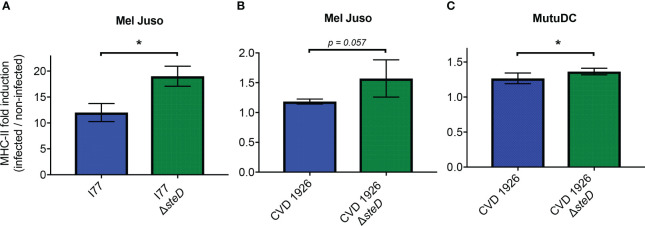 Figure 1
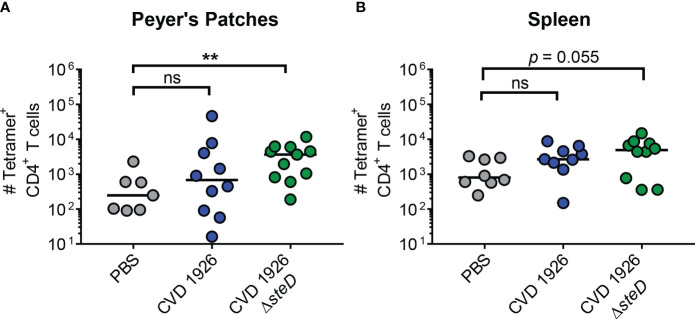 Figure 2
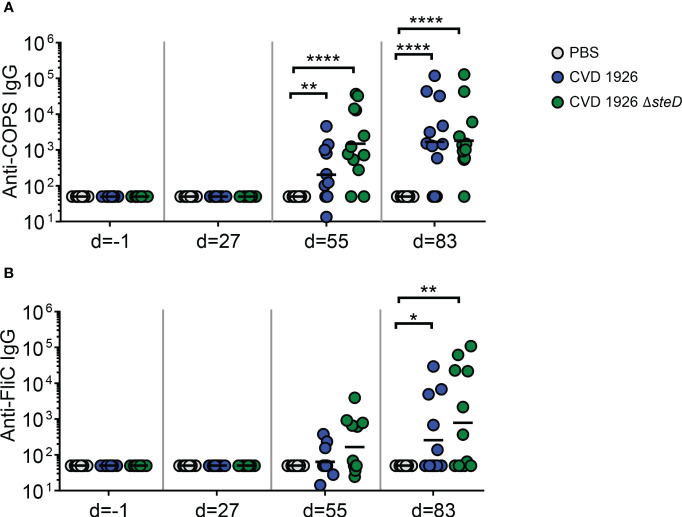 Figure 3
 Figure 4
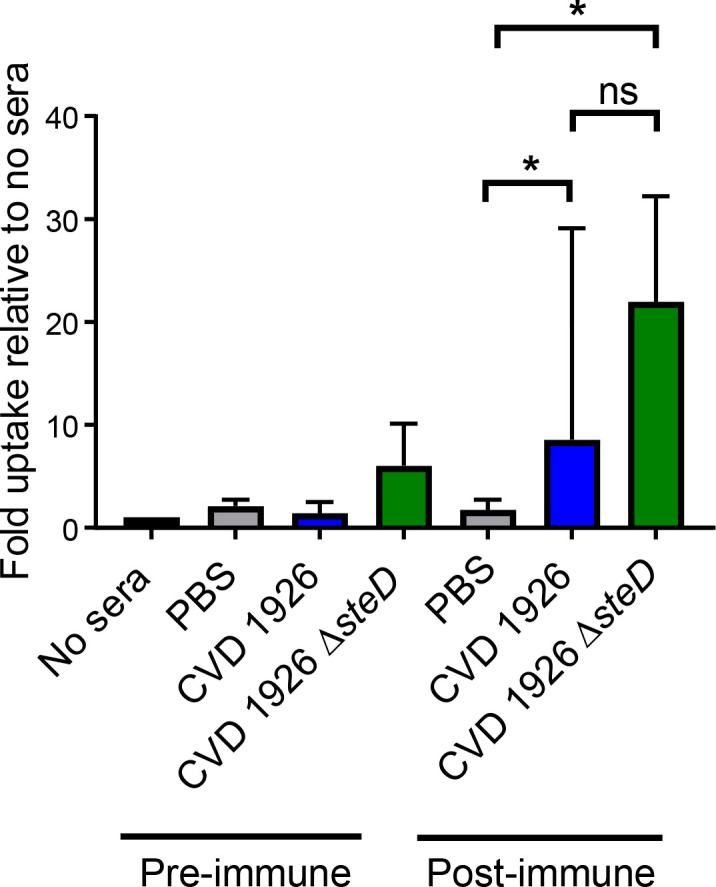 Figure 5
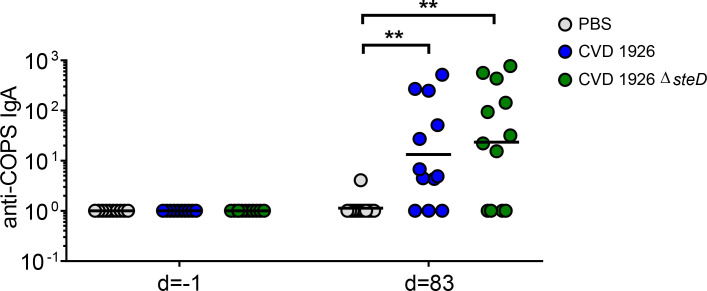 Figure 6
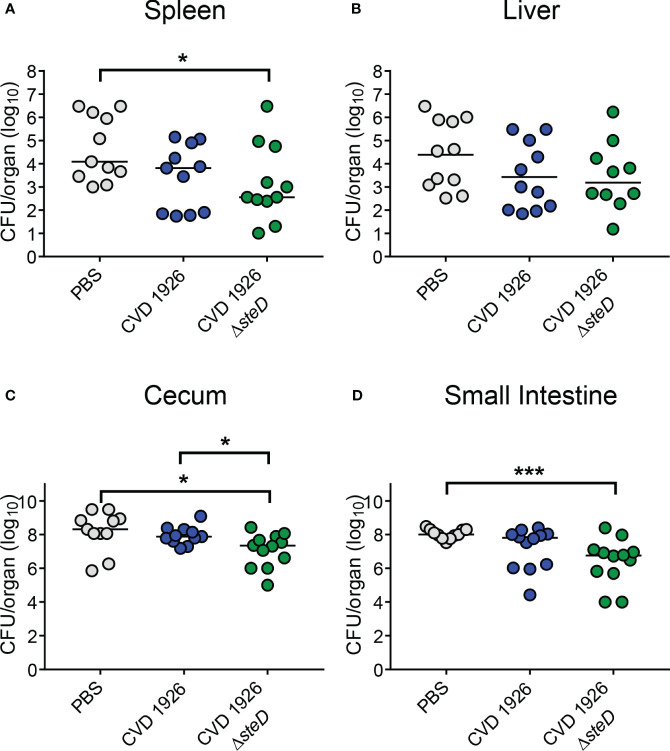 Figure 7
Peer Reviews
No public reviews on file for this paper yet. If you reviewed it on a platform where reviews are public (OpenReview, ICLR, NeurIPS, ICML), you can paste yours below so the community can read it here.
Videos
No videos yet. Explain this paper in a talk, walkthrough, or lecture? Add one.
Taxonomy
TopicsEscherichia coli research studies · Salmonella and Campylobacter epidemiology · Viral gastroenteritis research and epidemiology