Induced neural progenitor cells and iPS-neurons from major depressive disorder patients show altered bioenergetics and electrophysiological properties
Julian Triebelhorn, Iseline Cardon, Kerstin Kuffner, Stefanie Bader, Tatjana Jahner, Katrin Meindl, Tanja Rothhammer-Hampl, Markus J. Riemenschneider, Konstantin Drexler, Mark Berneburg, Caroline Nothdurfter, André Manook, Christoph Brochhausen, Thomas C. Baghai, Sven Hilbert

TL;DR
Cells from people with major depressive disorder show altered energy and electrical activity, suggesting these changes may contribute to the disorder's causes.
Contribution
The study shows that mitochondrial dysfunction and bioenergetic imbalances in MDD persist in reprogrammed cells and affect neuron function.
Findings
MDD-derived NPCs show lower maximal respiration rates and altered calcium levels.
MDD iPS-neurons have lower membrane capacitance and increased electrical activity.
Functional differences in MDD cells persist after reprogramming and may relate to disease etiology.
Abstract
The molecular pathomechanisms of major depressive disorder (MDD) are still not completely understood. Here, we follow the hypothesis, that mitochondria dysfunction which is inevitably associated with bioenergetic disbalance is a risk factor that contributes to the susceptibility of an individual to develop MDD. Thus, we investigated molecular mechanisms related to mitochondrial function in induced neuronal progenitor cells (NPCs) which were reprogrammed from fibroblasts of eight MDD patients and eight non-depressed controls. We found significantly lower maximal respiration rates, altered cytosolic basal calcium levels, and smaller soma size in NPCs derived from MDD patients. These findings are partially consistent with our earlier observations in MDD patient-derived fibroblasts. Furthermore, we differentiated MDD and control NPCs into iPS-neurons and analyzed their passive biophysical…
Genes, proteins, chemicals, diseases, species, mutations and cell lines named across the full text — each resolved to its canonical identifier and authoritative record.
Click any figure to enlarge with its caption.
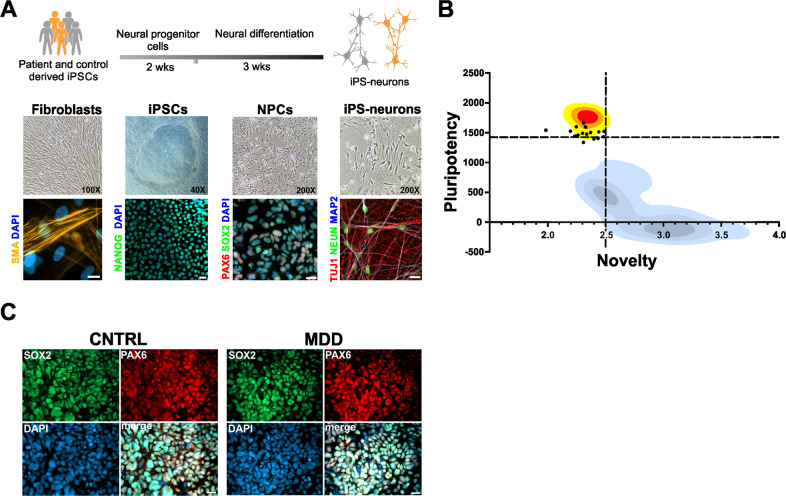 Figure 1
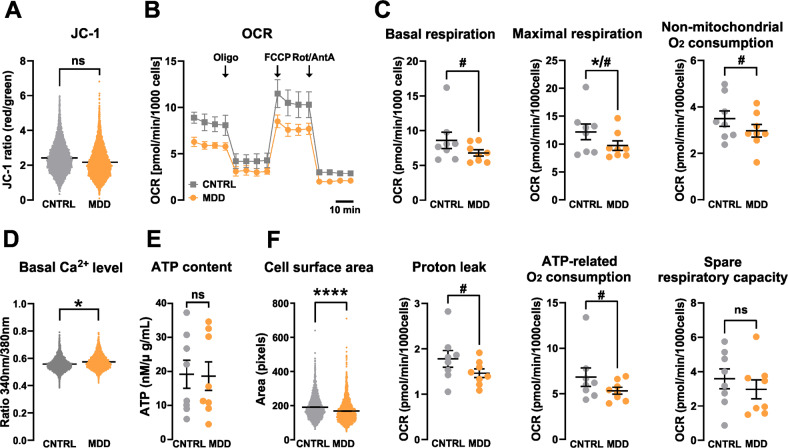 Figure 2
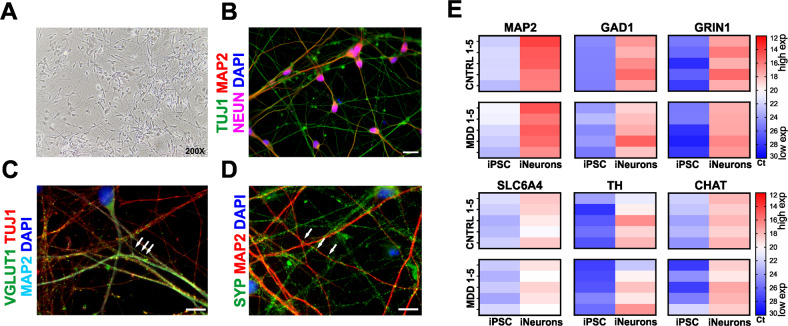 Figure 3
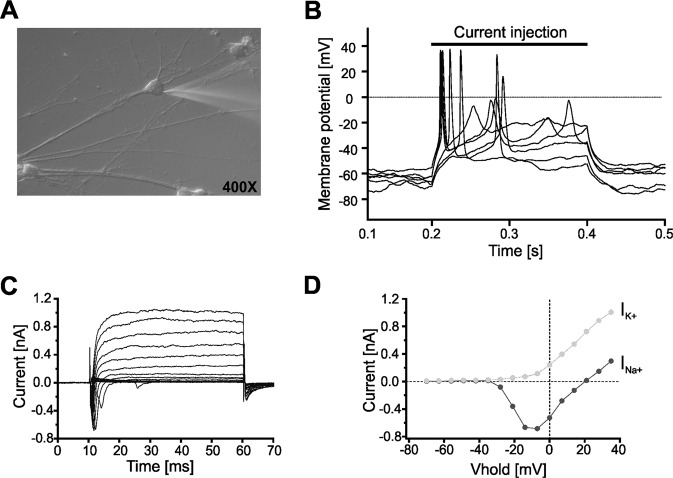 Figure 4
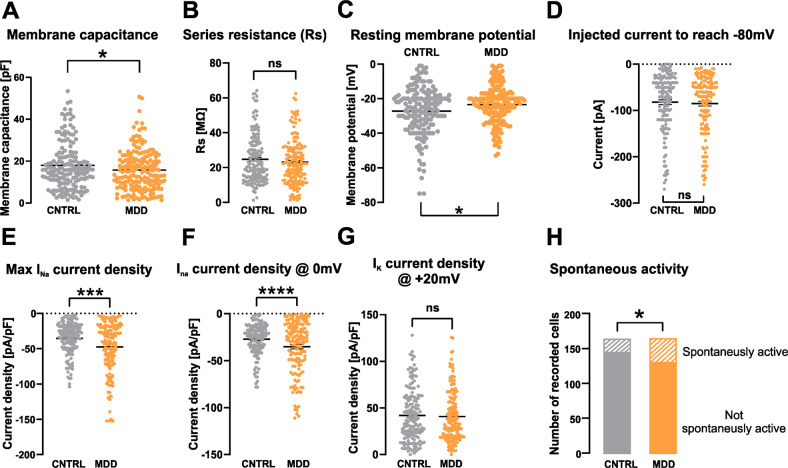 Figure 5
Peer Reviews
No public reviews on file for this paper yet. If you reviewed it on a platform where reviews are public (OpenReview, ICLR, NeurIPS, ICML), you can paste yours below so the community can read it here.
Videos
No videos yet. Explain this paper in a talk, walkthrough, or lecture? Add one.
Taxonomy
TopicsCultural and Mythological Studies · Literary and Cultural Studies