Integrate-and-fire-type models of the lateral superior olive
Go Ashida, Tiezhi Wang, Jutta Kretzberg

TL;DR
This paper compares six integrate-and-fire models of auditory brainstem neurons to determine which best captures their function in sound localization.
Contribution
The study systematically compares six LSO models with different subthreshold and spiking mechanisms to identify optimal modeling approaches.
Findings
Active models with potassium currents better capture temporal coding than passive models.
Spike generation mechanisms had minimal impact on model performance within active or passive groups.
Active integrate-and-fire models balance accuracy and computational cost for LSO simulations.
Abstract
Neurons of the lateral superior olive (LSO) in the auditory brainstem play a fundamental role in binaural sound localization. Previous theoretical studies developed various types of neuronal models to study the physiological functions of the LSO. These models were usually tuned to a small set of physiological data with specific aims in mind. Therefore, it is unclear whether and how they can be related to each other, how widely applicable they are, and which model is suitable for what purposes. In this study, we address these questions for six different single-compartment integrate-and-fire (IF) type LSO models. The models are divided into two groups depending on their subthreshold responses: passive (linear) models with only the leak conductance and active (nonlinear) models with an additional low-voltage-activated potassium conductance that is prevalent among the auditory system. Each…
Click any figure to enlarge with its caption.
 Figure 1
 Figure 2
 Figure 3
 Figure 4
 Figure 5
 Figure 6
 Figure 7
 Figure 8
 Figure 9
 Figure 10
 Figure 11
 Figure 12
 Figure 13
 Figure 14
 Figure 15
 Figure 16
 Figure 17
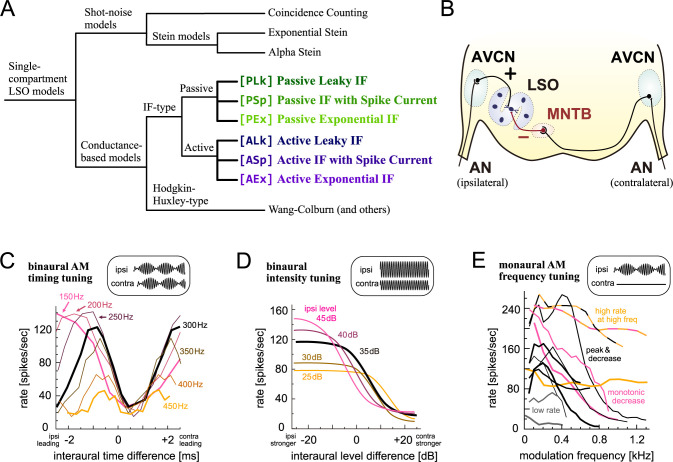 Figure 18
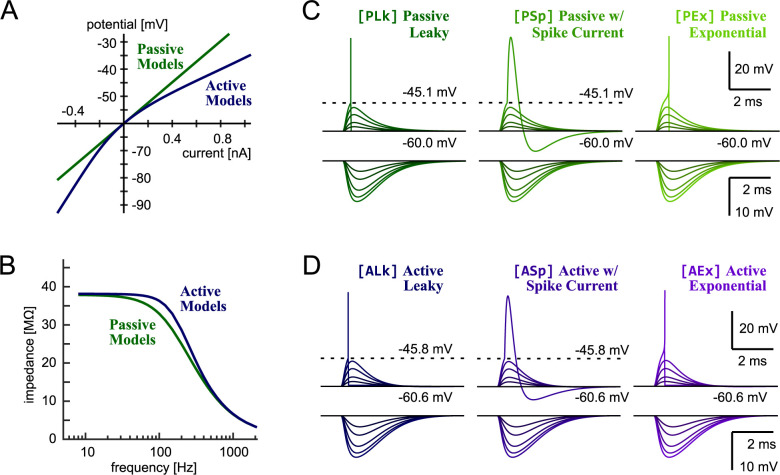 Figure 19
 Figure 20
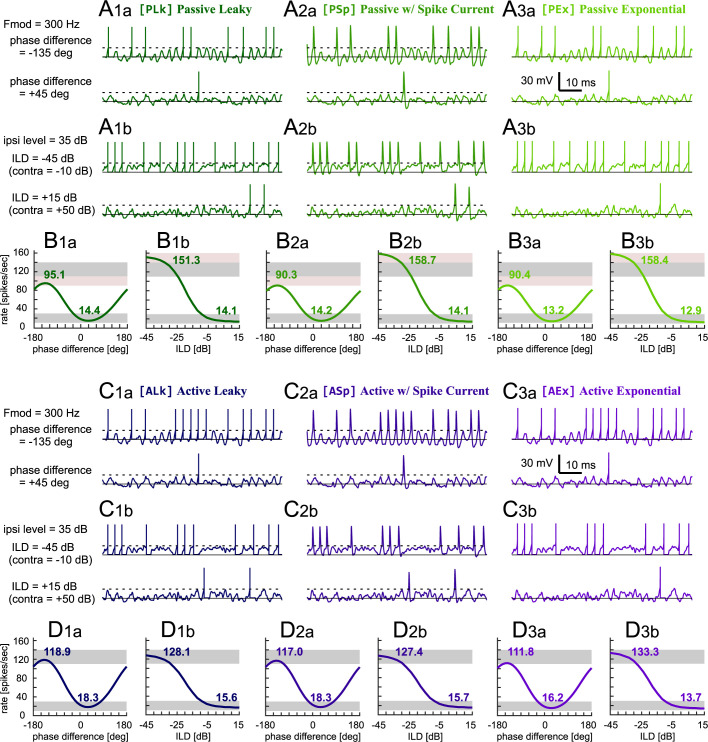 Figure 21
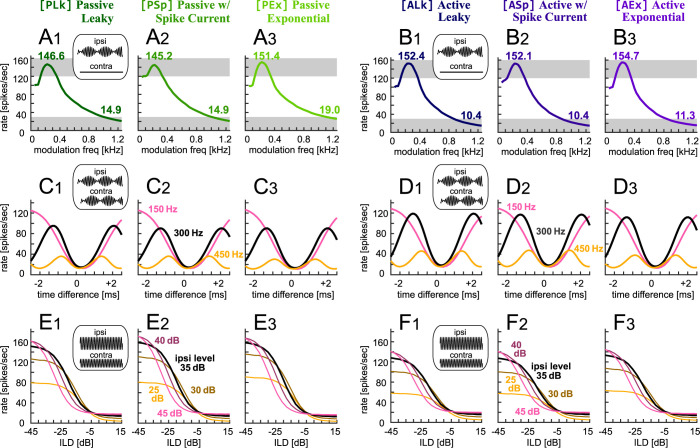 Figure 22
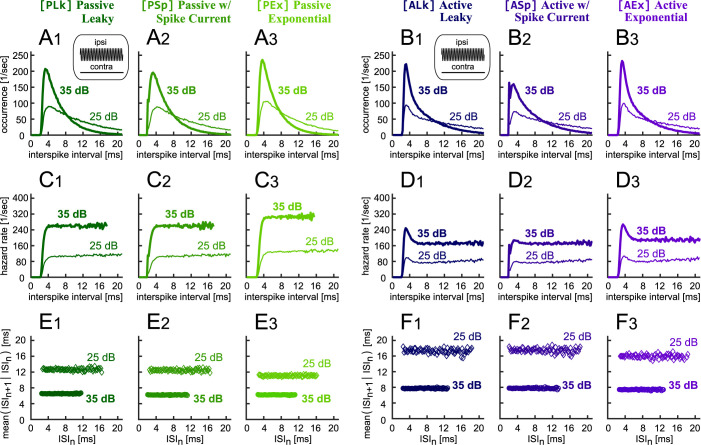 Figure 23
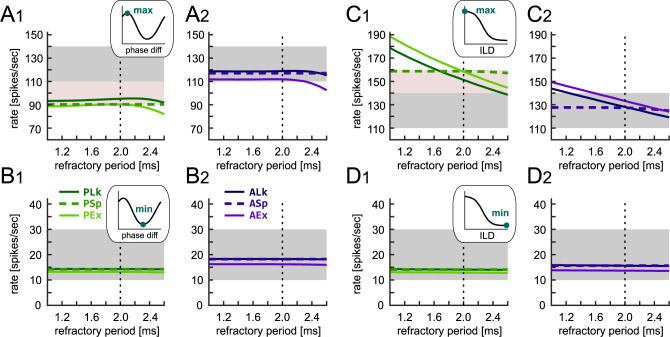 Figure 24
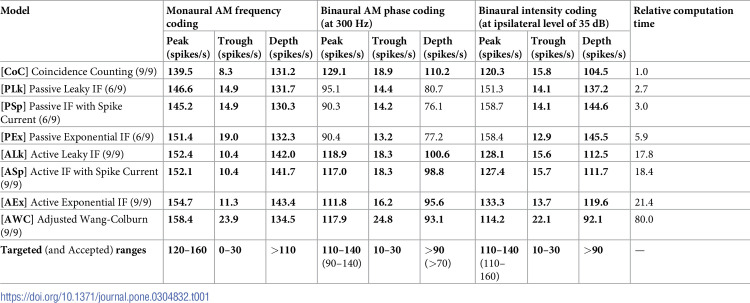 Figure 25
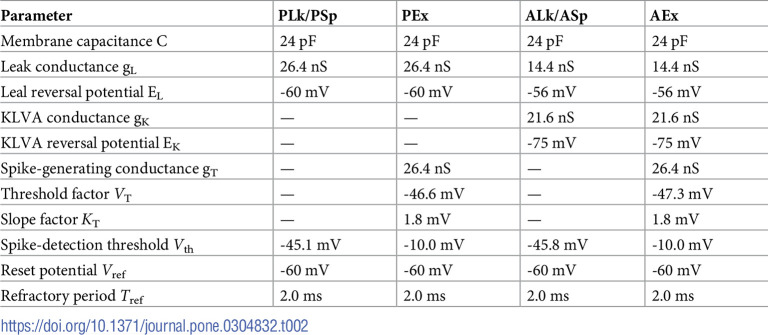 Figure 26
Peer Reviews
No public reviews on file for this paper yet. If you reviewed it on a platform where reviews are public (OpenReview, ICLR, NeurIPS, ICML), you can paste yours below so the community can read it here.
Videos
No videos yet. Explain this paper in a talk, walkthrough, or lecture? Add one.
Taxonomy
TopicsHearing Loss and Rehabilitation · Hearing, Cochlea, Tinnitus, Genetics · Neural dynamics and brain function