Insecticides, more than herbicides, land use, and climate, are associated with declines in butterfly species richness and abundance in the American Midwest
Braeden Van Deynze, Scott M. Swinton, David A. Hennessy, Nick M. Haddad, Leslie Ries, Travis Longcore, Travis Longcore, Travis Longcore

TL;DR
Butterfly populations in the American Midwest are declining most strongly due to insecticides, especially neonicotinoids, according to a large-scale study.
Contribution
This study provides the first comprehensive evaluation of how insecticides, herbicides, land use, and climate affect butterfly declines.
Findings
Butterfly abundance and species richness declined most strongly with insecticide use.
Neonicotinoid-treated seeds were particularly linked to species richness declines.
The migratory monarch butterfly's decline is strongly associated with these pesticide effects.
Abstract
Mounting evidence shows overall insect abundances are in decline globally. Habitat loss, climate change, and pesticides have all been implicated, but their relative effects have never been evaluated in a comprehensive large-scale study. We harmonized 17 years of land use, climate, multiple classes of pesticides, and butterfly survey data across 81 counties in five states in the US Midwest. We find community-wide declines in total butterfly abundance and species richness to be most strongly associated with insecticides in general, and for butterfly species richness the use of neonicotinoid-treated seeds in particular. This included the abundance of the migratory monarch (Danaus plexippus), whose decline is the focus of intensive debate and public concern. Insect declines cannot be understood without comprehensive data on all putative drivers, and the 2015 cessation of neonicotinoid data…
Genes, proteins, chemicals, diseases, species, mutations and cell lines named across the full text — each resolved to its canonical identifier and authoritative record.
Click any figure to enlarge with its caption.
 Figure 1
 Figure 2
 Figure 3
 Figure 4
 Figure 5
 Figure 6
 Figure 7
 Figure 8
 Figure 9
 Figure 10
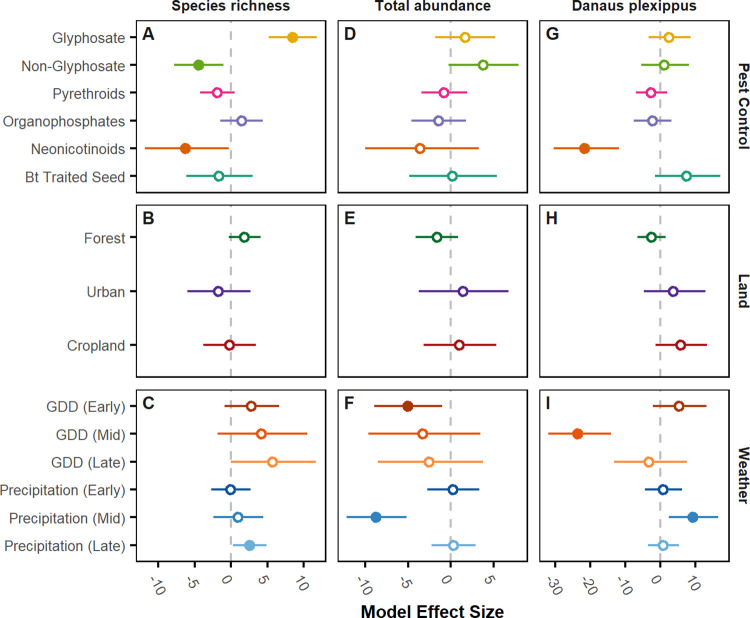 Figure 11
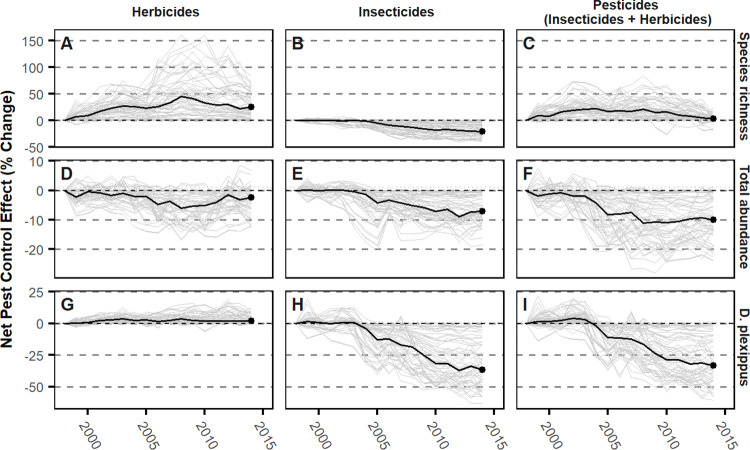 Figure 12
Peer Reviews
No public reviews on file for this paper yet. If you reviewed it on a platform where reviews are public (OpenReview, ICLR, NeurIPS, ICML), you can paste yours below so the community can read it here.
Videos
No videos yet. Explain this paper in a talk, walkthrough, or lecture? Add one.
Taxonomy
TopicsInsect and Pesticide Research · Insect Pheromone Research and Control · Plant and animal studies