Global Aphasia Secondary to Bilateral Thalamic Hyperintensities Post-cardiac Arrest
Kyle N Kaneko, Justin L Hoskin

TL;DR
A rare case of global aphasia caused by bilateral thalamic damage following cardiac arrest is presented, highlighting its unusual severity and limited recovery.
Contribution
This paper reports a rare case of global aphasia following bilateral thalamic injury post-cardiac arrest.
Findings
Global aphasia can result from bilateral thalamic damage post-cardiac arrest.
Global thalamic aphasia has a more guarded prognosis with limited recovery months after injury.
Abstract
Thalamic aphasia is thought to occur secondary to disruptions in the cortico-subcortical connections. Although rare, thalamic aphasia is a well-known phenomenon that usually presents with primarily lexical-semantic deficits with preservation of comprehension and repetition. Global aphasia secondary to thalamic injury is extremely rare, with only a few case reports of patients with left thalamic hemorrhages. The prognosis for thalamic aphasia is generally good, with most patients showing little to no symptoms after days or weeks. However, global thalamic aphasia carries a more guarded prognosis with limited recovery months after injury. Here, we report a case of global thalamic aphasia secondary to bilateral thalamic damage post-cardiac arrest.
Genes, proteins, chemicals, diseases, species, mutations and cell lines named across the full text — each resolved to its canonical identifier and authoritative record.
Click any figure to enlarge with its caption.
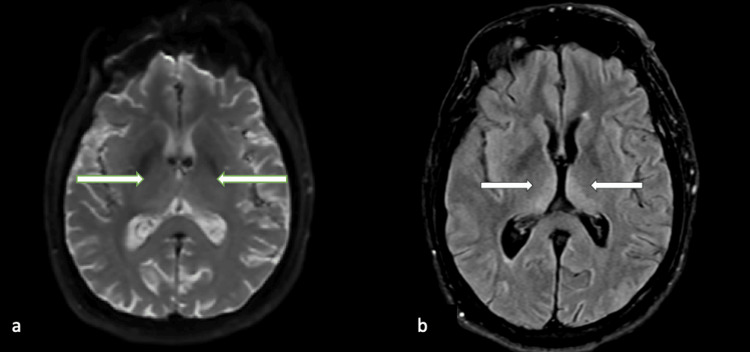 Figure 1
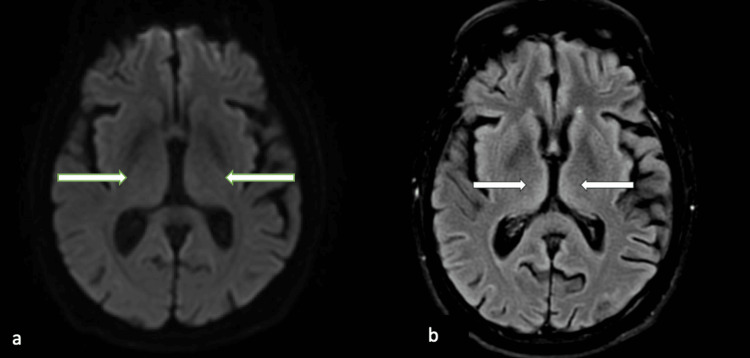 Figure 2
Peer Reviews
No public reviews on file for this paper yet. If you reviewed it on a platform where reviews are public (OpenReview, ICLR, NeurIPS, ICML), you can paste yours below so the community can read it here.
Videos
No videos yet. Explain this paper in a talk, walkthrough, or lecture? Add one.
Taxonomy
TopicsEpilepsy research and treatment · Acute Ischemic Stroke Management · Traumatic Brain Injury and Neurovascular Disturbances