Human parasitic infections of the class Adenophorea: global epidemiology, pathogenesis, prevention and control
Jitrawadee Intirach, Chang Shu, Xin Lv, Suzhen Gao, Nataya Sutthanont, Tao Chen, Zhiyue Lv

TL;DR
This review summarizes human parasitic infections caused by Adenophorean nematodes, their global impact, and strategies for prevention and control.
Contribution
The paper provides a comprehensive overview of the morphology, life cycle, and epidemiology of Adenophorean nematode infections in humans.
Findings
Adenophorean nematodes cause diseases like trichuriasis and trichinellosis, affecting multiple organs and causing severe health issues.
Humans can be both definitive and accidental hosts, with infections often linked to consumption of undercooked meat or contaminated food.
Prevention strategies include education, sanitation, and animal control to reduce parasite transmission in tropical and subtropical regions.
Abstract
Human parasitic infections caused by Adenophorean nematodes encompass a range of diseases, including dioctophymiasis, trichuriasis, capillariasis, trichinellosis, and myositis. These infection can result in adverse impacts on human health and cause societal and economic concerns in tropical and subtropical regions. This review conducted searches in PubMed, Embase and Google Scholar for relevant studies that published in established databases up to April 26, 2024. Studies that focused on the common morphology, life cycle, disease distribution, clinical manifestations, and prevention and control strategies for Adenophorean parasitic diseases in humans were included. Adenophorean nematodes exhibit shared morphological characteristics with a four-layered cuticle; uninucleate epidermal cells; pseudocoelom with six or more coelomocytes; generally three caudal glands; five esophageal glands;…
Genes, proteins, chemicals, diseases, species, mutations and cell lines named across the full text — each resolved to its canonical identifier and authoritative record.
Click any figure to enlarge with its caption.
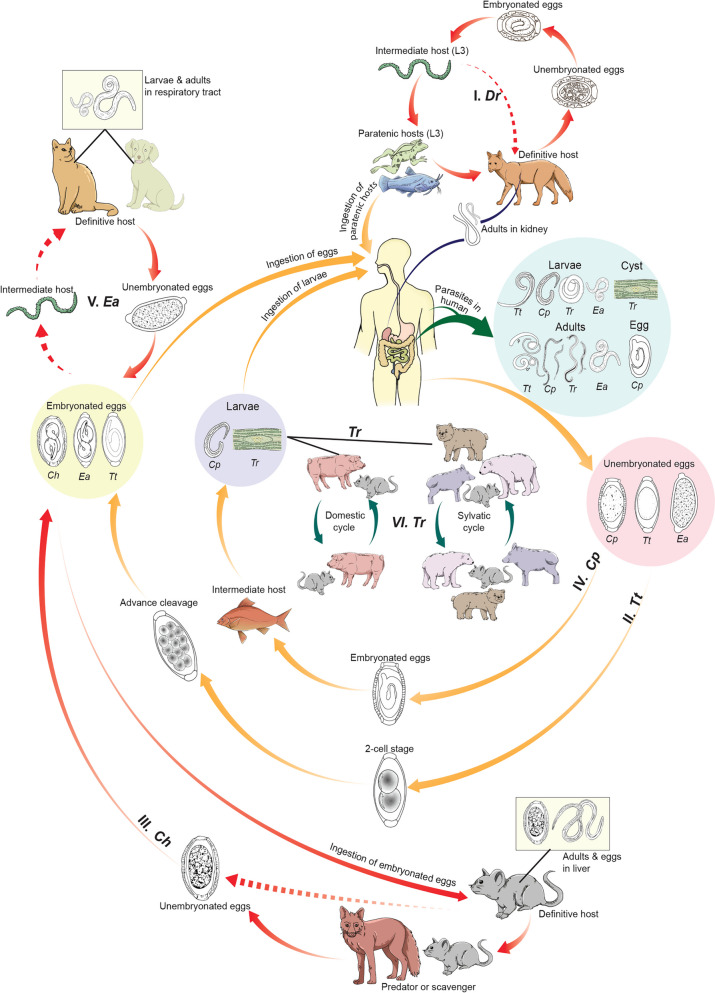 Figure 1
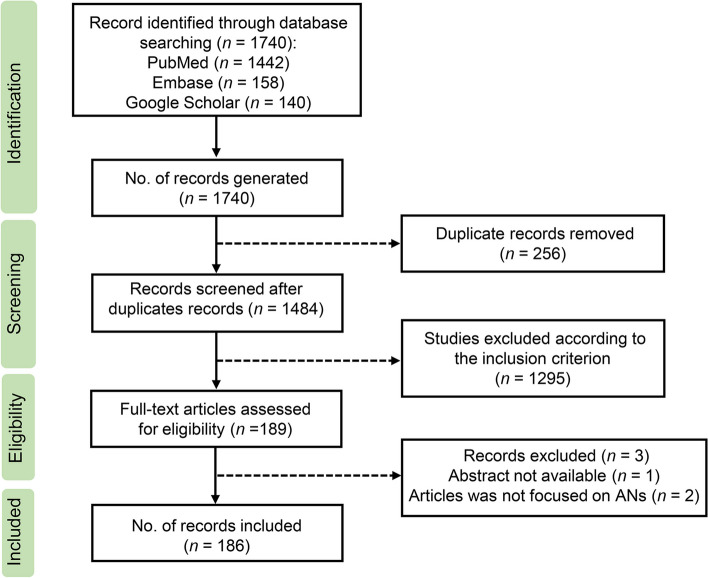 Figure 2
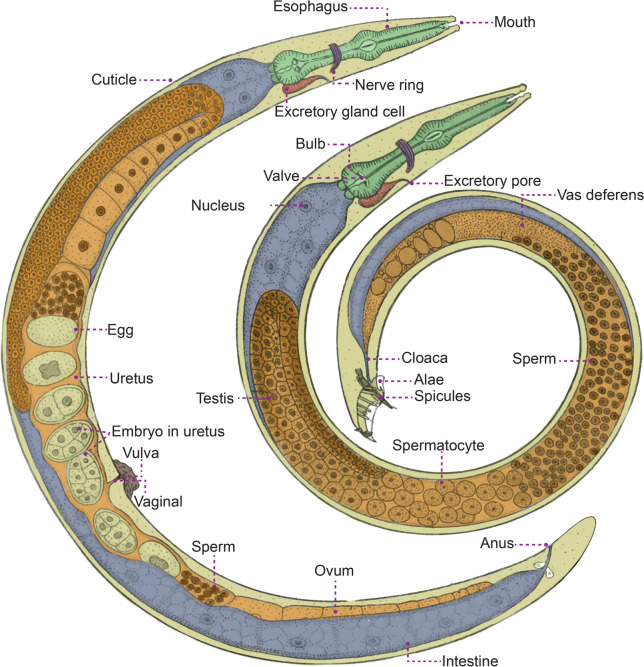 Figure 3
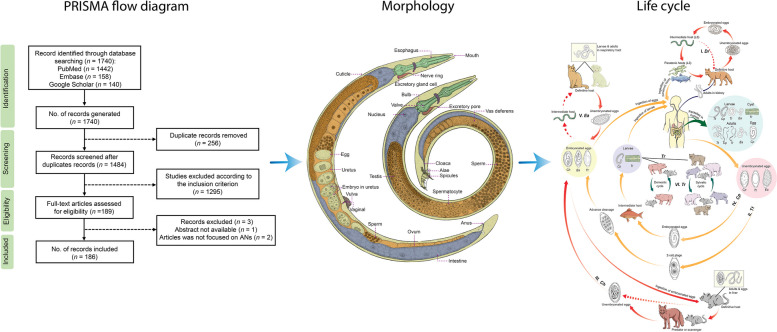 Figure 4
Peer Reviews
No public reviews on file for this paper yet. If you reviewed it on a platform where reviews are public (OpenReview, ICLR, NeurIPS, ICML), you can paste yours below so the community can read it here.
Videos
No videos yet. Explain this paper in a talk, walkthrough, or lecture? Add one.
Taxonomy
TopicsParasite Biology and Host Interactions · Helminth infection and control · Parasites and Host Interactions