Risk factors for subsequent suicidal acts among 12–25-year-old high-risk callers to a suicide prevention hotline in China: a longitudinal study
Jianlan Wu, Ruoyun Zhang, Liting Zhao, Yi Yin, Jing Min, Yiming Ge, Yang Luo, Peiyao Li, Lingling Li, Yongsheng Tong

TL;DR
This study identifies risk factors for future suicide attempts among high-risk young callers to a Chinese suicide hotline and finds that low hopefulness and substance misuse increase risk, while improved psychological distress reduces it.
Contribution
This is the first longitudinal study to examine risk factors for subsequent suicidal acts among high-risk youth suicide hotline callers in China.
Findings
Low hopefulness at the start of a call was linked to a higher risk of future suicide attempts.
Improvements in psychological distress and suicide intent during the call reduced the risk of future suicidal acts.
Alcohol or substance misuse and a history of suicide attempts were significant risk factors for subsequent suicidal acts.
Abstract
A few previous cross-sectional studies investigated correlated factors of suicidal ideation or suicide attempts among suicide prevention hotline callers; however, scarcely any evidence was from a longitudinal study. In addition, it is still unclear whether improvements in some suicide risk factors could reduce the occurrence of subsequent suicidal acts. This longitudinal study focusing on the risk factors for subsequent suicidal acts among adolescent and young adult callers with high suicide risk aims to fill this gap. This study recruited 12–25-year-old high-risk callers to a China nationwide suicide prevention hotline. Potential risk factors, including hopefulness, psychological distress, depression, history of suicide attempts, alcohol or substance misuse, and acute life events, were examined during the index calls, and improvements in hopefulness, psychological distress, and…
Genes, proteins, chemicals, diseases, species, mutations and cell lines named across the full text — each resolved to its canonical identifier and authoritative record.
Click any figure to enlarge with its caption.
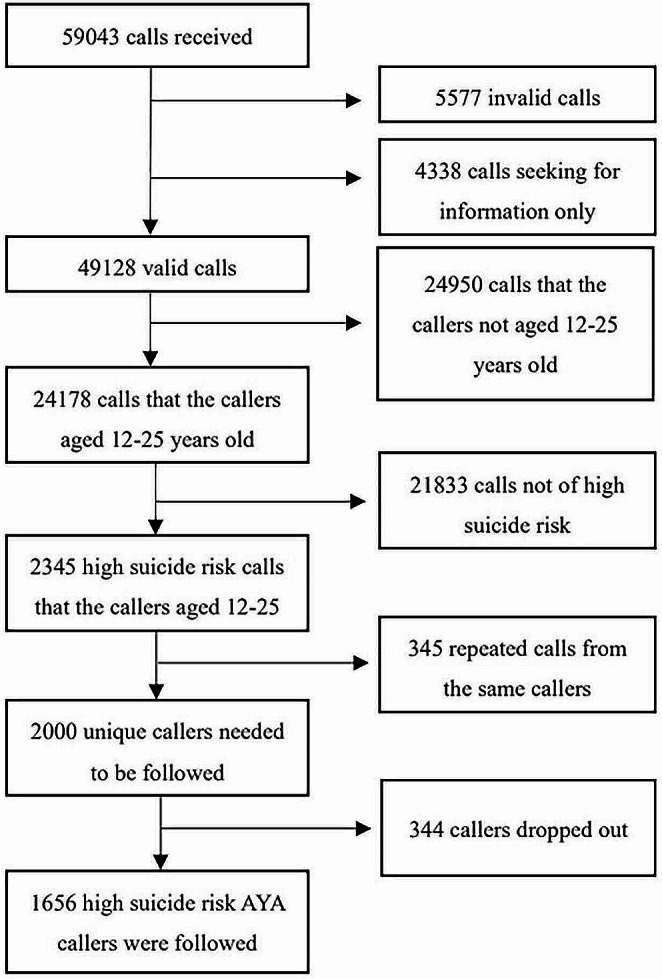 Figure 1
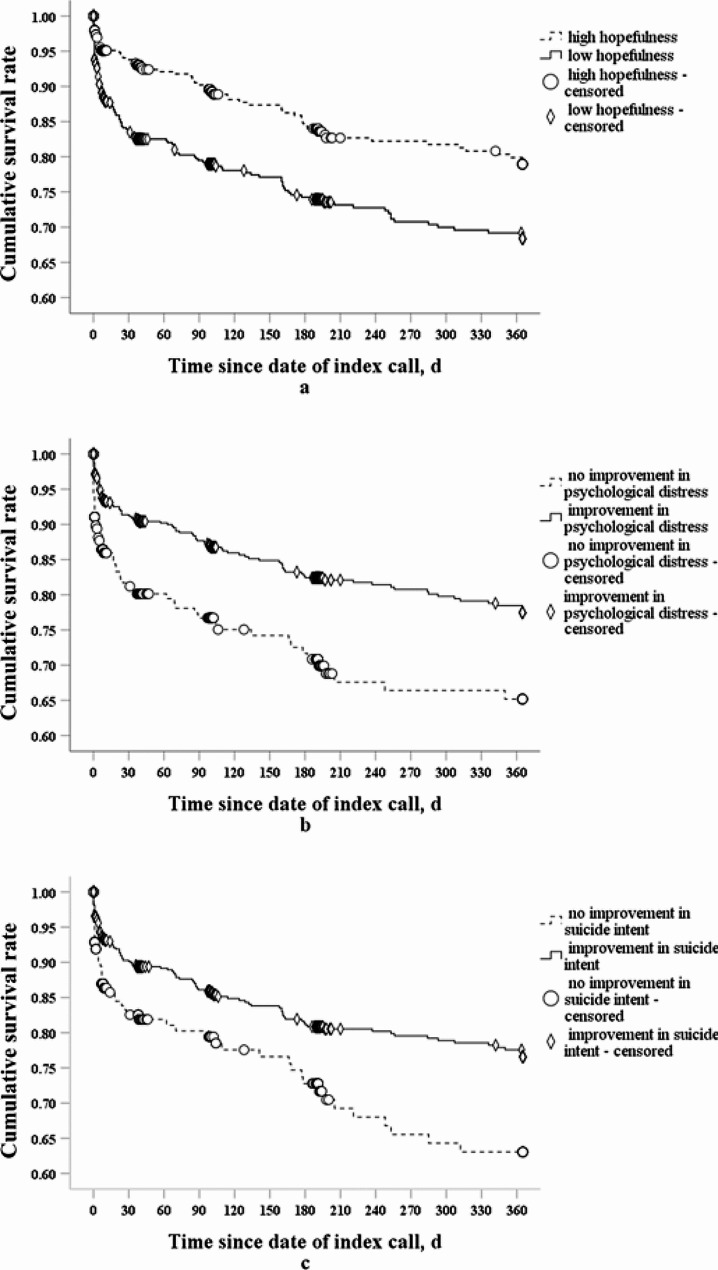 Figure 2
Peer Reviews
No public reviews on file for this paper yet. If you reviewed it on a platform where reviews are public (OpenReview, ICLR, NeurIPS, ICML), you can paste yours below so the community can read it here.
Videos
No videos yet. Explain this paper in a talk, walkthrough, or lecture? Add one.
Taxonomy
TopicsSuicide and Self-Harm Studies · Child and Adolescent Psychosocial and Emotional Development · Mental Health Treatment and Access