Inhibition of differentiation of monocyte-derived macrophages toward an M2-Like phenotype May Be a neglected mechanism of β-AR receptor blocker therapy for atherosclerosis
Shouyi Liu, Bo Zhang, Jingqun Zhou, Jianfeng Lv, Jinxia Zhang, Xiangyan Li, Weihua Yang, Yuanlin Guo

TL;DR
This paper suggests that beta-blockers may help treat atherosclerosis by preventing macrophages from becoming M2-like, which could reduce plaque formation.
Contribution
The paper proposes a novel mechanism for beta-blockers' efficacy in atherosclerosis by linking them to inhibition of M2 macrophage differentiation.
Findings
Beta-AR blockers may stabilize atherosclerotic plaques by inhibiting M2-like macrophage differentiation.
Lipid-induced macrophage polarization plays a role in atherosclerosis progression.
Current evidence supports the use of beta-blockers for treating atherosclerosis.
Abstract
The clinical efficacy of adrenergic β-receptor (β-AR) blockers in significantly stabilizing atherosclerotic plaques has been extensively supported by evidence-based medical research; however, the underlying mechanism remains unclear. Recent findings have highlighted the impact of lipid-induced aberrant polarization of macrophages during normal inflammatory-repair and regenerative processes on atherosclerosis formation and progression. In this review, we explore the relationship between macrophage polarization and atherosclerosis, as well as the influence of β-AR blockers on macrophage polarization. Based on the robust evidence supporting the use of β-AR blockers for treating atherosclerosis, we propose that their main mechanism involves inhibiting monocyte-derived macrophage differentiation towards an M2-like phenotype.
Genes, proteins, chemicals, diseases, species, mutations and cell lines named across the full text — each resolved to its canonical identifier and authoritative record.
Click any figure to enlarge with its caption.
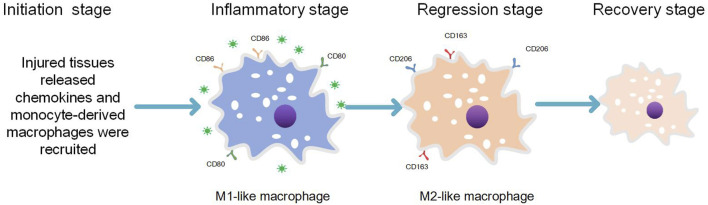 Figure 1
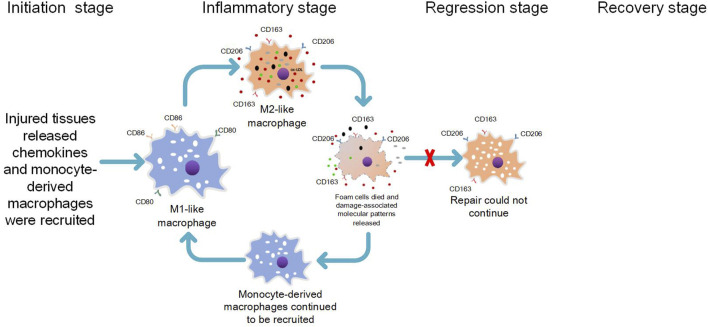 Figure 2
Peer Reviews
No public reviews on file for this paper yet. If you reviewed it on a platform where reviews are public (OpenReview, ICLR, NeurIPS, ICML), you can paste yours below so the community can read it here.
Videos
No videos yet. Explain this paper in a talk, walkthrough, or lecture? Add one.
Taxonomy
TopicsImmune cells in cancer · Tryptophan and brain disorders · Receptor Mechanisms and Signaling