iGenSig-Rx: an integral genomic signature based white-box tool for modeling cancer therapeutic responses using multi-omics data
Sanghoon Lee, Min Sun, Yiheng Hu, Yue Wang, Md N. Islam, David Goerlitz, Peter C. Lucas, Adrian V. Lee, Sandra M. Swain, Gong Tang, Xiao-Song Wang

TL;DR
iGenSig-Rx is a transparent tool that uses multi-omics data to predict cancer treatment responses and helps personalize patient care.
Contribution
iGenSig-Rx introduces a novel, interpretable method for modeling therapeutic responses using redundant genomic features and adaptive penalization.
Findings
iGenSig-Rx shows consistent predictive power across four independent HER2-targeted therapy clinical trials.
The method provides transparency by explaining how features contribute to predictions and identifies key pathways.
An R package was developed to implement the method for clinical trial datasets.
Abstract
Multi-omics sequencing is poised to revolutionize clinical care in the coming decade. However, there is a lack of effective and interpretable genome-wide modeling methods for the rational selection of patients for personalized interventions. To address this, we present iGenSig-Rx, an integral genomic signature-based approach, as a transparent tool for modeling therapeutic response using clinical trial datasets. This method adeptly addresses challenges related to cross-dataset modeling by capitalizing on high-dimensional redundant genomic features, analogous to reinforcing building pillars with redundant steel rods. Moreover, it integrates adaptive penalization of feature redundancy on a per-sample basis to prevent score flattening and mitigate overfitting. We then developed a purpose-built R package to implement this method for modeling clinical trial datasets. When applied to genomic…
Genes, proteins, chemicals, diseases, species, mutations and cell lines named across the full text — each resolved to its canonical identifier and authoritative record.
Click any figure to enlarge with its caption.
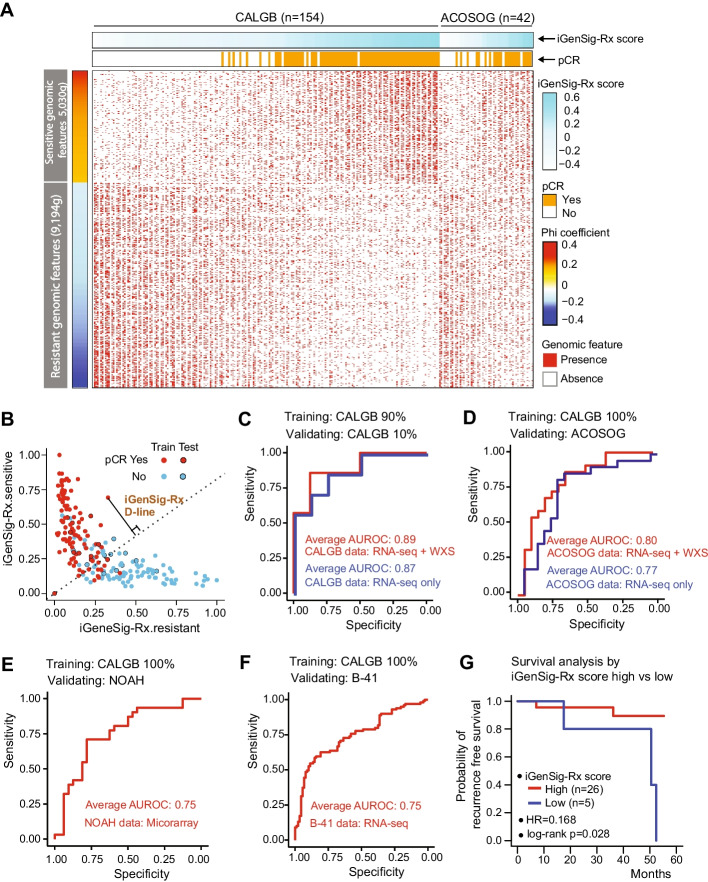 Figure 1
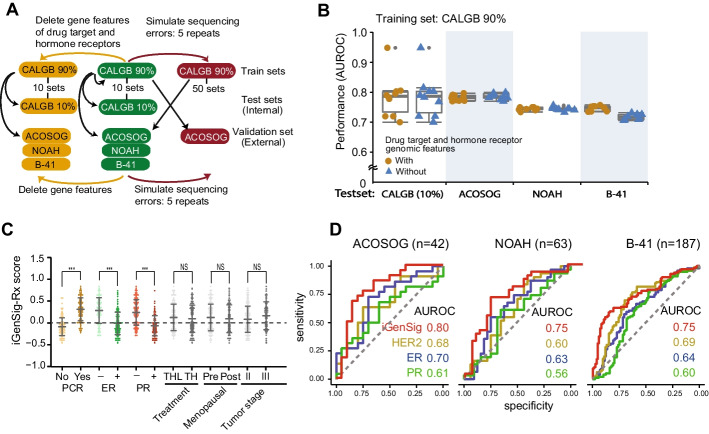 Figure 2
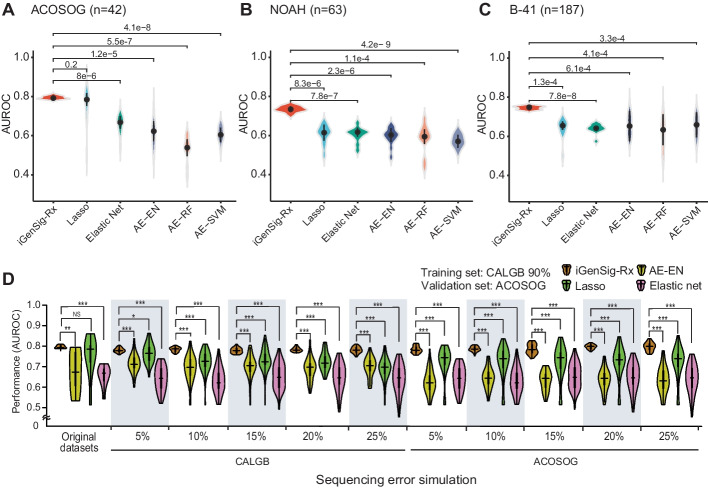 Figure 3
 Figure 4
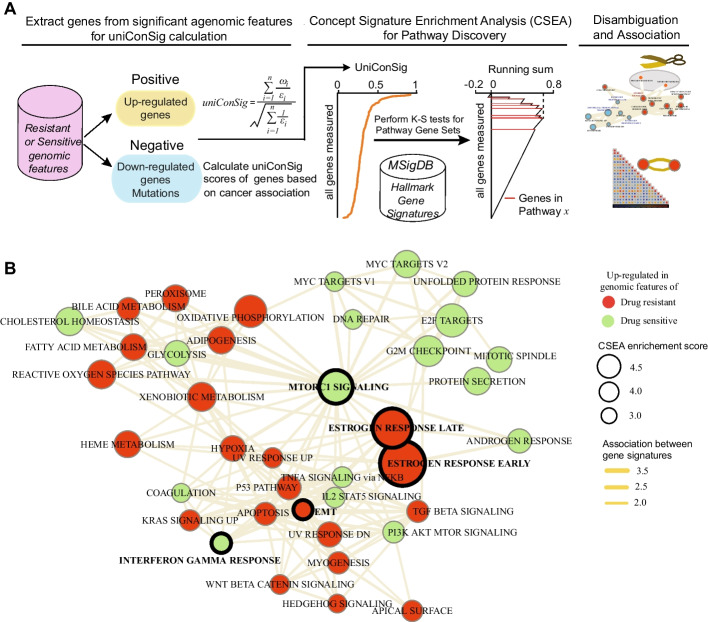 Figure 5
Peer Reviews
No public reviews on file for this paper yet. If you reviewed it on a platform where reviews are public (OpenReview, ICLR, NeurIPS, ICML), you can paste yours below so the community can read it here.
Videos
No videos yet. Explain this paper in a talk, walkthrough, or lecture? Add one.
Taxonomy
TopicsGene expression and cancer classification · Cancer Genomics and Diagnostics · Bioinformatics and Genomic Networks