Evaluation of agreement between a noninvasive method for real-time measurement of critical blood values with a standard point-of-care device
Rudi H. Ettrich, Joshua Caballero, Prashant Sakharkar, Sultan Ahmed, Traci Hurlston, Jayesh Parmar, Subrata Deb

TL;DR
This study compares a non-invasive blood measurement method with a standard invasive device, finding moderate agreement for some blood values but highlighting the need for further validation.
Contribution
The study introduces and evaluates a non-invasive method for measuring critical blood values against a standard point-of-care device.
Findings
The DBC method showed moderate agreement with i-STAT for some blood values like Hb, pCO2, and TCO2.
Systematic differences were observed in measurements of Hb, K, and Na between the DBC and i-STAT methods.
The non-invasive DBC method was found reliable for most measured blood values in healthy participants.
Abstract
The purpose of this work was to investigate the degree of agreement between two distinct approaches for measuring a set of blood values and to compare comfort levels reported by participants when utilizing these two disparate measurement methods. Radial arterial blood was collected for the comparator analysis using the Abbott i-STAT® POCT device. In contrast, the non-invasive proprietary DBC methodology is used to calculate sodium, potassium, chloride, ionized calcium, total carbon dioxide, pH, bicarbonate, and oxygen saturation using four input parameters (temperature, hemoglobin, pO2, and pCO2). Agreement between the measurement for a set of blood values obtained using i-STAT and DBC methodology was compared using intraclass correlation coefficients, Passing and Bablok regression analyses, and Bland Altman plots. A p-value of <0.05 was considered statistically significant. A total of…
Genes, proteins, chemicals, diseases, species, mutations and cell lines named across the full text — each resolved to its canonical identifier and authoritative record.
Click any figure to enlarge with its caption.
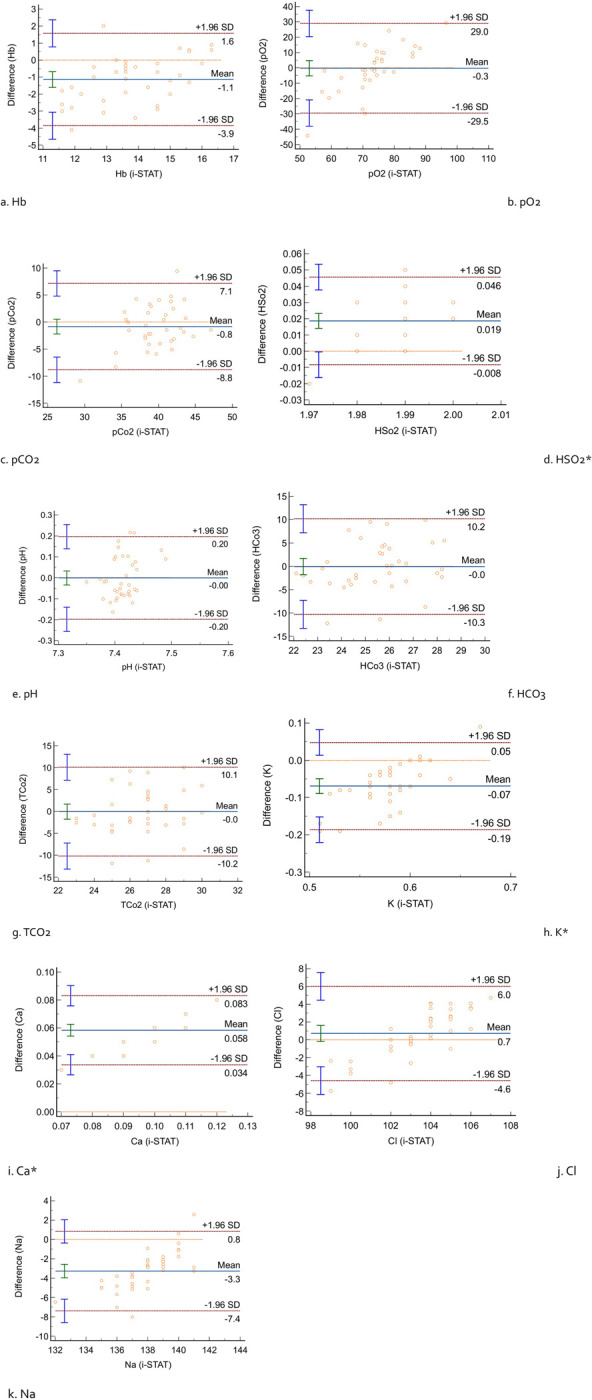 Figure 1
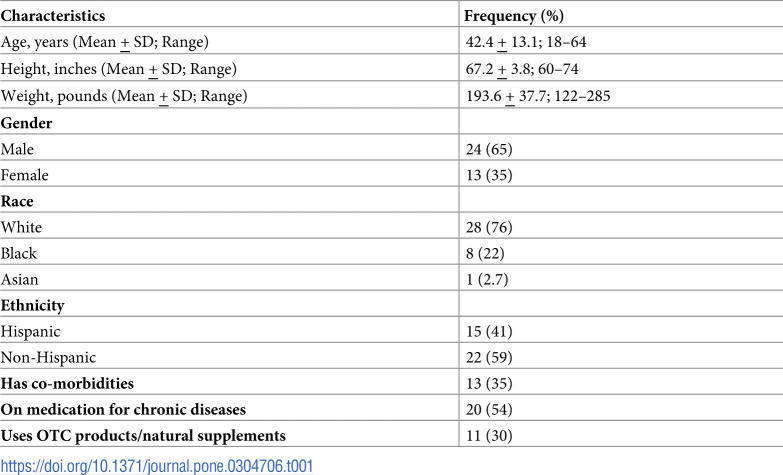 Figure 2
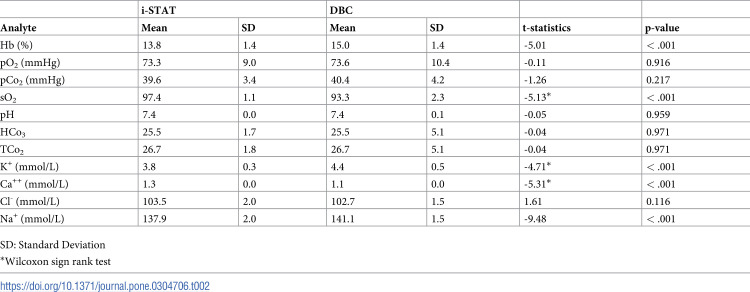 Figure 3
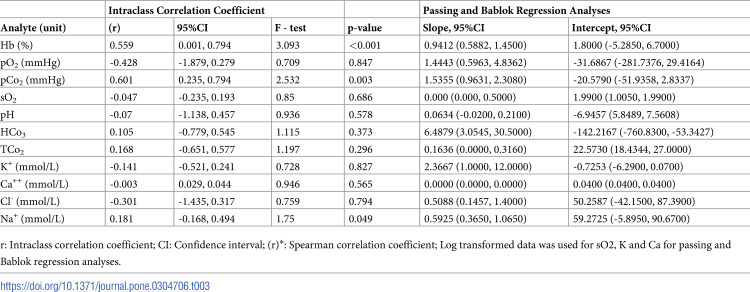 Figure 4
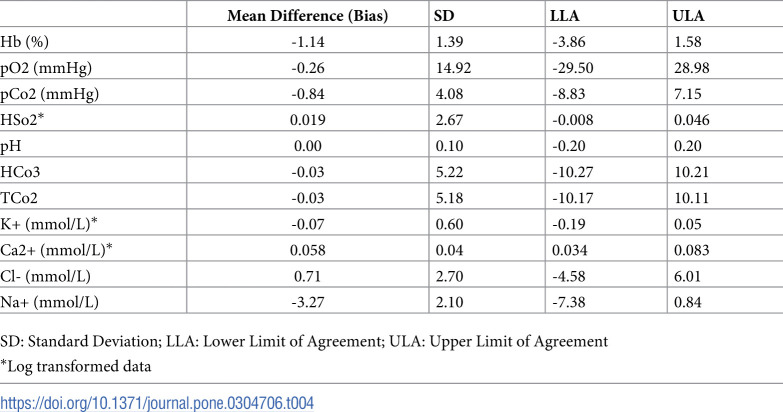 Figure 5
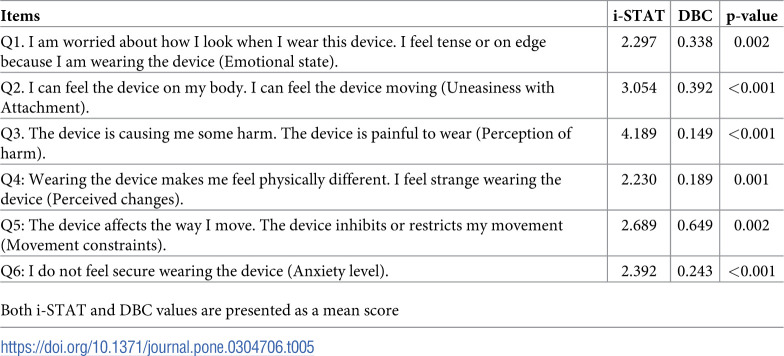 Figure 6
Peer Reviews
No public reviews on file for this paper yet. If you reviewed it on a platform where reviews are public (OpenReview, ICLR, NeurIPS, ICML), you can paste yours below so the community can read it here.
Videos
No videos yet. Explain this paper in a talk, walkthrough, or lecture? Add one.
Taxonomy
TopicsRenal function and acid-base balance · Hemodynamic Monitoring and Therapy · Clinical Laboratory Practices and Quality Control