Dependency-aware action planning for smart home
Jongjin Kim, Jaeri Lee, Jeongin Yun, U. Kang, Praveen Kumar Donta, Praveen Kumar Donta, Praveen Kumar Donta

TL;DR
This paper introduces SmartAid, a method for smart homes to plan actions based on user requests while considering dependencies between devices and their capabilities.
Contribution
SmartAid introduces a novel action planning method that considers dependencies in smart home systems using learned state transition models.
Findings
SmartAid successfully represents real-world devices using state transition logs.
The method generates accurate action sequences for user queries by considering dependencies.
Experiments show SmartAid outperforms existing approaches in action planning accuracy.
Abstract
How can a smart home system control a connected device to be in a desired state? Recent developments in the Internet of Things (IoT) technology enable people to control various devices with the smart home system rather than physical contact. Furthermore, smart home systems cooperate with voice assistants such as Bixby or Alexa allowing users to control their devices through voice. In this process, a user’s query clarifies the target state of the device rather than the actions to perform. Thus, the smart home system needs to plan a sequence of actions to fulfill the user’s needs. However, it is challenging to perform action planning because it needs to handle a large-scale state transition graph of a real-world device, and the complex dependence relationships between capabilities. In this work, we propose SmartAid (Smart Home Action Planning in awareness of Dependency), an action…
Genes, proteins, chemicals, diseases, species, mutations and cell lines named across the full text — each resolved to its canonical identifier and authoritative record.
Click any figure to enlarge with its caption.
 Figure 1
 Figure 2
 Figure 3
 Figure 4
 Figure 5
 Figure 6
 Figure 7
 Figure 8
 Figure 9
 Figure 10
 Figure 11
 Figure 12
 Figure 13
 Figure 14
 Figure 15
 Figure 16
 Figure 17
 Figure 18
 Figure 19
 Figure 20
 Figure 21
 Figure 22
 Figure 23
 Figure 24
 Figure 25
 Figure 26
 Figure 27
 Figure 28
 Figure 29
 Figure 30
 Figure 31
 Figure 32
 Figure 33
 Figure 34
 Figure 35
 Figure 36
 Figure 37
 Figure 38
 Figure 39
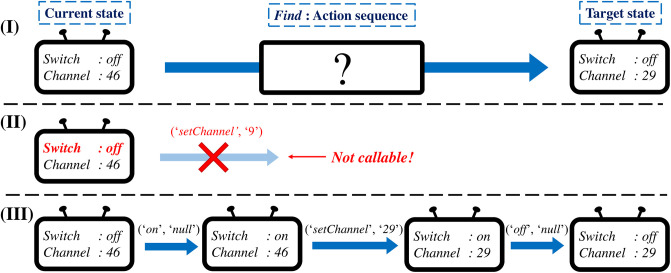 Figure 40
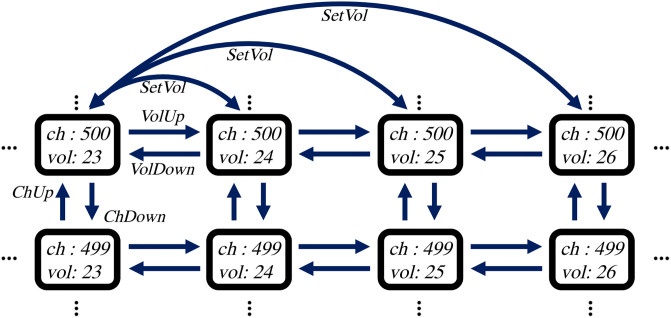 Figure 41
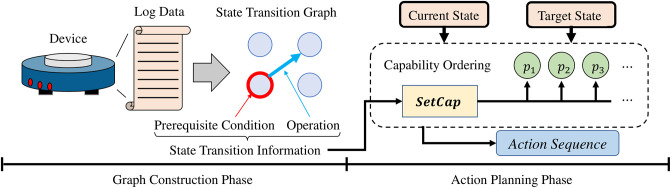 Figure 42
 Figure 43
 Figure 44
 Figure 45
 Figure 46
 Figure 47
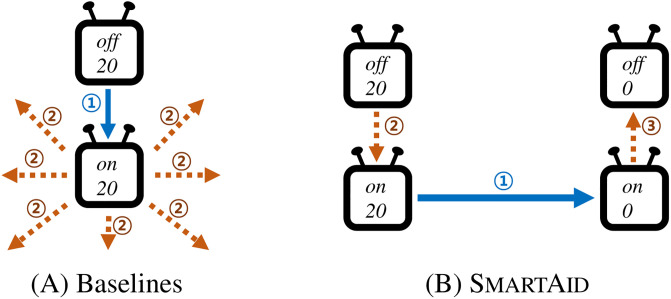 Figure 48
 Figure 49
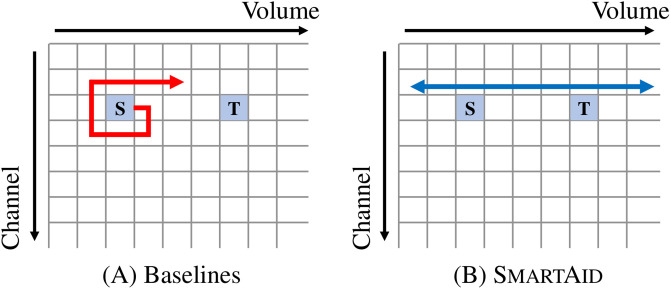 Figure 50
Peer Reviews
No public reviews on file for this paper yet. If you reviewed it on a platform where reviews are public (OpenReview, ICLR, NeurIPS, ICML), you can paste yours below so the community can read it here.
Videos
No videos yet. Explain this paper in a talk, walkthrough, or lecture? Add one.
Taxonomy
TopicsContext-Aware Activity Recognition Systems · IoT and Edge/Fog Computing · Robotics and Automated Systems