Exploring Anesthesia Provider Preferences for Precision Feedback: Preference Elicitation Study
Zach Landis-Lewis, Chris A Andrews, Colin A Gross, Charles P Friedman, Nirav J Shah

TL;DR
This study explores how anesthesia providers prefer to receive personalized feedback to improve their performance, finding that individual preferences vary but are consistent within individuals.
Contribution
The study introduces a method for eliciting anesthesia providers' preferences for precision feedback and demonstrates the feasibility of tailoring feedback to individual needs.
Findings
Participants showed diverse but internally consistent preferences for feedback characteristics like temporality and display format.
Preferred messages received high perceived benefit ratings (mean 4.27 on a 5-point scale).
A one-size-fits-all approach to feedback delivery is unlikely to meet individual preferences.
Abstract
Health care professionals must learn continuously as a core part of their work. As the rate of knowledge production in biomedicine increases, better support for health care professionals’ continuous learning is needed. In health systems, feedback is pervasive and is widely considered to be essential for learning that drives improvement. Clinical quality dashboards are one widely deployed approach to delivering feedback, but engagement with these systems is commonly low, reflecting a limited understanding of how to improve the effectiveness of feedback about health care. When coaches and facilitators deliver feedback for improving performance, they aim to be responsive to the recipient’s motivations, information needs, and preferences. However, such functionality is largely missing from dashboards and feedback reports. Precision feedback is the delivery of high-value, motivating…
Genes, proteins, chemicals, diseases, species, mutations and cell lines named across the full text — each resolved to its canonical identifier and authoritative record.
Click any figure to enlarge with its caption.
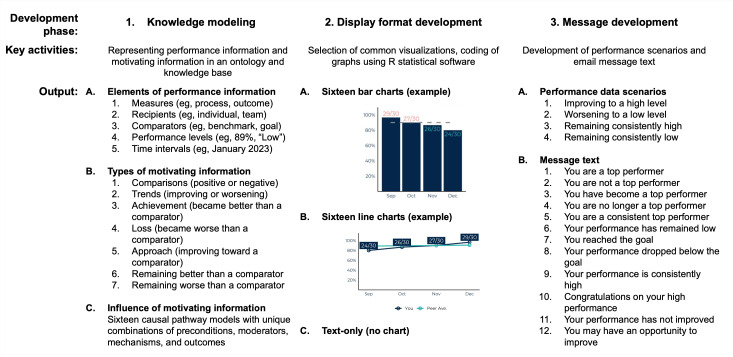 Figure 1
Peer Reviews
No public reviews on file for this paper yet. If you reviewed it on a platform where reviews are public (OpenReview, ICLR, NeurIPS, ICML), you can paste yours below so the community can read it here.
Videos
No videos yet. Explain this paper in a talk, walkthrough, or lecture? Add one.
Taxonomy
TopicsPatient Safety and Medication Errors · Delphi Technique in Research · Visual and Cognitive Learning Processes