dCCA: detecting differential covariation patterns between two types of high-throughput omics data
Hwiyoung Lee, Tianzhou Ma, Hongjie Ke, Zhenyao Ye, Shuo Chen

TL;DR
This paper introduces dCCA, a new method to detect how relationships between two types of omics data differ across clinical groups, helping uncover disease-related biological patterns.
Contribution
The novel dCCA method captures differential multivariate covariation patterns between two omics data types across clinical groups.
Findings
dCCA outperforms existing methods in variable selection and recovering differential correlations in simulations.
dCCA identified differentially expressed covariations between noncoding RNAs and gene expressions in kidney cancer data.
Abstract
The advent of multimodal omics data has provided an unprecedented opportunity to systematically investigate underlying biological mechanisms from distinct yet complementary angles. However, the joint analysis of multi-omics data remains challenging because it requires modeling interactions between multiple sets of high-throughput variables. Furthermore, these interaction patterns may vary across different clinical groups, reflecting disease-related biological processes. We propose a novel approach called Differential Canonical Correlation Analysis (dCCA) to capture differential covariation patterns between two multivariate vectors across clinical groups. Unlike classical Canonical Correlation Analysis, which maximizes the correlation between two multivariate vectors, dCCA aims to maximally recover differentially expressed multivariate-to-multivariate covariation patterns between…
Genes, proteins, chemicals, diseases, species, mutations and cell lines named across the full text — each resolved to its canonical identifier and authoritative record.
Click any figure to enlarge with its caption.
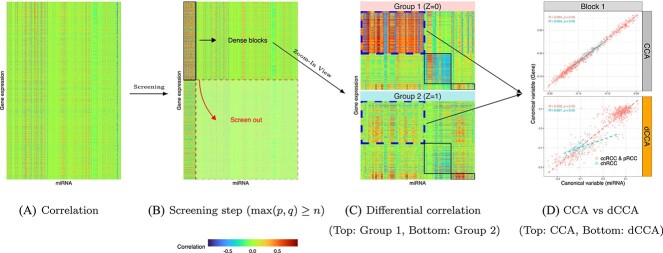 Figure 1
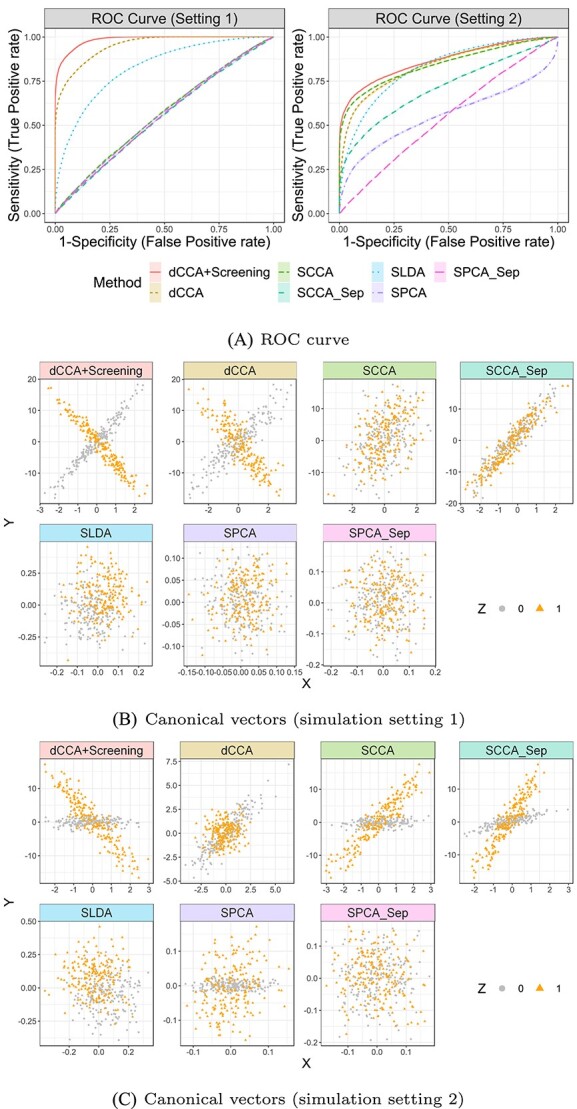 Figure 2
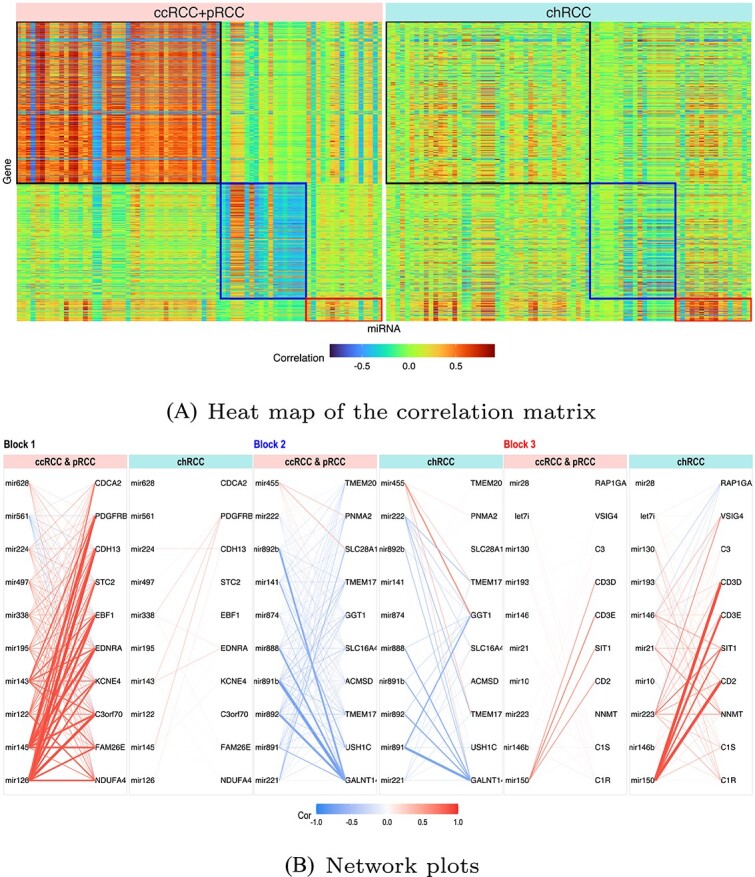 Figure 3
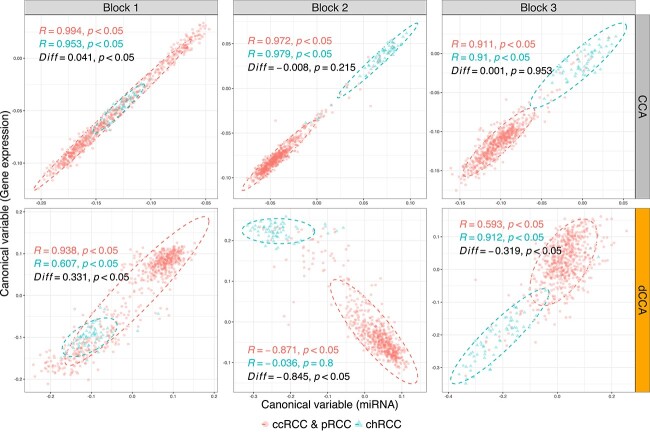 Figure 4
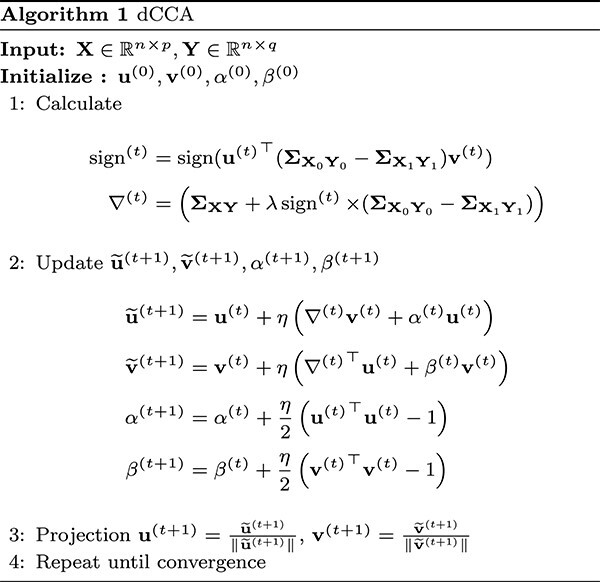 Figure 5
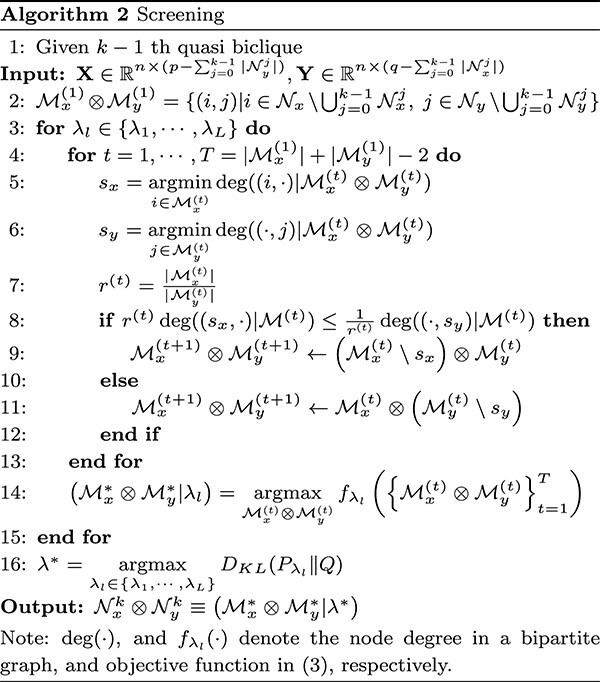 Figure 6
Peer Reviews
No public reviews on file for this paper yet. If you reviewed it on a platform where reviews are public (OpenReview, ICLR, NeurIPS, ICML), you can paste yours below so the community can read it here.
Videos
No videos yet. Explain this paper in a talk, walkthrough, or lecture? Add one.
Taxonomy
TopicsBioinformatics and Genomic Networks · Gene expression and cancer classification · Genetic Associations and Epidemiology