Management of serum phosphorus over a 1-year follow-up in patients on peritoneal dialysis prescribed sucroferric oxyhydroxide as part of routine care: a retrospective analysis
Kamyar Kalantar-Zadeh, Linda H. Ficociello, Meijiao Zhou, Michael S. Anger

TL;DR
This study shows that using sucroferric oxyhydroxide in peritoneal dialysis patients helps lower blood phosphorus levels and reduces the number of pills needed.
Contribution
The study provides real-world evidence of sucroferric oxyhydroxide's effectiveness in managing serum phosphorus in peritoneal dialysis patients over one year.
Findings
Patients on sucroferric oxyhydroxide achieved serum phosphorus levels ≤5.5 mg/dL more frequently over one year.
The average number of phosphate binder pills taken per day decreased significantly during treatment.
Improvements in phosphorus control occurred regardless of changes in residual kidney function.
Abstract
Hyperphosphatemia is associated with increased morbidity and mortality in patients with end-stage kidney disease (ESKD). Whereas clinical and observational studies have demonstrated the effectiveness of sucroferric oxyhydroxide (SO) in controlling serum phosphorus (sP) in ESKD, data on the real-world impact of switching to SO in patients on peritoneal dialysis (PD) are limited. In this retrospective database analysis, we examine the impact of SO on sP management over a 1-year period among PD patients prescribed SO as part of routine clinical care. We analyzed de-identified data from adults on PD in Fresenius Kidney Care clinics who were prescribed SO monotherapy between May 2018 and December 2019 as part of routine clinical management. Changes from baseline in sP levels, phosphate binder (PB) pill burden, and laboratory parameters were evaluated during the four consecutive 91-day…
Genes, proteins, chemicals, diseases, species, mutations and cell lines named across the full text — each resolved to its canonical identifier and authoritative record.
Click any figure to enlarge with its caption.
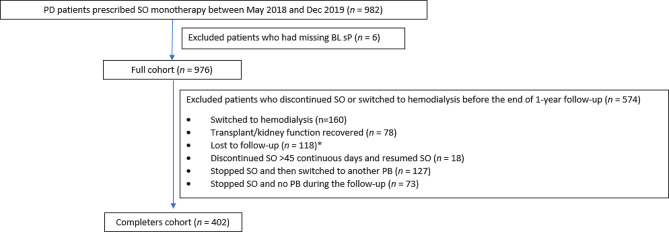 Figure 1
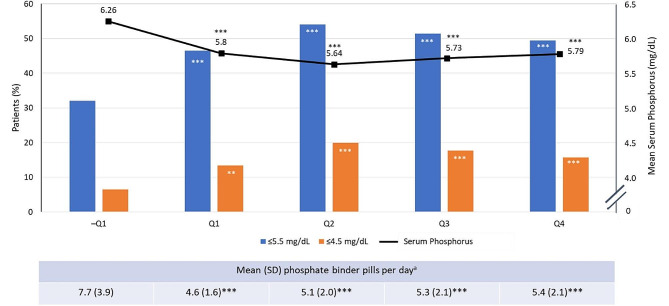 Figure 2
Peer Reviews
No public reviews on file for this paper yet. If you reviewed it on a platform where reviews are public (OpenReview, ICLR, NeurIPS, ICML), you can paste yours below so the community can read it here.
Videos
No videos yet. Explain this paper in a talk, walkthrough, or lecture? Add one.
Taxonomy
TopicsParathyroid Disorders and Treatments · Dialysis and Renal Disease Management · Potassium and Related Disorders