Analysis of alcohol-metabolizing enzymes genetic variants and RAR/RXR expression in patients diagnosed with fetal alcohol syndrome: a case-control study
Melina Vieiros, Elisabet Navarro-Tapia, Anna Ramos-Triguero, Àgueda García-Meseguer, Leopoldo Martínez, Óscar García-Algar, Vicente Andreu-Fernández

TL;DR
This study explores how genetic differences in alcohol-metabolizing enzymes and retinoic acid pathway genes may influence the development of fetal alcohol syndrome.
Contribution
The study identifies specific genetic variants in alcohol-metabolizing enzymes and retinoic acid pathway dysregulation in children with fetal alcohol syndrome.
Findings
Children without fetal alcohol spectrum disorder had higher frequencies of ADH1B*3 and ADH1C*1 alleles, which increase alcohol metabolism.
FAS children had an ADH4 variant with weak teratogen binding, leading to higher fetal alcohol exposure.
Both groups showed dysregulated expression of retinoic acid pathway genes like RAR and RXR.
Abstract
Understanding the mechanisms underlying alcohol metabolism and its regulation, including the effect of polymorphisms in alcohol-metabolizing enzymes, is crucial for research on Fetal Alcohol Spectrum Disorders. The aim of this study was to identify specific single nucleotide polymorphisms in key alcohol-metabolizing enzymes in a cohort of 71 children, including children with fetal alcohol syndrome, children prenatally exposed to ethanol but without fetal alcohol spectrum disorder, and controls. We hypothesized that certain genetic variants related to alcohol metabolism may be fixed in these populations, giving them a particular alcohol metabolism profile. In addition, the difference in certain isoforms of these enzymes determines their affinity for alcohol, which also affects the metabolism of retinoic acid, which is key to the proper development of the central nervous system. Our…
Genes, proteins, chemicals, diseases, species, mutations and cell lines named across the full text — each resolved to its canonical identifier and authoritative record.
Click any figure to enlarge with its caption.
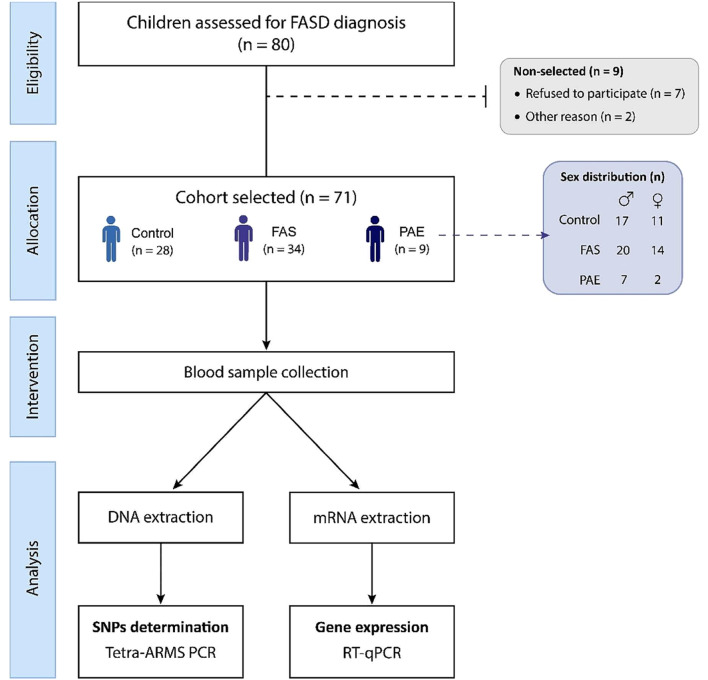 Figure 1
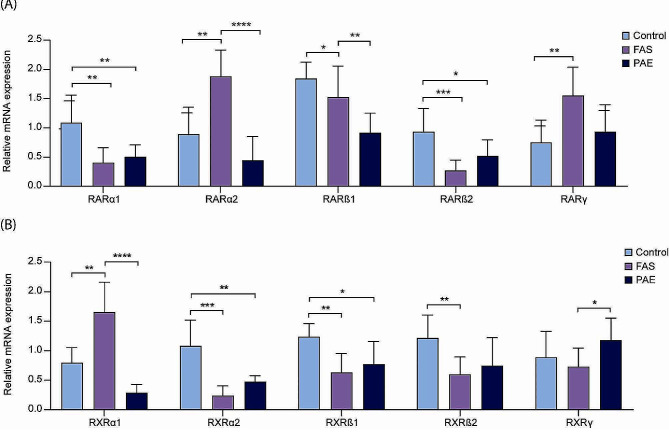 Figure 2
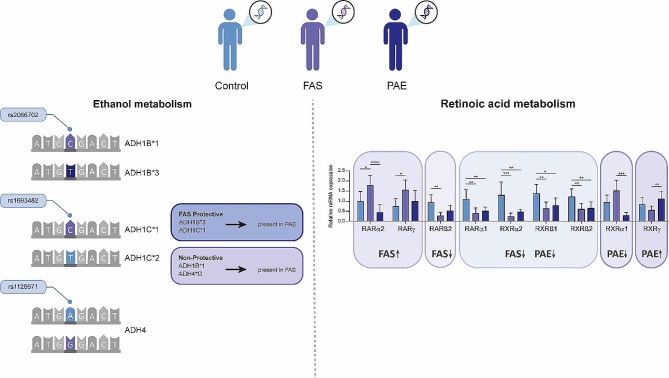 Figure 3
 Figure 4
Peer Reviews
No public reviews on file for this paper yet. If you reviewed it on a platform where reviews are public (OpenReview, ICLR, NeurIPS, ICML), you can paste yours below so the community can read it here.
Videos
No videos yet. Explain this paper in a talk, walkthrough, or lecture? Add one.
Taxonomy
TopicsPrenatal Substance Exposure Effects · Retinoids in leukemia and cellular processes · Folate and B Vitamins Research