PD‐1 blockade enhances the effect of targeted chemotherapy on locally advanced pMMR/MSS colorectal cancer
Fengyun Pei, Wan He, Yinghua Duan, Qijun Yao, Yandong Zhao, Xinjuan Fan, Shuai Liu, Haiyang Chen, Fang He, Tingzhi Liu, Jiaoting Chen, Yijia Zheng, Heping Li, Xiaofang Guo, Lishuo Shi, Li Ling, Yaoxu Chen, Jiapeng He, Miao Liu, Mengli Huang, Yuezong Bai, Jianping Wang

TL;DR
Blocking PD-1 with sintilimab improves chemotherapy outcomes in advanced colorectal cancer patients who don't usually respond well to immunotherapy.
Contribution
A novel combination therapy using PD-1 blockade with sintilimab and chemotherapy shows promising results in pMMR/MSS colorectal cancer.
Findings
54.5% of patients achieved a pathologic complete response after the combination therapy.
CD3+/CD4+ cell levels in tumor and stroma were significantly lower in pathologic complete response cases.
Treatment caused minimal side effects and did not delay surgery.
Abstract
Patients with DNA mismatch repair‐proficient/microsatellite stable (pMMR/MSS) colorectal cancer (CRC), which accounts for 85% of all CRC cases, display a poor respond to immune checkpoint inhibitors (i.e., anti‐PD‐1 antibodies). pMMR/MSS CRC patients with locally advanced cancers need effective combined therapies. In this pilot study, we administered six preoperative doses of each 2‐week cycle of the anti‐PD‐1 antibody sintilimab (at a fixed dose of 200 mg), oxaliplatin, and 5‐FU/CF (mFOLFOX6) combined with five doses of bevacizumab (the number of doses was reduced to prevent surgical delays) to patients with cT4NxM0 colon or upper rectal cancers. And radical surgery was performed approximately 2 weeks after the last dose of neoadjuvant therapy. The primary endpoint was a pathologic complete response (pCR). We also evaluated major pathologic response (MPR, ≤10% residual viable tumor),…
Genes, proteins, chemicals, diseases, species, mutations and cell lines named across the full text — each resolved to its canonical identifier and authoritative record.
Click any figure to enlarge with its caption.
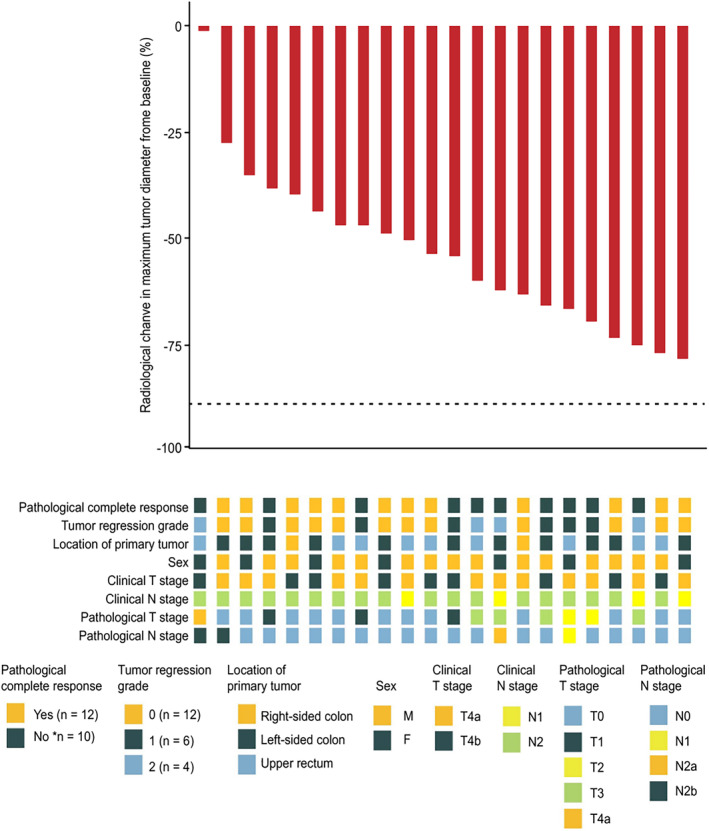 Figure 1
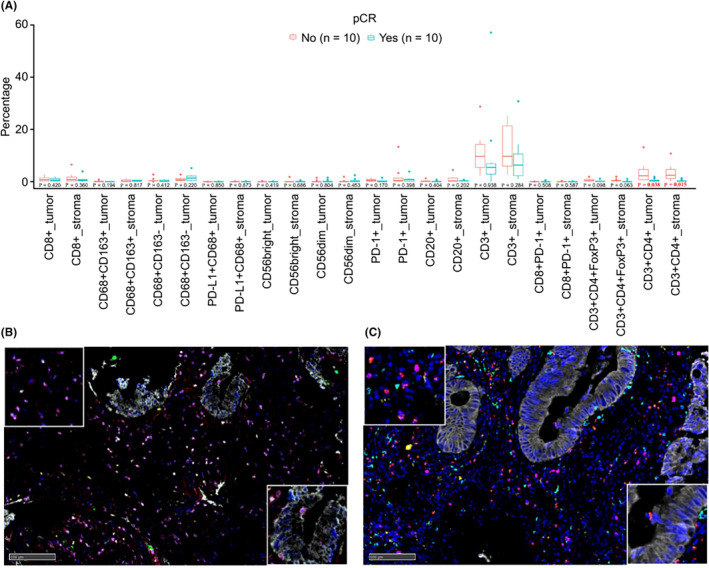 Figure 2
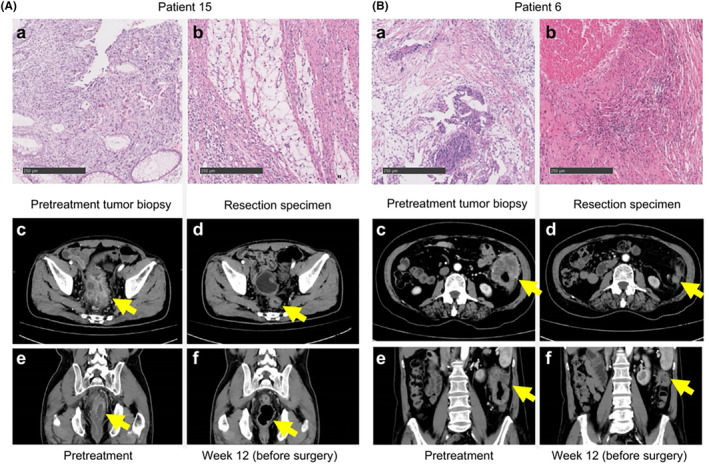 Figure 3
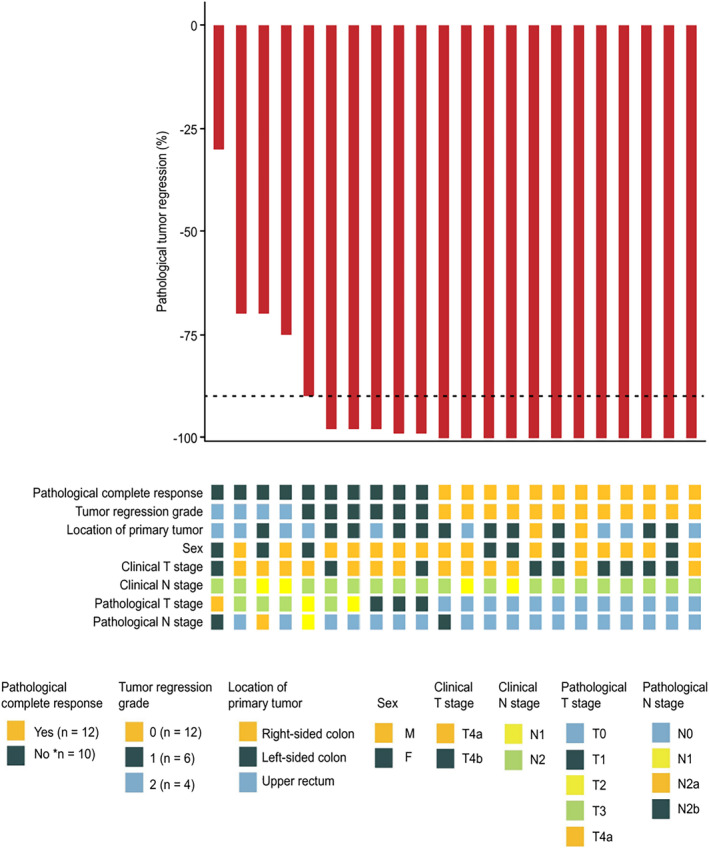 Figure 4
Peer Reviews
No public reviews on file for this paper yet. If you reviewed it on a platform where reviews are public (OpenReview, ICLR, NeurIPS, ICML), you can paste yours below so the community can read it here.
Videos
No videos yet. Explain this paper in a talk, walkthrough, or lecture? Add one.
Taxonomy
TopicsNutrition, Health, and Society Studies