
Abstract
Genes, proteins, chemicals, diseases, species, mutations and cell lines named across the full text — each resolved to its canonical identifier and authoritative record.
Click any figure to enlarge with its caption.
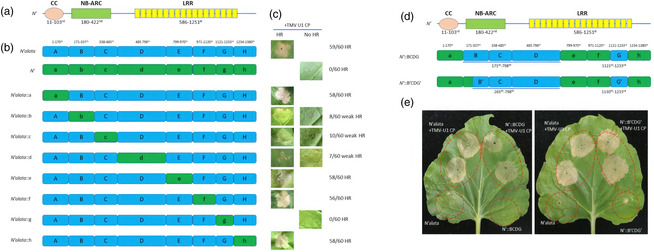 Figure 1
Peer Reviews
No public reviews on file for this paper yet. If you reviewed it on a platform where reviews are public (OpenReview, ICLR, NeurIPS, ICML), you can paste yours below so the community can read it here.
Videos
No videos yet. Explain this paper in a talk, walkthrough, or lecture? Add one.
Correction to ‘CRISPR/Cas9‐mediated seamless gene replacement in protoplasts expands the resistance spectrum to TMV‐U1 strain in regenerated Nicotiana tabacum’
Li, Y., Huang, C., Liu, Y., Zeng, J., Yu, H., Tong, Z., Yuan, X., et al. (2023) CRISPR/Cas9‐mediated seamless gene replacement in protoplasts expands the resistance spectrum to TMV‐U1 strain in regenerated Nicotiana tabacum. Plant Biotechnol. J. 21, 2641–2653.
In the above article, the authors would like to update Figure 3e. The images should show two different leaves, however, the published version mistakenly contains the same picture reproduced twice. The correct figure is shown below.
Figure 3 Verification of the N′ alata gene resistance‐determining regions. (a) Schematic diagram of the N′ gene domain structure. CC represents the coiled‐coil domain. NB‐ARC represents the nucleotide‐binding adaptor shared by the APAF‐1, R proteins and the CED‐4 domain. LRR represents the leucine‐rich repeat domain. The amino acid distributions are labelled below each domain. (b) Schematic diagram of N′ alata, N′ and recombinant N′ alata with fragments swapped from the N′ gene. The N′ alata and N′ genes were divided into eight regions to facilitate construction of different domains. The amino acid ranges are labelled for each domain. N′ alata, N′ and recombinant N′ alata genes were inserted between the 35S promoter and octopine synthase terminator. (c) Transient co‐expression of the N′ alata, N′ and recombinant N′ alata genes along with the TMV‐U1 CP gene in N. benthamiana leaves. Two days after agroinfiltration, the N. benthamiana leaves exhibited hypersensitive response (HR) symptoms (left) or no HR symptoms (right). The HR implies that the recombinant gene is resistant to TMV‐U1, whereas the absence of HR indicates susceptibility to TMV‐U1. The proportions of infiltration sites showing the HR for each construct are shown based on counting 60 infiltration sites per construct in three independent experiments. Under most circumstances, the N′ alata::b, N′ alata::c and N′ alata::d genes failed to induce HR symptoms, but they occasionally induced weak HR. Other constructs induced only one dominant symptom after infiltration. (d) Schematic diagram of the N′ gene with fragments swapped from the N′ alata gene. The BCD and G regions were truncated into the B'CD and G' regions, respectively, to more precisely locate the resistance‐determining regions. (e) Transient co‐expression of recombinant N′ genes with TMV‐U1 CP compared with only the recombinant N′ genes in N. benthamiana leaves. The Infiltrated areas of each structure are indicated with dotted red circles. Transient expression of recombinant N′ genes without the TMV‐U1 CP was used as controls to eliminate spontaneous HR responses to infiltration. The N′ gene is shown in green and the N′ alata gene is in cyan. All infiltration assays were repeated three times and a total of 60 infiltrations were conducted for each structure.
We apologize for these errors.