Squirrel bite—a rare cause of necrotizing soft tissue infection: Case report
Prosper Adjei, Boateng Bosomtwi, Prince Henry Asamoah, Stanley Anenyemele Asasu, Dominic Asante Ohene, Augustina Amoakohene‐Yeboah, Kojo Eduakwa Abban

TL;DR
A rare case of a necrotizing soft tissue infection caused by a squirrel bite is reported in a young hunter.
Contribution
This case highlights the potential severity of squirrel bites and their rare association with life-threatening infections.
Findings
A 27-year-old hunter developed necrotizing soft tissue infection following a ground squirrel bite.
The infection presented with vesiculo-bullous skin lesions.
Squirrel bites, though uncommon, can lead to severe and life-threatening infections.
Abstract
Although squirrel bites are uncommon and generally benign, they have been implicated in the transmission of certain diseases in humans, some of which can be life‐threatening. This report discusses the case of a 27‐year‐old hunter who developed a necrotizing soft tissue infection with vesiculo‐bullous skin lesions after a ground squirrel bite. Necrotizing soft tissue infection caused by a squirrel bite.
Genes, proteins, chemicals, diseases, species, mutations and cell lines named across the full text — each resolved to its canonical identifier and authoritative record.
Click any figure to enlarge with its caption.
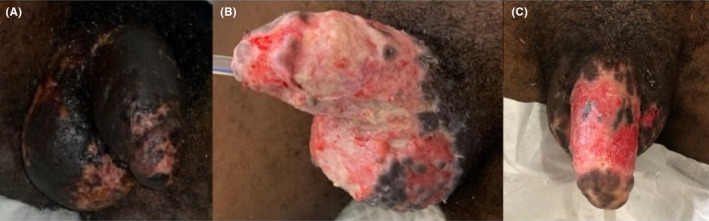 Figure 1
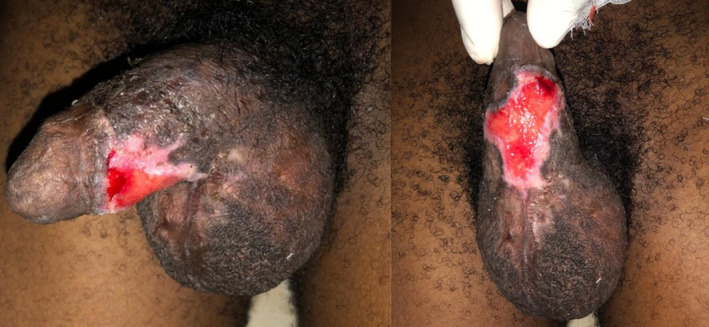 Figure 2
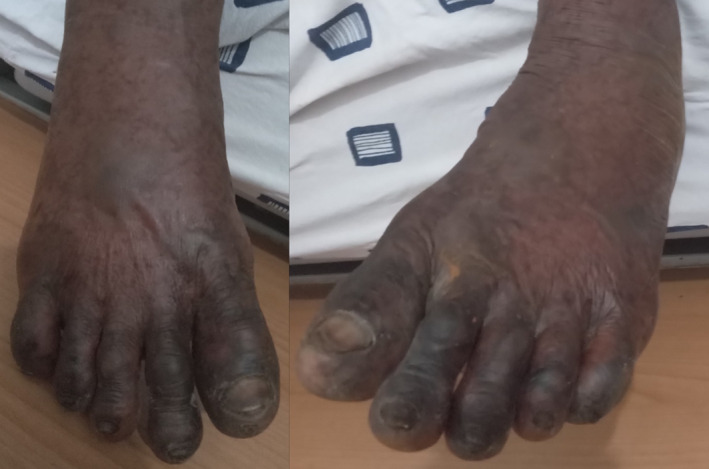 Figure 3
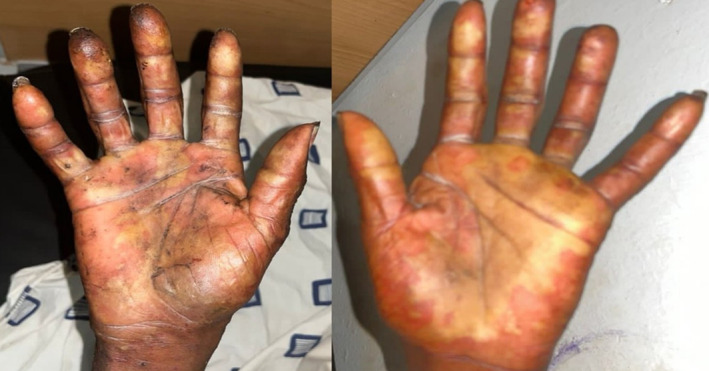 Figure 4
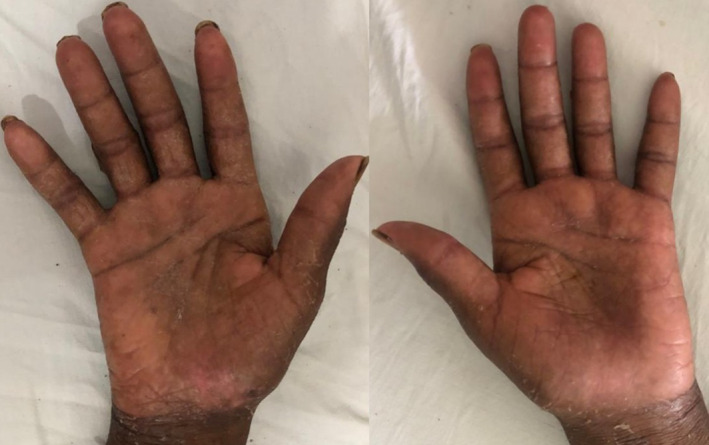 Figure 5
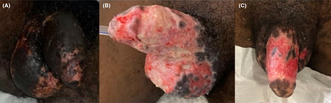 Figure 6
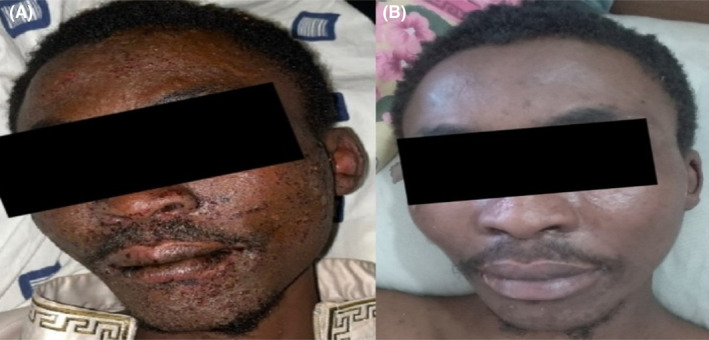 Figure 7
Peer Reviews
No public reviews on file for this paper yet. If you reviewed it on a platform where reviews are public (OpenReview, ICLR, NeurIPS, ICML), you can paste yours below so the community can read it here.
Videos
No videos yet. Explain this paper in a talk, walkthrough, or lecture? Add one.
Taxonomy
TopicsStreptococcal Infections and Treatments · Rabies epidemiology and control · Venomous Animal Envenomation and Studies