A Severe Form of Atypical Hemolytic Uremic Syndrome in a Two-Year-Old Girl: A Case Report
Ashwin Meshram, Ritu Rajan, Ishani Arora, Shruti Dange, Abhiram Chandran

TL;DR
A two-year-old girl with a severe form of atypical hemolytic uremic syndrome recovered after treatment with plasmapheresis and rituximab.
Contribution
This case report highlights the importance of early intervention in atypical HUS despite limited genetic testing capabilities.
Findings
The patient showed clinical improvement after plasmapheresis and rituximab treatment.
Atypical HUS in young children can have a severe clinical course requiring prompt management.
Timely intervention can prevent progression to chronic kidney disease even without genetic confirmation.
Abstract
Hemolytic uremic syndrome (HUS) is a prevalent cause of severe acute kidney injury in children, often leading to chronic renal damage. It is characterized by thrombotic microangiopathy (TMA), which represents a triad of microangiopathic hemolytic anemia, thrombocytopenia, and renal impairment. The choice of treatment and management strategies depends primarily on the underlying etiology. We present the case of a two-year-old girl diagnosed with rapidly progressive glomerulonephritis accompanied by hypertension necessitating renal replacement therapy. Initial laboratory findings indicated positive antinuclear antibodies, prompting immunosuppression and renal biopsy, revealing TMA with minimal chronicity changes. The treatment involved plasmapheresis and a single dose of injection rituximab, resulting in clinical recovery with an improved glomerular filtration rate. Since the…
Genes, proteins, chemicals, diseases, species, mutations and cell lines named across the full text — each resolved to its canonical identifier and authoritative record.
Click any figure to enlarge with its caption.
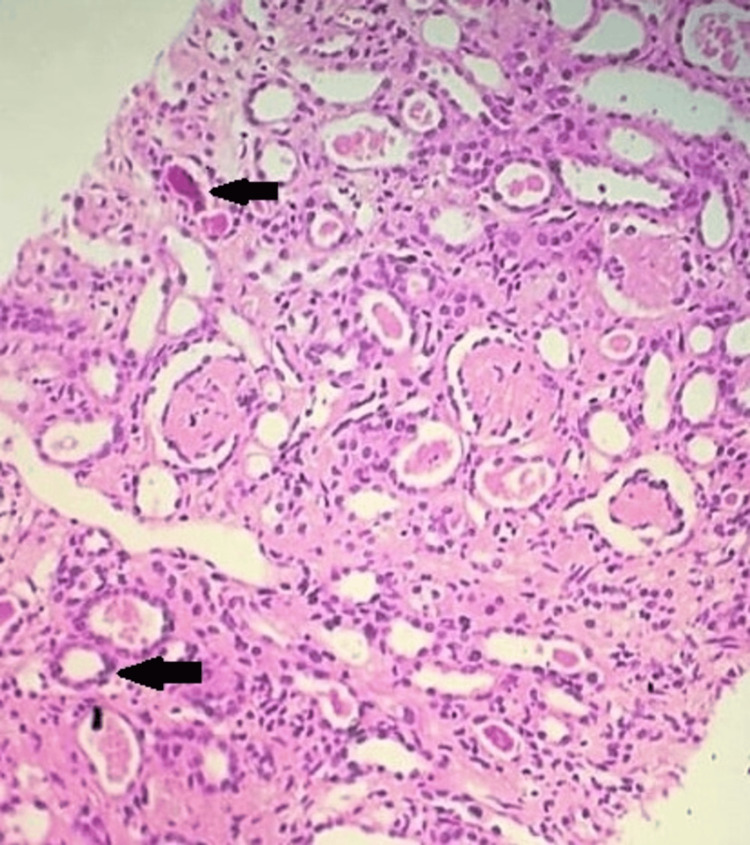 Figure 1
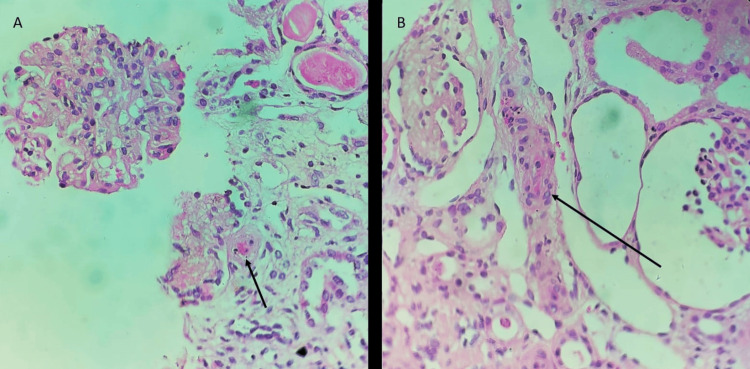 Figure 2
Peer Reviews
No public reviews on file for this paper yet. If you reviewed it on a platform where reviews are public (OpenReview, ICLR, NeurIPS, ICML), you can paste yours below so the community can read it here.
Videos
No videos yet. Explain this paper in a talk, walkthrough, or lecture? Add one.
Taxonomy
TopicsComplement system in diseases · Renal Diseases and Glomerulopathies · Adenosine and Purinergic Signaling