Should We Consider Routine Blood Work for Diplopia and Ptosis in a Primary Care Setting?
William L Dietlein, Zachary Dickey, Stephanie Aldret

TL;DR
The paper argues for routine blood tests in primary care for patients with eye-related symptoms to detect myasthenia gravis early and improve outcomes.
Contribution
The paper advocates for incorporating routine lab work in primary care for diplopia and ptosis to enable earlier diagnosis of myasthenia gravis.
Findings
A patient with diplopia was later diagnosed with myasthenia gravis after subspecialist lab work.
Early treatment with acetylcholinesterase inhibitors improved the patient's prognosis.
Routine lab work in primary care could help diagnose myasthenia gravis before it becomes systemic.
Abstract
Myasthenia gravis (MG) is a rare disorder that most commonly presents with ocular symptoms. Despite the highly sensitive blood work that can be used to diagnose the disease, it is frequently misdiagnosed until the disease becomes systemic. Literature, however, shows that those who begin treatment with acetylcholinesterase inhibitors before systemic presentation have a better prognosis. We discuss the case of a patient who presented to the clinic with a chief complaint of diplopia that was subsequently referred to ophthalmology. It was not until lab work was done by a subspecialist that the diagnosis of MG was made. The patient quickly responded to an acetylcholinesterase inhibitor and has since had a great prognosis. Here, we are advocating for the inclusion of routine lab work in the evaluation of patients who present to the primary care setting with diplopia in the absence of red…
Genes, proteins, chemicals, diseases, species, mutations and cell lines named across the full text — each resolved to its canonical identifier and authoritative record.
Click any figure to enlarge with its caption.
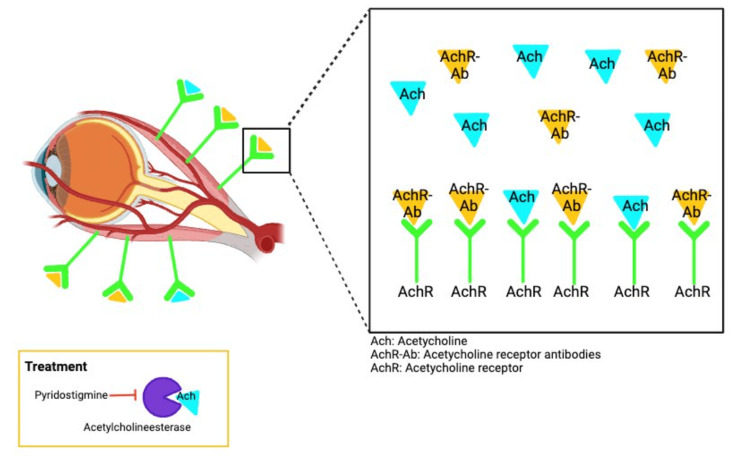 Figure 1
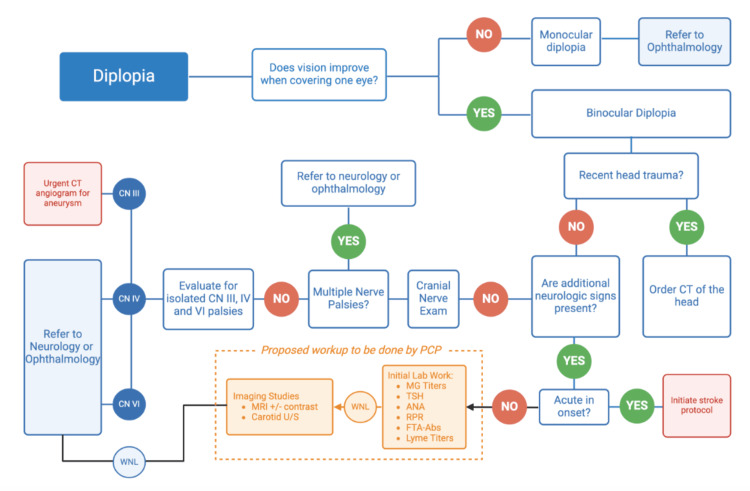 Figure 2
Peer Reviews
No public reviews on file for this paper yet. If you reviewed it on a platform where reviews are public (OpenReview, ICLR, NeurIPS, ICML), you can paste yours below so the community can read it here.
Videos
No videos yet. Explain this paper in a talk, walkthrough, or lecture? Add one.
Taxonomy
TopicsOphthalmology and Eye Disorders · Facial Nerve Paralysis Treatment and Research · Intraoperative Neuromonitoring and Anesthetic Effects