Human gut microbes express functionally distinct endoglycosidases to metabolize the same N-glycan substrate
Diego E. Sastre, Nazneen Sultana, Marcos V. A. S. Navarro, Maros Huliciak, Jonathan Du, Javier O. Cifuente, Maria Flowers, Xu Liu, Pete Lollar, Beatriz Trastoy, Marcelo E. Guerin, Eric J. Sundberg

TL;DR
Human gut microbes use different enzymes to break down the same sugar structure in the gut, each optimized for specific conditions.
Contribution
Discovery of a distinct endoglycosidase in Bacteroides thetaiotaomicron with unique functional properties for N-glycan metabolism.
Findings
BT1285 has higher affinity and faster hydrolysis of HM N-glycans compared to BT3987.
BT1285 and BT3987 function optimally under different environmental conditions.
Alistipes finegoldii also uses condition-specific endoglycosidases for HM N-glycan processing.
Abstract
Bacteroidales (syn. Bacteroidetes) are prominent members of the human gastrointestinal ecosystem mainly due to their efficient glycan-degrading machinery, organized into gene clusters known as polysaccharide utilization loci (PULs). A single PUL was reported for catabolism of high-mannose (HM) N-glycan glyco-polypeptides in the gut symbiont Bacteroides thetaiotaomicron, encoding a surface endo-β-N-acetylglucosaminidase (ENGase), BT3987. Here, we discover an ENGase from the GH18 family in B. thetaiotaomicron, BT1285, encoded in a distinct PUL with its own repertoire of proteins for catabolism of the same HM N-glycan substrate as that of BT3987. We employ X-ray crystallography, electron microscopy, mass spectrometry-based activity measurements, alanine scanning mutagenesis and a broad range of biophysical methods to comprehensively define the molecular mechanism by which BT1285 recognizes…
Genes, proteins, chemicals, diseases, species, mutations and cell lines named across the full text — each resolved to its canonical identifier and authoritative record.
Click any figure to enlarge with its caption.
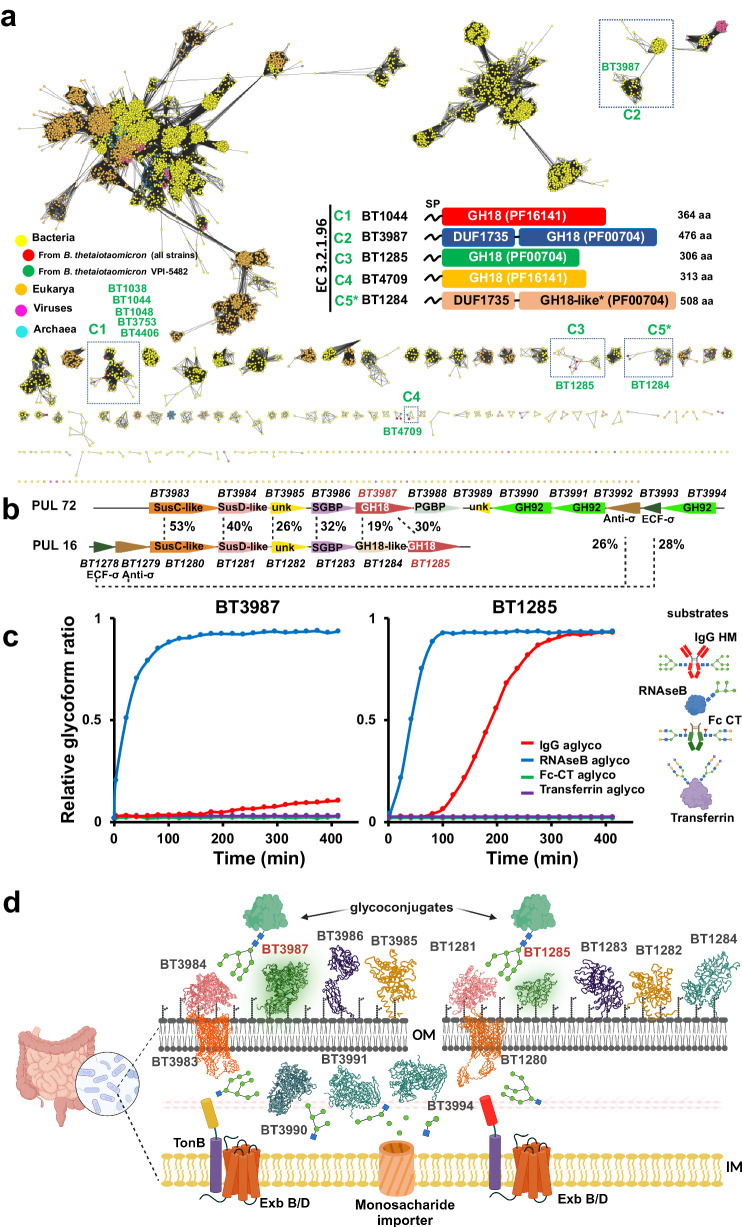 Figure 1
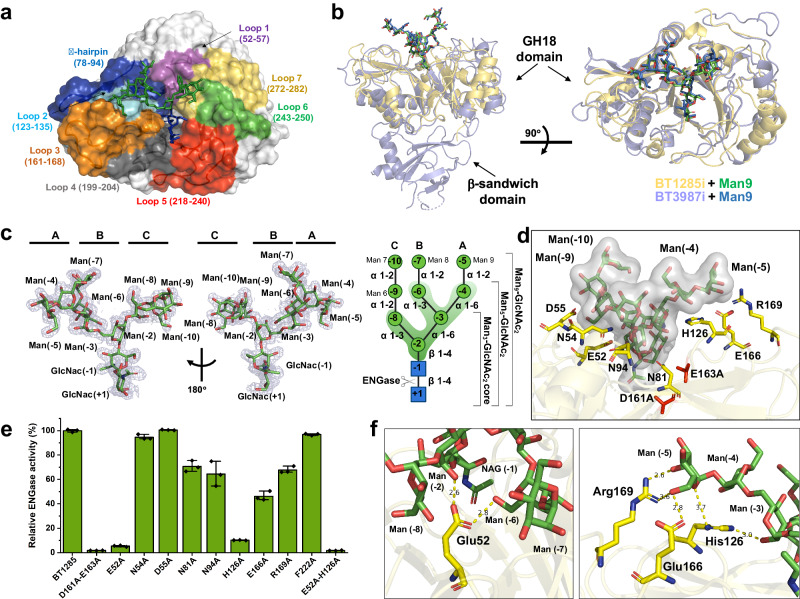 Figure 2
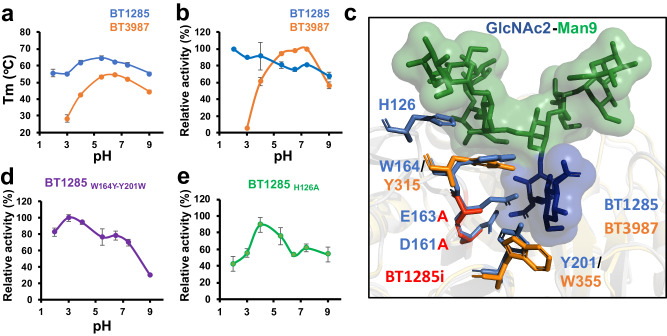 Figure 3
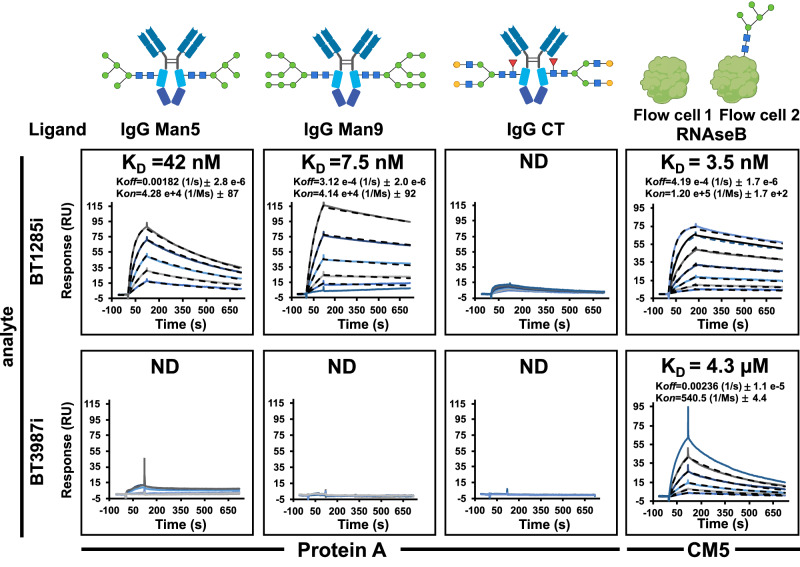 Figure 4
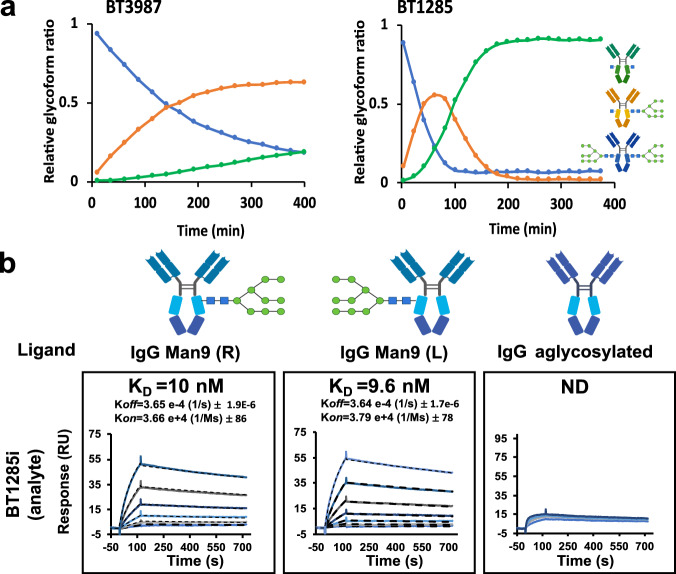 Figure 5
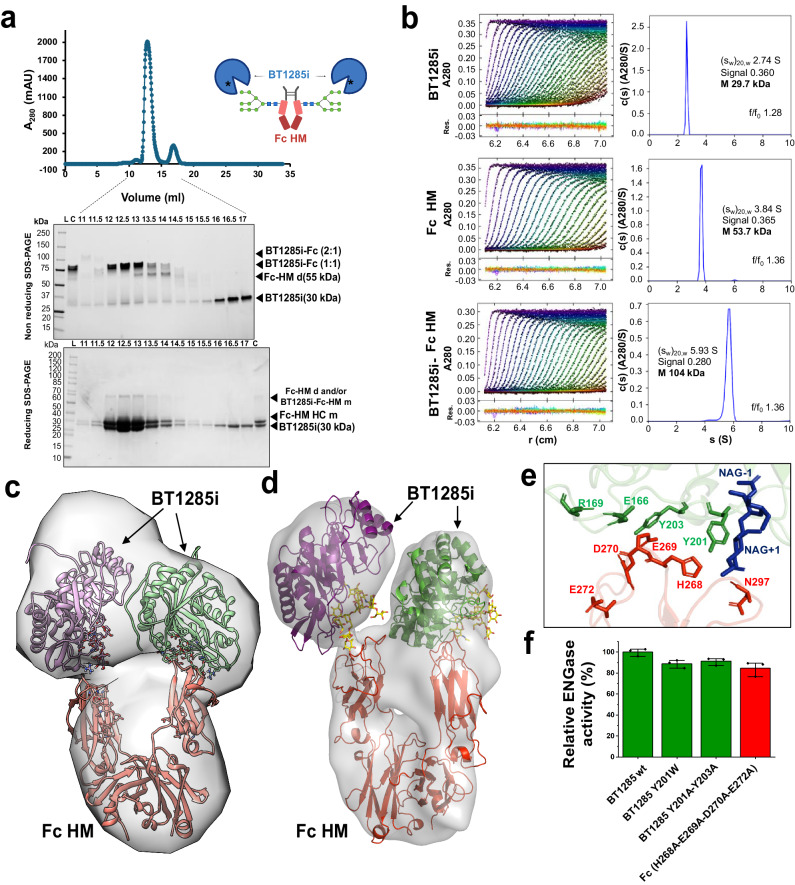 Figure 6
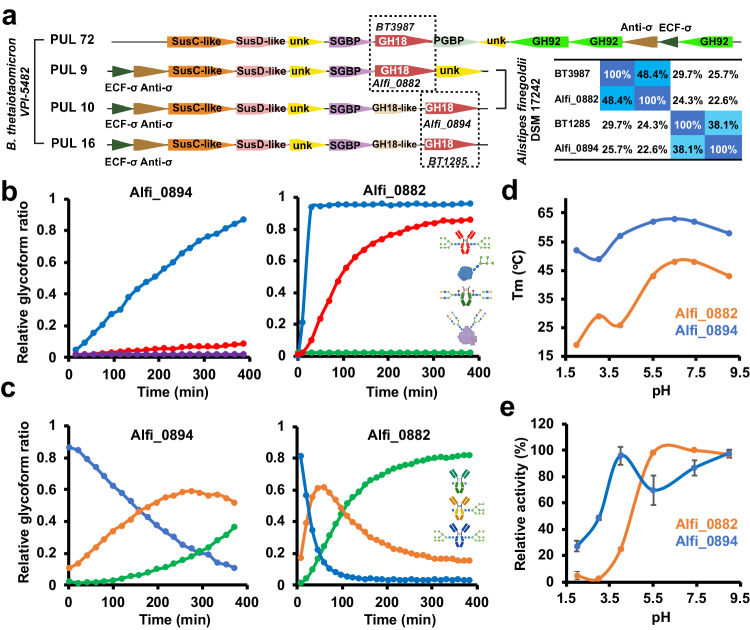 Figure 7
Peer Reviews
No public reviews on file for this paper yet. If you reviewed it on a platform where reviews are public (OpenReview, ICLR, NeurIPS, ICML), you can paste yours below so the community can read it here.
Videos
No videos yet. Explain this paper in a talk, walkthrough, or lecture? Add one.
Taxonomy
TopicsCardiovascular and exercise physiology