Functional Anatomy of the Rear Attachment of the Deep Deltoid (RAD) Ligament of the Ankle
Radwane Faroug, Suheil Amanat, Benjamin Schapira, Aashish Raghu, Michael Tombros

TL;DR
This paper explains how a specific part of the ankle's deltoid ligament, called the RAD, is crucial for ankle stability and managing injuries.
Contribution
The paper identifies the rear attachment of the deep deltoid ligament (RAD) as the key component for ankle stability.
Findings
The RAD provides mechanical stability by preventing talar shift and tilt.
The RAD is essential for rotational stability of the ankle joint.
Abstract
The deltoid ligament plays a key role in ankle stability. Ankle fractures involving the medial ligamentous complex are evaluated on the basis of medial-sided tenderness and the Ottawa ankle rules. Evolution in our understanding of this ligament over the last three decades has shown that, within this medial ligamentous complex, it is the deep deltoid ligament that confers mechanical stability. The latest evolution in this understanding, and the learning point of this report, is that only a distinct component of the deep deltoid ligament - specifically the discreet posterior third - the rear attachment of the deep deltoid ligament (RAD) - confers mechanical value. The RAD is responsible for providing the medial ligamentous component of ankle stability - specifically talar shift, tilt, and importantly rotational stability. This knowledge is of key importance in the assessment and…
Genes, proteins, chemicals, diseases, species, mutations and cell lines named across the full text — each resolved to its canonical identifier and authoritative record.
Click any figure to enlarge with its caption.
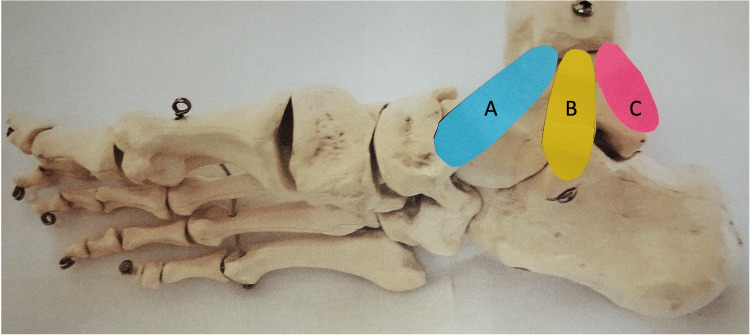 Figure 1
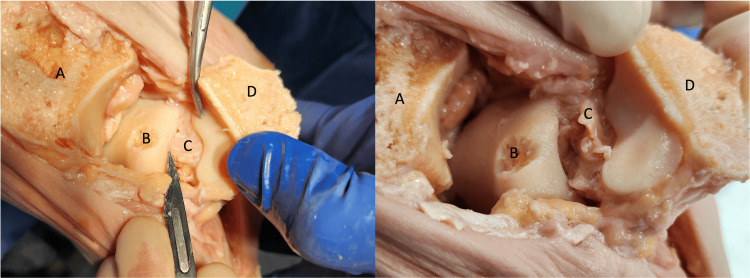 Figure 2
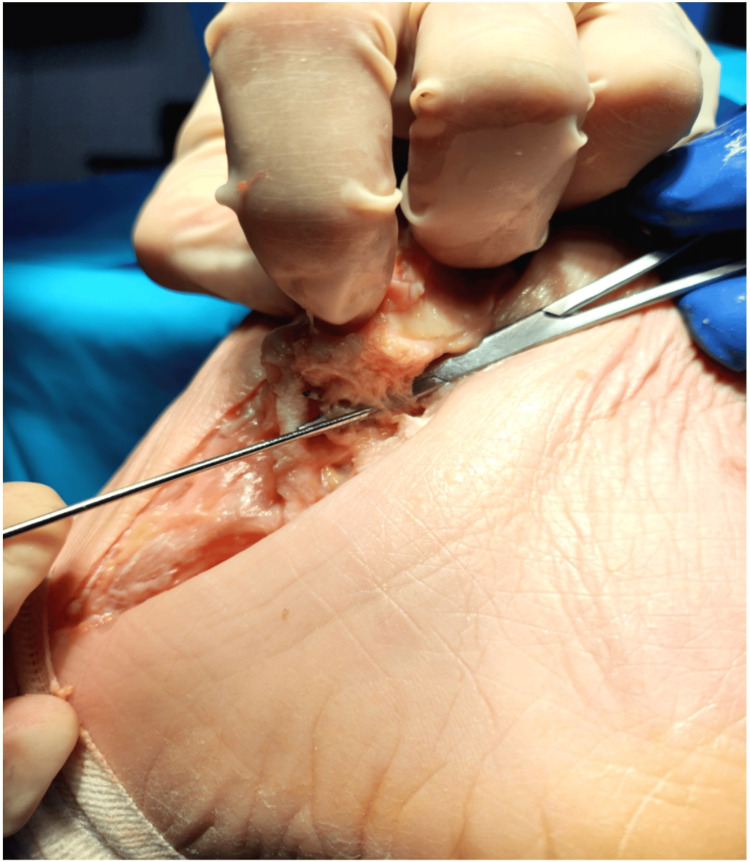 Figure 3
Peer Reviews
No public reviews on file for this paper yet. If you reviewed it on a platform where reviews are public (OpenReview, ICLR, NeurIPS, ICML), you can paste yours below so the community can read it here.
Videos
No videos yet. Explain this paper in a talk, walkthrough, or lecture? Add one.
Taxonomy
TopicsFoot and Ankle Surgery · Tendon Structure and Treatment · Orthopedic Surgery and Rehabilitation