Extracorporeal Shock Wave Therapy and the Handstand-Position Radiography for Proximal Humeral Epiphysiolysis in Elite Gymnasts: A Report of Two Cases
Toru Omodani, Norimasa Takahashi, Kenji Takahashi

TL;DR
Two elite gymnasts with shoulder injuries were successfully treated with non-surgical methods, including shock wave therapy and special radiography.
Contribution
Demonstrates the effectiveness of extracorporeal shock wave therapy and handstand-position radiography in treating proximal humeral epiphysiolysis in gymnasts.
Findings
Extracorporeal shock wave therapy led to rapid bone repair and pain relief in one gymnast.
Handstand-position radiography identified humeral shortening and compensatory movements, avoiding surgery in another case.
Abstract
We report two cases of proximal humeral epiphysiolysis in elite gymnasts. Both patients presented with shoulder pain during weight-bearing movements. The patient in case 1, treated with extracorporeal shock wave therapy (ESWT), exhibited rapid bone repair and pain relief, allowing an early return to competition. In the case 2 patient, humeral shortening was identified. Handstand-position radiography revealed compensatory scapular movements, negating the need for surgical intervention. These findings highlight ESWT's potential in promoting bone repair and the utility of handstand-position radiography in assessing humeral length. Both methods provide innovative treatment approaches for proximal humeral epiphysiolysis in gymnasts.
Genes, proteins, chemicals, diseases, species, mutations and cell lines named across the full text — each resolved to its canonical identifier and authoritative record.
Click any figure to enlarge with its caption.
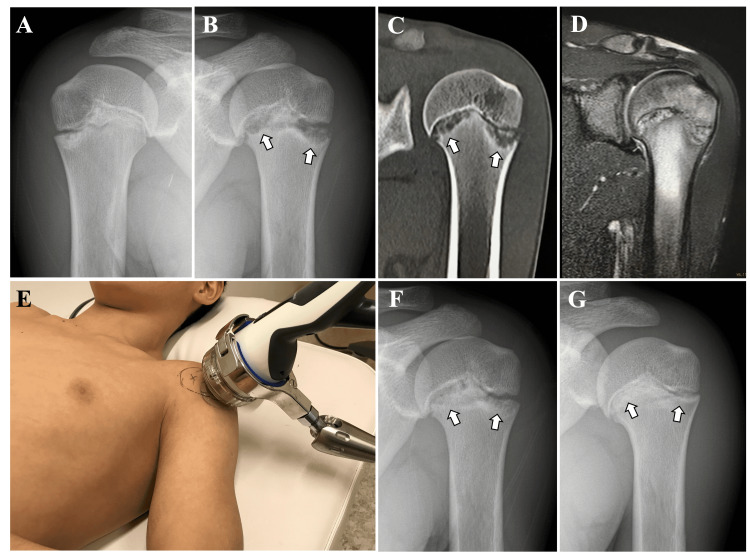 Figure 1
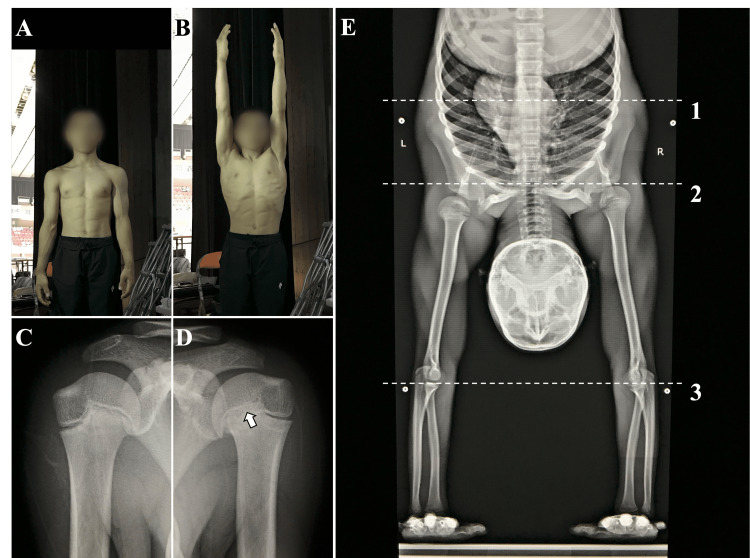 Figure 2
Peer Reviews
No public reviews on file for this paper yet. If you reviewed it on a platform where reviews are public (OpenReview, ICLR, NeurIPS, ICML), you can paste yours below so the community can read it here.
Videos
No videos yet. Explain this paper in a talk, walkthrough, or lecture? Add one.
Taxonomy
TopicsShoulder Injury and Treatment · Tendon Structure and Treatment · Orthopedic Surgery and Rehabilitation