Attentional Differences Between Males and Females for Emojis During the Emotional Stroop Task
Deeksha Patel, Om Lata Bhagat, Abhinav Dixit

TL;DR
This study found that females react faster than males to emotional emojis and words in a cognitive task, showing gender differences in emotional processing.
Contribution
The study introduces emojis as emotional stimuli in the Stroop task to reveal gender differences in attentional processing.
Findings
Males had significantly longer reaction times than females across all task conditions.
Reaction times increased notably from neutral to incongruent conditions for both genders.
Females showed greater proficiency in emotional processing during the task compared to males.
Abstract
Introduction Cognitive load can be intensified by emotional components such as emotive words or facial expressions. Sex differences influence both emotional and cognitive functions for emotional facial expressions. Emojis, in contrast to human faces, serve as digital cues conveying emotional nuances in communication. The present study aimed to compare attentional differences prompted by emojis. Methods This study aimed to compare attentional differences in males and females elicited by emojis in 100 healthy adults (50 males and 50 females) within the age group of 18 to 40 years (mean ± SD: 27.87 ± 5.37 years) while performing the emotional Stroop task (EST). The EST comprised emojis depicting four emotions (happy, fear, sad, and angry) and emotionally charged words conveying similar emotions. An independent sample t-test was used to compare the reaction times among males and females.…
Genes, proteins, chemicals, diseases, species, mutations and cell lines named across the full text — each resolved to its canonical identifier and authoritative record.
Click any figure to enlarge with its caption.
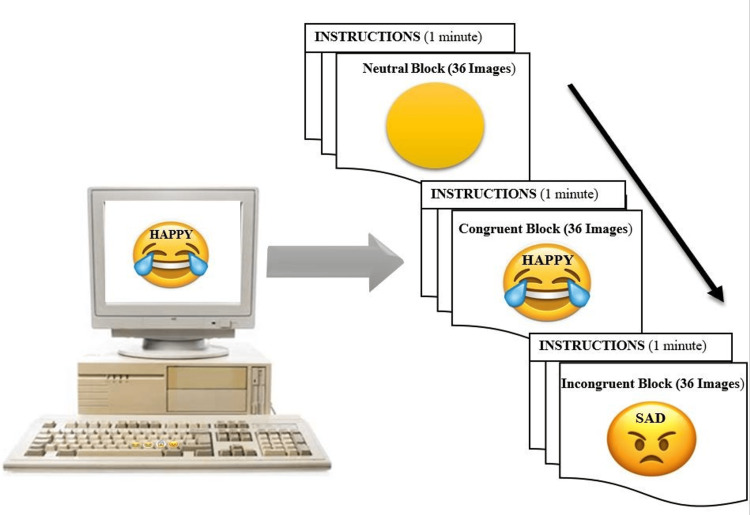 Figure 1
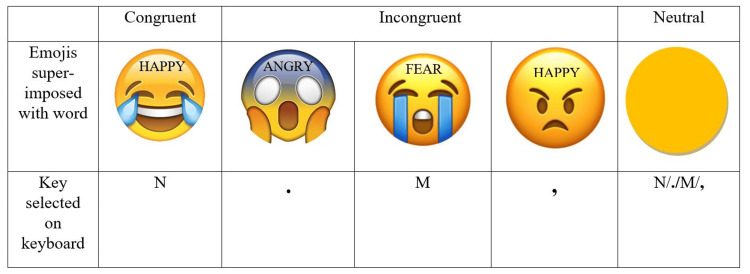 Figure 2
Peer Reviews
No public reviews on file for this paper yet. If you reviewed it on a platform where reviews are public (OpenReview, ICLR, NeurIPS, ICML), you can paste yours below so the community can read it here.
Videos
No videos yet. Explain this paper in a talk, walkthrough, or lecture? Add one.
Taxonomy
TopicsDigital Communication and Language · Multisensory perception and integration