Secretory Carcinoma of the Breast: A Rare Entity With Favorable Prognosis
Souad Margoum, Soufiane Berhili, Meriem Bouabid, Mohamed Moukhlissi, Mezouar Loubna

TL;DR
Secretory breast carcinoma is a rare type of breast cancer with a good prognosis, but there is no agreed-upon treatment due to its rarity.
Contribution
The paper presents a case study and literature review to highlight the clinical features and management of secretory breast carcinoma.
Findings
SBC is rare and has a favorable prognosis despite being triple-negative or hormone receptor-low.
Treatment options are not well-defined, with surgery and radiotherapy being commonly used.
Chemotherapy and hormone therapy efficacy remains unexplored in SBC.
Abstract
Secretory breast carcinoma (SBC) is an extremely rare entity of breast cancer, which can affect all age groups. The diagnosis is based on the characteristic microscopic appearance, and despite the triple negativity or low hormone receptor positivity, SBC is generally characterized by a favorable prognosis. Due to the rarity of the disease, no clear consensus on optimal treatment is available. Nevertheless, conservative surgery or mastectomy is the main therapeutic option. The efficacy of chemotherapy, radiotherapy, and hormone therapy in this pathology has not been rigorously explored. We report the case of a 65-year-old woman with SBC treated with surgery and adjuvant radiotherapy, with a review of the literature.
Genes, proteins, chemicals, diseases, species, mutations and cell lines named across the full text — each resolved to its canonical identifier and authoritative record.
Click any figure to enlarge with its caption.
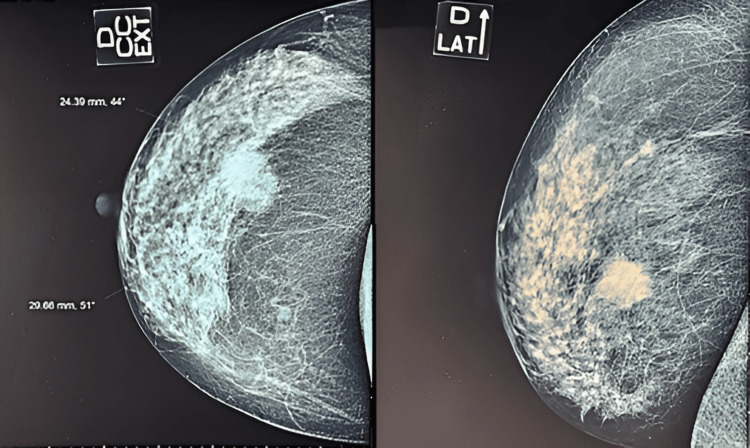 Figure 1
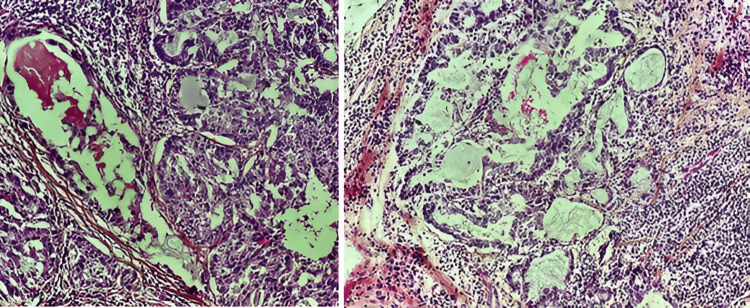 Figure 2
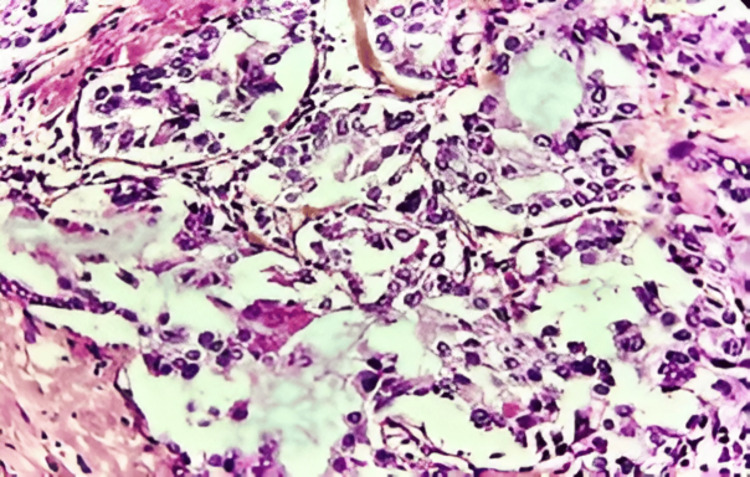 Figure 3
Peer Reviews
No public reviews on file for this paper yet. If you reviewed it on a platform where reviews are public (OpenReview, ICLR, NeurIPS, ICML), you can paste yours below so the community can read it here.
Videos
No videos yet. Explain this paper in a talk, walkthrough, or lecture? Add one.
Taxonomy
TopicsBreast Lesions and Carcinomas · Breast Cancer Treatment Studies · Cancer and Skin Lesions