A novel SPAST gene splicing variant (c.1617-2A>C) in a heterozygous carrier with hereditary spastic paraplegia
Elvira Sbragia, Andrea Assini, Silvia Calzavara, Paola Carrera, Claudio Marcello Solaro, Emilio Di Maria

TL;DR
A new genetic variant in the SPAST gene is linked to hereditary spastic paraplegia in a family, suggesting it may cause the disease.
Contribution
A novel SPAST gene splicing variant (c.1617-2A>C) is identified as pathogenic in autosomal dominant HSP.
Findings
The c.1617-2A>C variant disrupts RNA splicing and is classified as a null variant.
The variant was found in a heterozygous carrier with clinical features of SPG4.
The study supports the pathogenicity of the novel SPAST gene variant.
Abstract
Hereditary spastic paraplegia (HSP) is a group of genetically heterogenous neurodegenerative disorders characterized by progressive spasticity and weakness of lower limbs. We report a novel splicing variant (c.1617-2A>C) of the SPAST gene in a heterozygous carrier from an Italian family with autosomal dominant HSP. The case study describes a pure form of spastic paraparesis with the cardinal clinical features of SPG4. The novel variant affects a canonical splice site and is likely to disrupt RNA splicing. We conclude that the c.1617-2A>C substitution is a null variant, which could be classified as pathogenic; its penetrance should be further investigated. •Hereditary spastic paraplegia (HSP) denotes a group of clinically and genetically heterogeneous neurodegenerative disorders; the identification of the underlying pathogenic variant is crucial.•The case study presents a 59-years-old…
Genes, proteins, chemicals, diseases, species, mutations and cell lines named across the full text — each resolved to its canonical identifier and authoritative record.
Click any figure to enlarge with its caption.
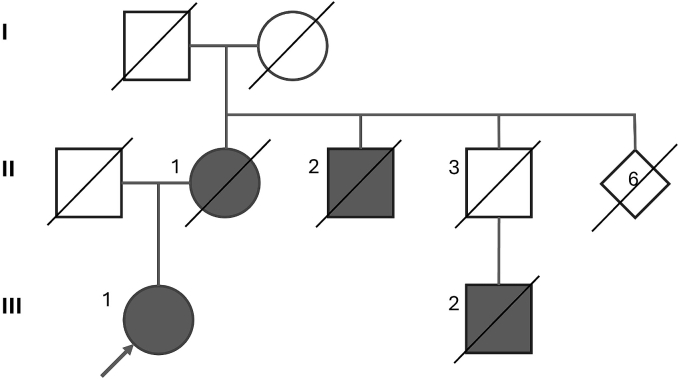 Figure 1
Peer Reviews
No public reviews on file for this paper yet. If you reviewed it on a platform where reviews are public (OpenReview, ICLR, NeurIPS, ICML), you can paste yours below so the community can read it here.
Videos
No videos yet. Explain this paper in a talk, walkthrough, or lecture? Add one.
Taxonomy
TopicsHereditary Neurological Disorders · Neurological diseases and metabolism · Neurogenetic and Muscular Disorders Research