Genome-wide analysis reveals the contributors to fast molecular evolution of the Chinese hook snout carp (Opsariichthys bidens)
Fengbo Li, Wei Wang, Haihua Cheng, Ming Li

TL;DR
This study finds that the Chinese hook snout carp has unusually fast molecular evolution driven by ancestral traits and natural selection, with implications for understanding evolutionary mechanisms.
Contribution
The study identifies genome-wide contributors to fast molecular evolution in a fish species, linking it to ancestral states, adaptive selection, and gene-specific metabolic effects.
Findings
O. bidens has a significantly higher substitution rate and more fast-evolving genes compared to other fish species.
Adaptive selection, not random drift, explains most fast-evolving genes in O. bidens and related species.
Metabolic rate influences substitution rate in a gene-specific manner.
Abstract
Variations in molecular evolutionary rate have been widely investigated among lineages and genes. However, it remains an open question whether fast rate of molecular evolution is driven by natural selection or random drift, and how the fast rate is linked to metabolic rate. Additionally, previous studies on fast molecular evolution have been largely restricted to concatenated matrix of genes or a few specifically selected genes, but less is known for individual genes at the genome-wide level. Here we addressed these questions using more than 5000 single-copy orthologous (SCO) genes through comparative genomic and phylogenetic analyses among fishes, with a special focus on a newly-sequenced clupeocephalan fish the Chinese hook snout carp Opsariichthys bidens. We showed O. bidens displays significantly higher mean substitution rate and more fast-evolving SCO genes (2172 genes) than most…
Genes, proteins, chemicals, diseases, species, mutations and cell lines named across the full text — each resolved to its canonical identifier and authoritative record.
Click any figure to enlarge with its caption.
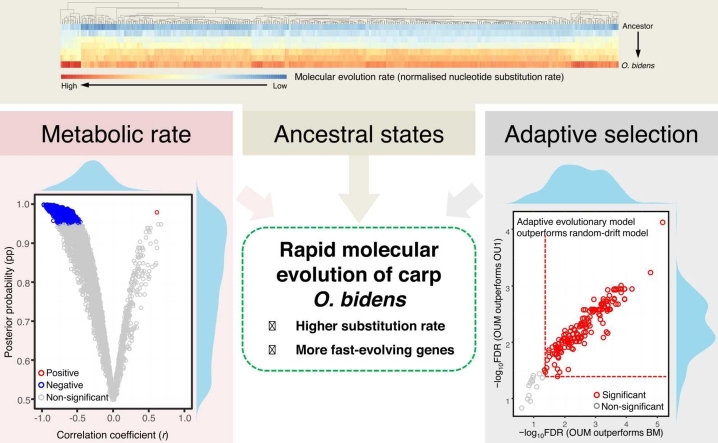 Figure 1
 Figure 2
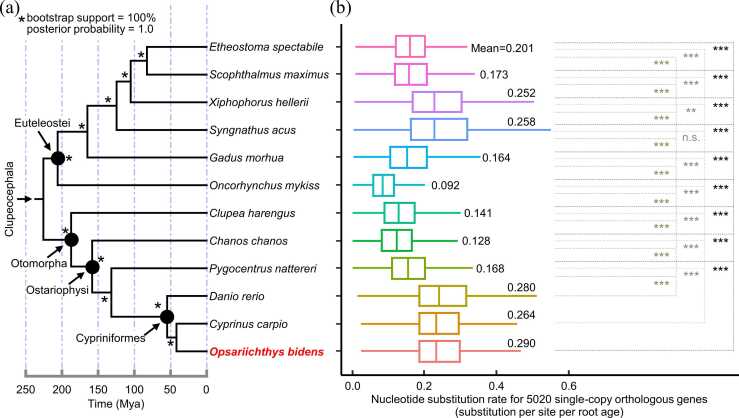 Figure 3
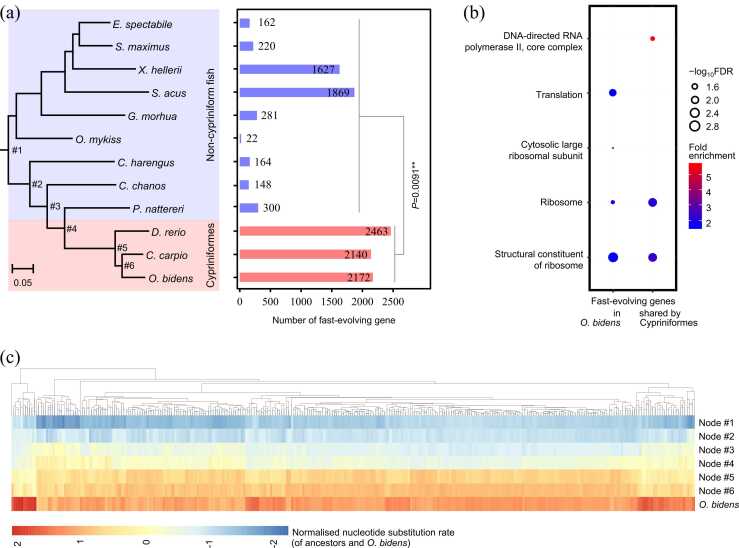 Figure 4
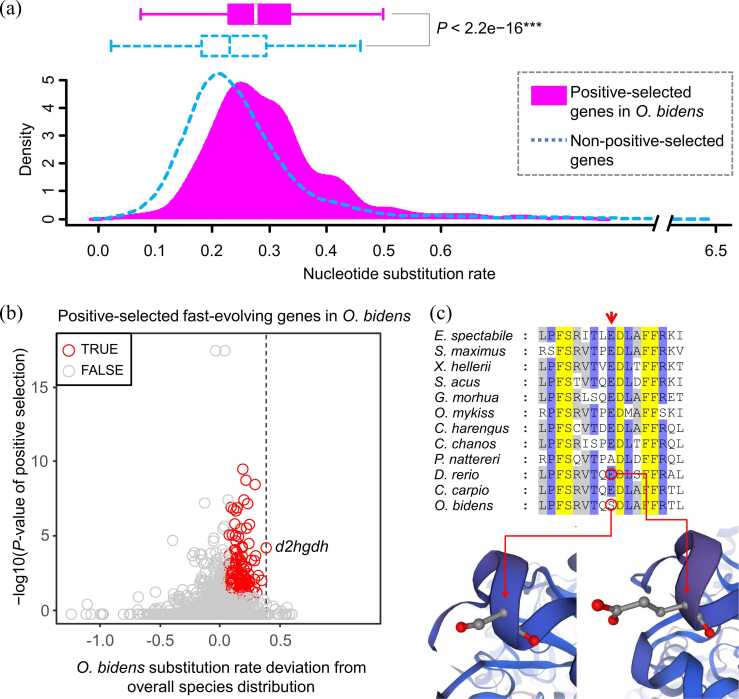 Figure 5
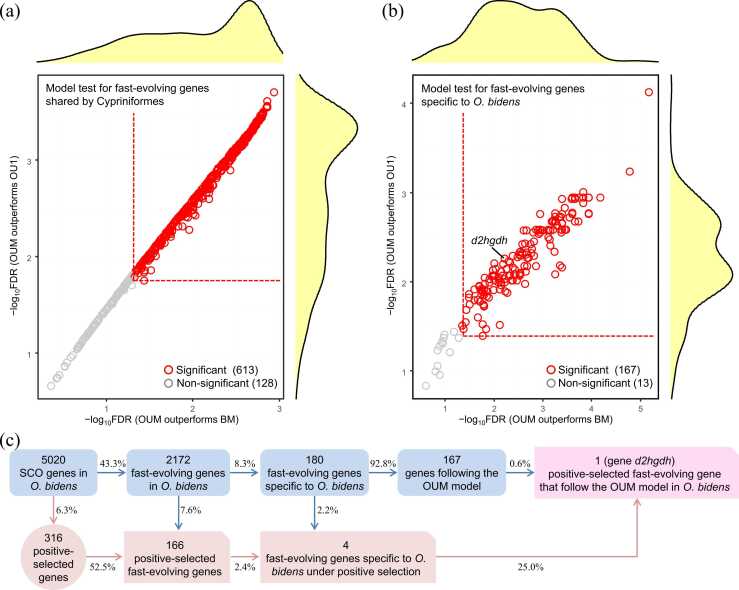 Figure 6
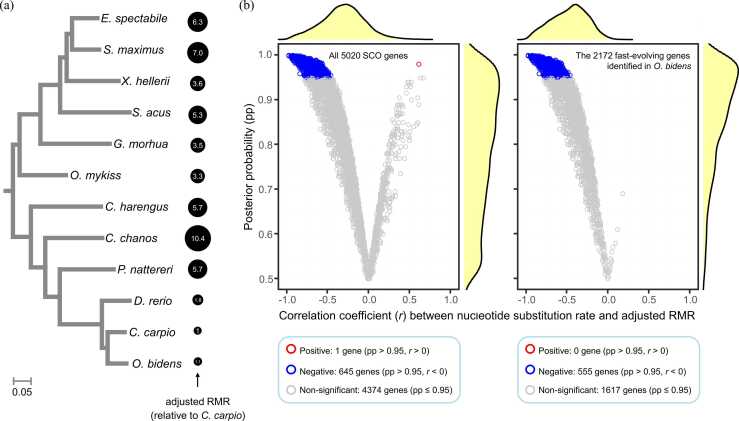 Figure 7
Peer Reviews
No public reviews on file for this paper yet. If you reviewed it on a platform where reviews are public (OpenReview, ICLR, NeurIPS, ICML), you can paste yours below so the community can read it here.
Videos
No videos yet. Explain this paper in a talk, walkthrough, or lecture? Add one.
Taxonomy
TopicsGenomics and Phylogenetic Studies · Genetic diversity and population structure · Evolution and Genetic Dynamics