Medial cortical bone thickness of the tibial diaphysis in osteoarthritis is related to lower extremity alignment and tibial morphology
Keisuke Maeda, Tomoharu Mochizuki, Osamu Tanifuji, Ryota Katsumi, Koichi Kobayashi, Hiroyuki Kawashima

TL;DR
This study found that osteoarthritic knees have thicker medial cortical bone in the tibia compared to healthy knees, linked to alignment and tibial shape.
Contribution
The study identifies a novel relationship between tibial cortical bone thickness, lower extremity alignment, and tibial morphology in osteoarthritis.
Findings
OA group showed thicker medial cortical bone in the proximal tibia compared to lateral areas.
The medial-to-lateral cortical bone thickness ratio was significantly higher in OA knees than in healthy knees.
Proximal-medial cortical bone thickness correlated with femorotibial angle and medial compartment inclination in OA patients.
Abstract
The purpose of this study was to clarify (1) the differences in cortical bone thickness (CBT) of the tibial diaphysis between healthy and osteoarthritic knees and (2) the influences of the femorotibial angle (FTA) and inclination of the medial compartment of the proximal tibia (MCT) on tibial CBT. The study assessed 60 subjects with varus knee osteoarthritis (OA) (22 males and 38 females; mean age, 74 ± 7 years) and 53 healthy elderly subjects (28 males and 25 females; mean age, 70 ± 6 years). Three-dimensional estimated CBT of the tibial diaphysis was automatically calculated for 2752–11,296 points using high-resolution measurements from CT. The standardized CBT was assessed in 24 regions by combining six heights and four areas. Additionally, the association between the CBT, each FTA, and MCT inclination was investigated. The OA group showed a thicker CBT in the medial areas than in…
Genes, proteins, chemicals, diseases, species, mutations and cell lines named across the full text — each resolved to its canonical identifier and authoritative record.
Click any figure to enlarge with its caption.
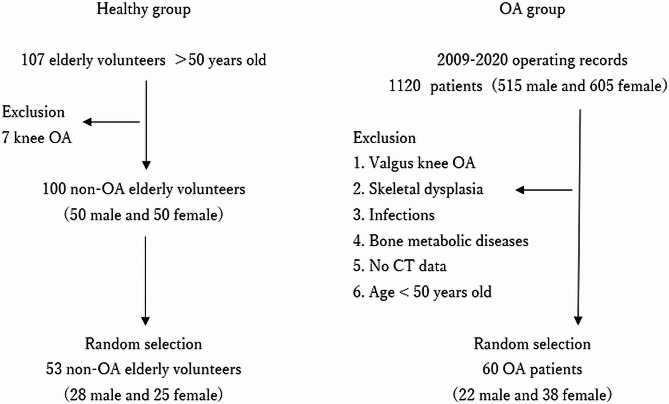 Figure 1
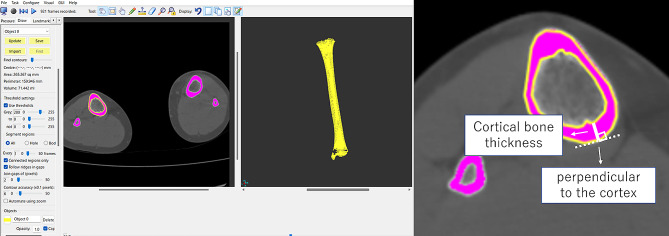 Figure 2
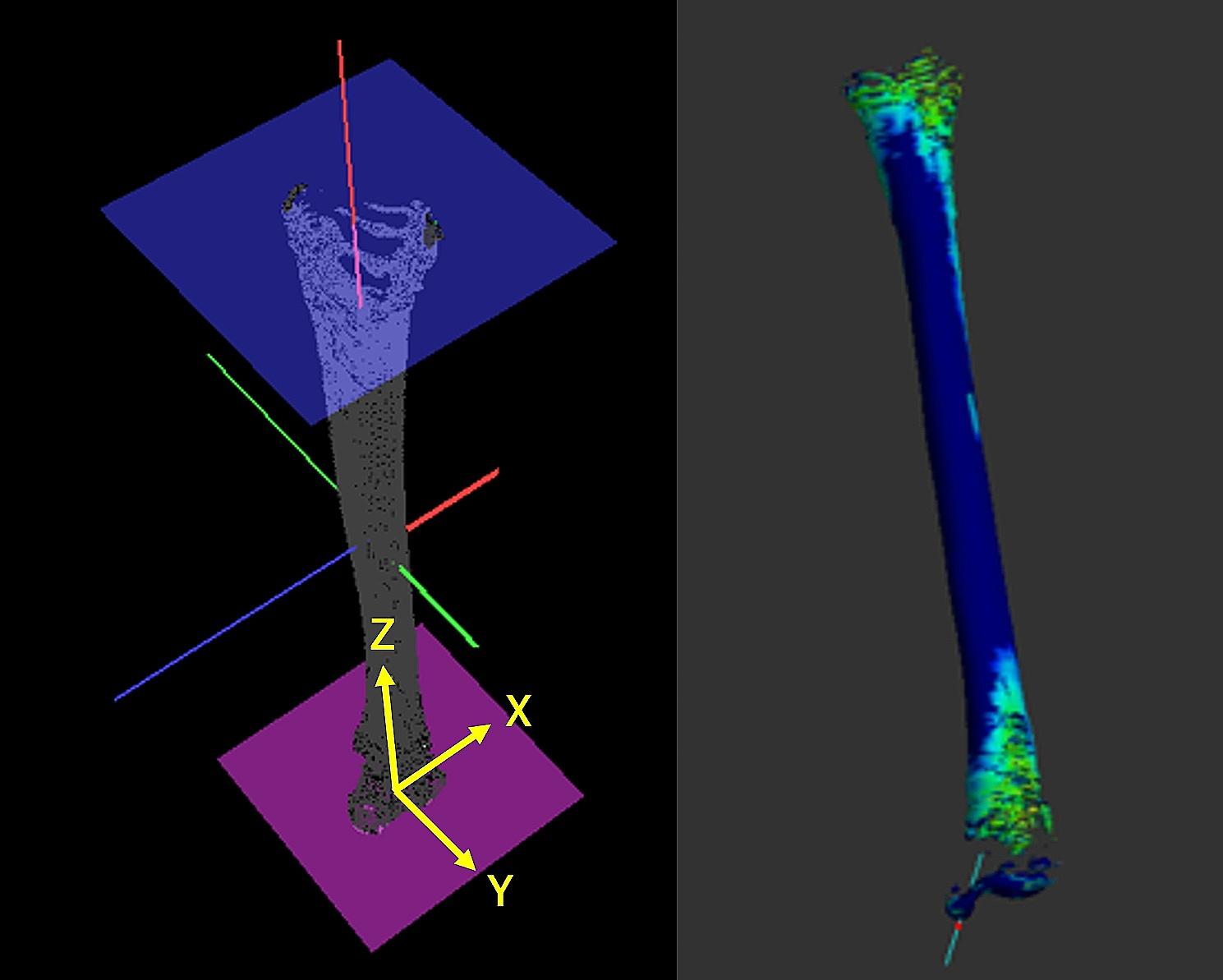 Figure 3
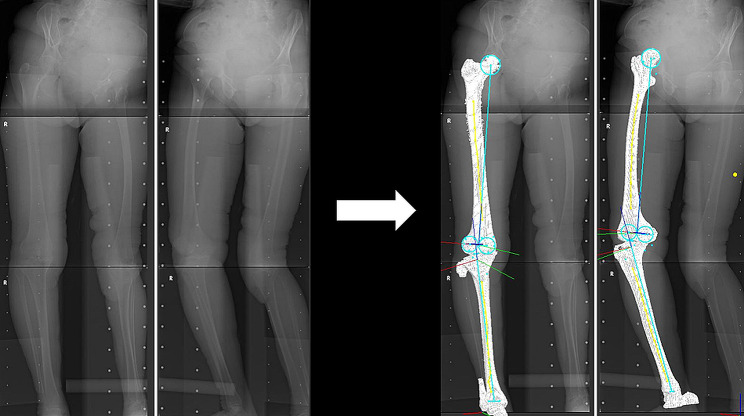 Figure 4
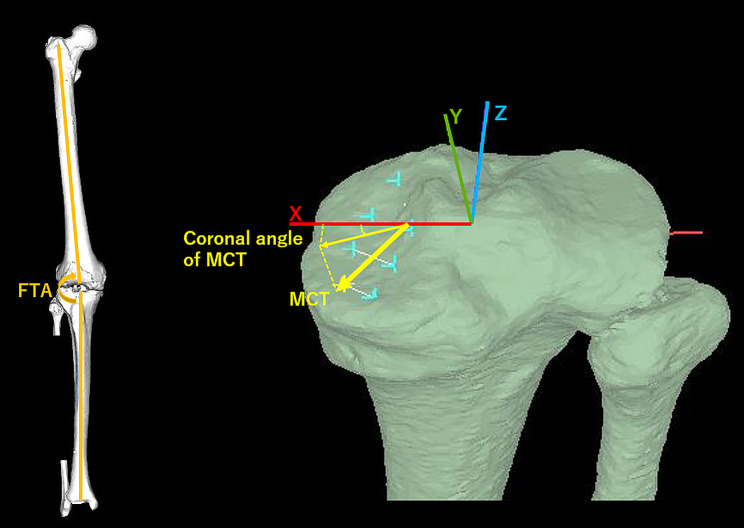 Figure 5
Peer Reviews
No public reviews on file for this paper yet. If you reviewed it on a platform where reviews are public (OpenReview, ICLR, NeurIPS, ICML), you can paste yours below so the community can read it here.
Videos
No videos yet. Explain this paper in a talk, walkthrough, or lecture? Add one.
Taxonomy
TopicsOsteoarthritis Treatment and Mechanisms · Lower Extremity Biomechanics and Pathologies · Total Knee Arthroplasty Outcomes