A Phase IIa Multicenter, Randomized, Vehicle-Controlled, Dose Escalating Study to Evaluate the Safety, Efficacy, and Pharmacokinetics of CBT-001 Ophthalmic Solution in Patients With Primary or Recurrent Pterygium
Scott M. Whitcup, Kenneth N. Sall, John A. Hovanesian, Damien F. Goldberg, Olivia L. Lee, Rong Yang, Jinsong Ni

TL;DR
A clinical trial tested CBT-001 eyedrops for pterygia, finding it reduced lesion vascularity and length with minimal side effects.
Contribution
This study demonstrates the safety and efficacy of CBT-001 ophthalmic solution in treating pterygia through a phase IIa trial.
Findings
CBT-001 0.2% significantly reduced pterygium vascularity scores compared to vehicle after 4 weeks of treatment.
The drug showed a prolonged effect on vascularity reduction at weeks 8 and 16, though not at week 24.
CBT-001 was well tolerated with minimal systemic absorption and mild, transient ocular side effects.
Abstract
To evaluate the safety and efficacy of CBT-001, a multitarget tyrosine kinase inhibitor eyedrop, for pterygia. Phase II clinical trial. Stage 1 was a single center, open-labeled, vehicle-controlled study. Stage 2 was a multicenter, randomized, double-masked, vehicle-controlled trial. Patients with primary or recurrent pterygia. The primary efficacy end point was lesion vascularity based on masked grading of photographs by an independent reading center. Other end points included dimensions of pterygia and safety. In stage 1, 24 eyes of 24 patients received 1 drop of CBT-001 in a dose escalation fashion (0.02%, 0.05%, and 0.2%) to determine the maximally tolerated dose based on adverse events (AEs) and blood drug levels. In stage 2, subjects were randomly assigned to receive the maximally tolerated dose of CBT-001 or vehicle dosed 3 times a day for 4 weeks with a 20-week follow-up.…
Genes, proteins, chemicals, diseases, species, mutations and cell lines named across the full text — each resolved to its canonical identifier and authoritative record.
Click any figure to enlarge with its caption.
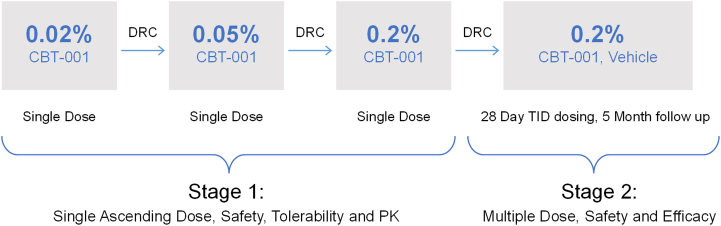 Figure 1
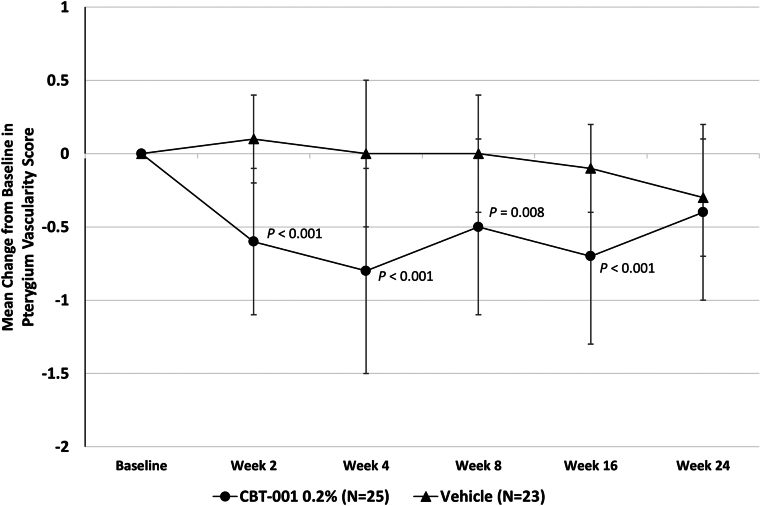 Figure 2
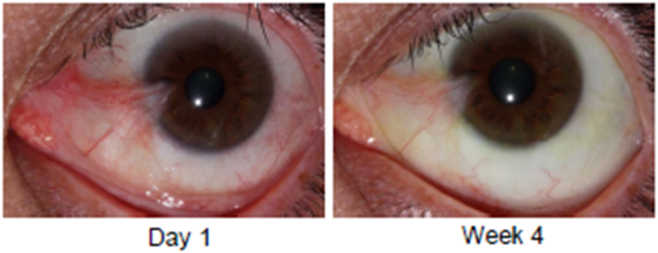 Figure 3
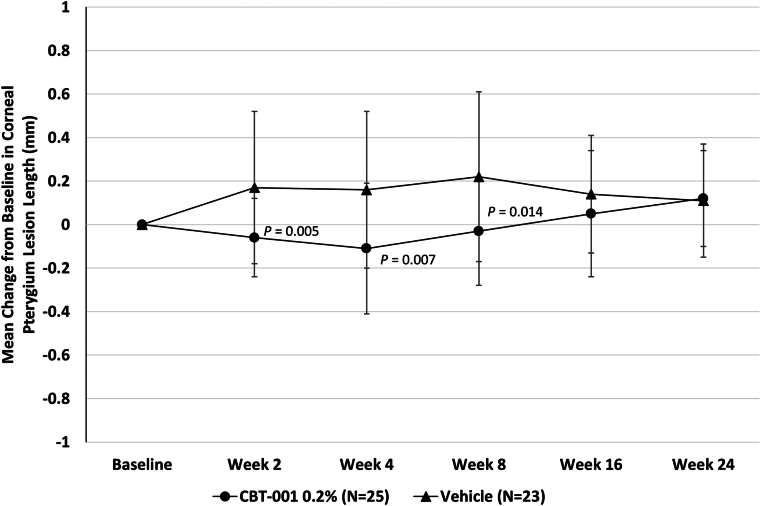 Figure 4
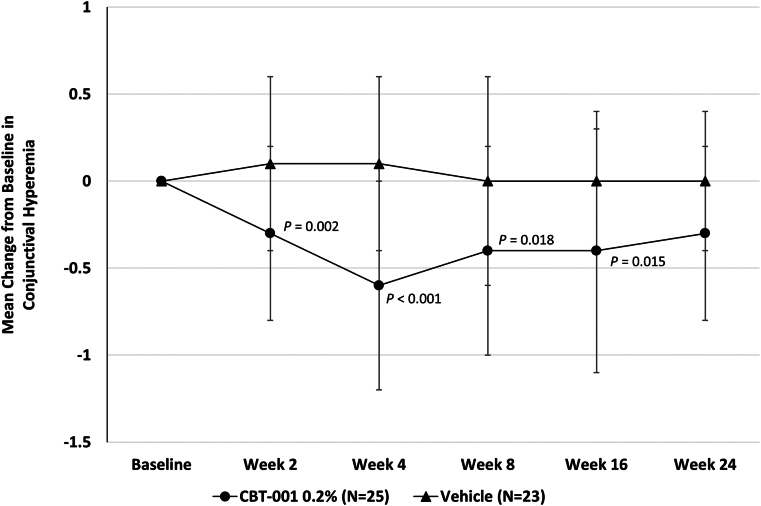 Figure 5
Peer Reviews
No public reviews on file for this paper yet. If you reviewed it on a platform where reviews are public (OpenReview, ICLR, NeurIPS, ICML), you can paste yours below so the community can read it here.
Videos
No videos yet. Explain this paper in a talk, walkthrough, or lecture? Add one.
Taxonomy
TopicsCorneal Surgery and Treatments · Ocular Surface and Contact Lens · Glaucoma and retinal disorders