Probing intracellular potassium dynamics in neurons with the genetically encoded sensor lc-LysM GEPII 1.0 in vitro and in vivo
Bernhard Groschup, Gian Marco Calandra, Constanze Raitmayr, Joshua Shrouder, Gemma Llovera, Asal Ghaffari Zaki, Sandra Burgstaller, Helmut Bischof, Emrah Eroglu, Arthur Liesz, Roland Malli, Severin Filser, Nikolaus Plesnila

TL;DR
This study shows that the sensor lc-LysM GEPII 1.0 can detect large changes in intracellular potassium levels in neurons in both lab and living mouse models.
Contribution
The study demonstrates the first in vivo use of lc-LysM GEPII 1.0 to measure intracellular potassium dynamics in neurons.
Findings
lc-LysM GEPII 1.0 can detect intracellular potassium decreases during intense neuronal activity in vitro.
In vivo experiments showed increased fluorescence lifetime during periinfarct depolarizations, indicating potassium loss.
The sensor cannot detect potassium changes during single action potentials and needs optimization for smaller changes.
Abstract
Neuronal activity is accompanied by a net outflow of potassium ions (K+) from the intra- to the extracellular space. While extracellular [K+] changes during neuronal activity are well characterized, intracellular dynamics have been less well investigated due to lack of respective probes. In the current study we characterized the FRET-based K+ biosensor lc-LysM GEPII 1.0 for its capacity to measure intracellular [K+] changes in primary cultured neurons and in mouse cortical neurons in vivo. We found that lc-LysM GEPII 1.0 can resolve neuronal [K+] decreases in vitro during seizure-like and intense optogenetically evoked activity. [K+] changes during single action potentials could not be recorded. We confirmed these findings in vivo by expressing lc-LysM GEPII 1.0 in mouse cortical neurons and performing 2-photon fluorescence lifetime imaging. We observed an increase in the fluorescence…
Genes, proteins, chemicals, diseases, species, mutations and cell lines named across the full text — each resolved to its canonical identifier and authoritative record.
Click any figure to enlarge with its caption.
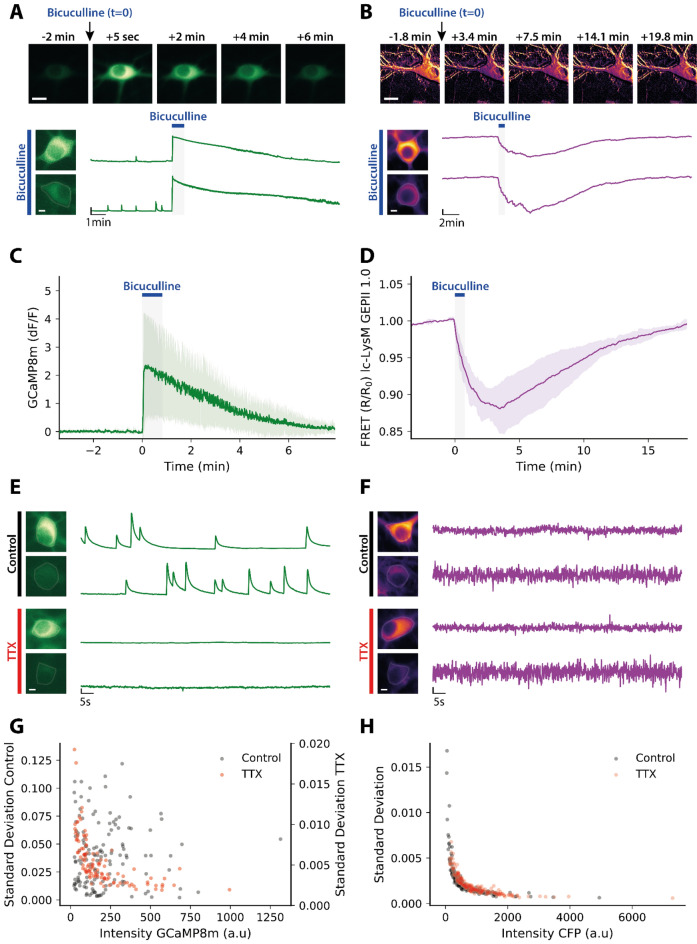 Figure 1
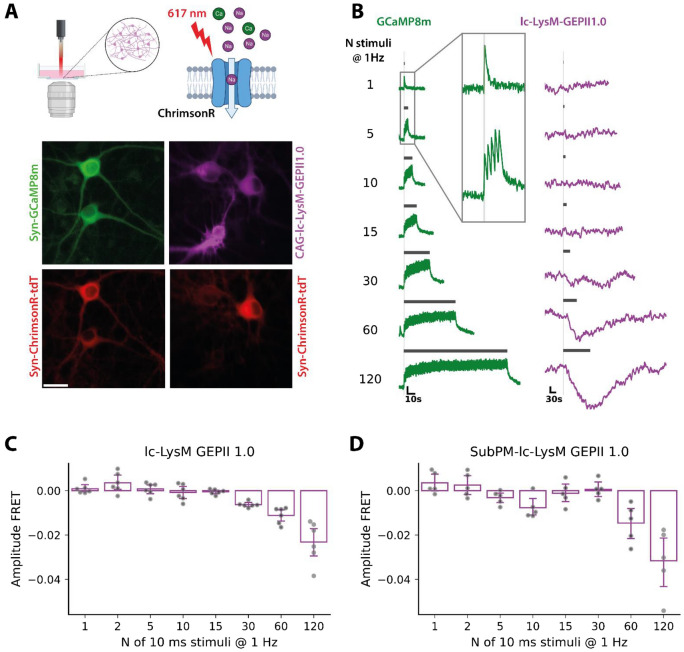 Figure 2
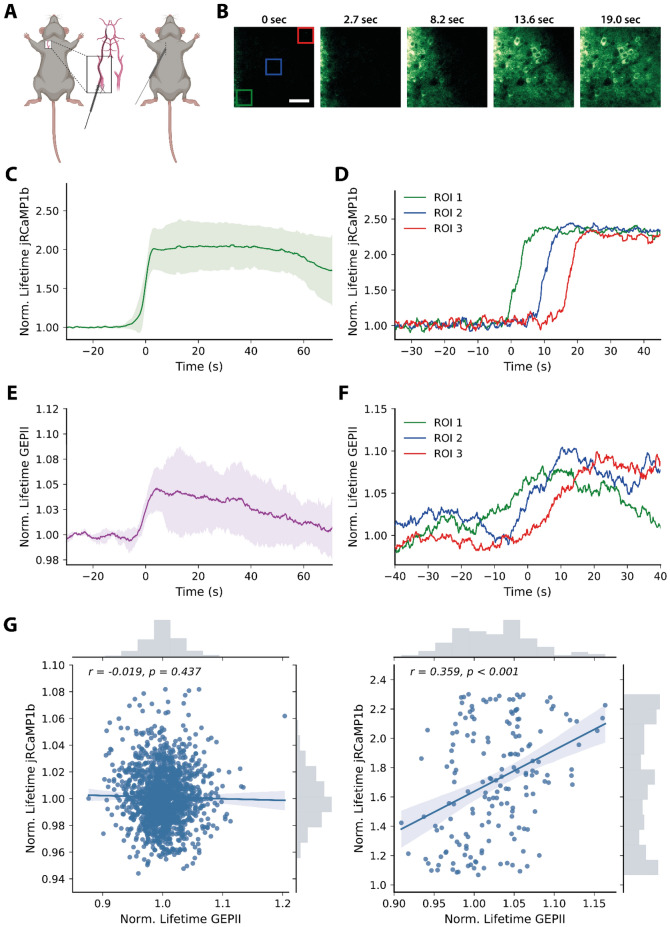 Figure 3
Peer Reviews
No public reviews on file for this paper yet. If you reviewed it on a platform where reviews are public (OpenReview, ICLR, NeurIPS, ICML), you can paste yours below so the community can read it here.
Videos
No videos yet. Explain this paper in a talk, walkthrough, or lecture? Add one.
Taxonomy
TopicsNeuroscience and Neuropharmacology Research · Ion channel regulation and function · Ion Transport and Channel Regulation