Evaluation of digit ratio (2D:4D) in breast cancer patients
Şafak Yıldırım Dişli, Ali Caner Özdöver, Elif Yüce, Ahmet Kürşad Dişli, Evren Fidan

TL;DR
This study examines the 2D:4D finger ratio in breast cancer patients to explore its link with prenatal hormonal exposure and cancer subtypes.
Contribution
The study is the first to evaluate 2D:4D ratio differences among pathological subgroups of breast cancer.
Findings
The right hand 2D:4D ratio was significantly lower in the Luminal A breast cancer subgroup.
No significant age differences were found between breast cancer subgroups and the control group.
The 2D:4D ratio may be associated with breast cancer, particularly in the hormone receptor-positive Luminal A group.
Abstract
Breast cancer is a hormone-dependent cancer. Hormonal exposure begins in the intrauterine period and continues in later years of life. 2D:4D ratio is accepted as an indicator of this exposure. The aim of this study was to investigate whether there is a difference in 2D:4D ratio between pathological subgroups of breast cancer and healthy control group. In this study, 204 participants, 154 breast cancer patients and 50 healthy control volunteers with similar age distribution, were included. Both hands of all participants were scanned using a digital scanner. The second and fourth finger lengths were measured using a digital measuring ruler with an accuracy of 0.05 mm. The 2D:4D ratio was calculated as the length of the second finger divided by the length of the fourth finger. A total of 204 patients (55 triple negative, 52 luminal B, 33 luminal A, 14 HER2-overexpessing and 50 healthy…
Genes, proteins, chemicals, diseases, species, mutations and cell lines named across the full text — each resolved to its canonical identifier and authoritative record.
Click any figure to enlarge with its caption.
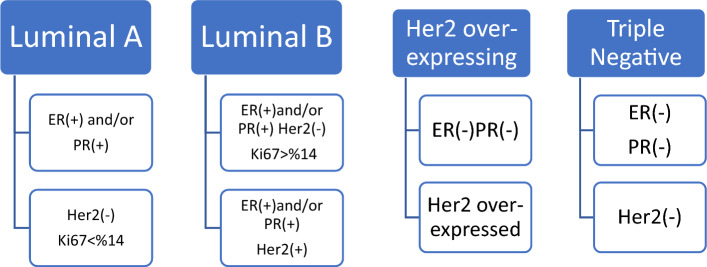 Figure 1
Peer Reviews
No public reviews on file for this paper yet. If you reviewed it on a platform where reviews are public (OpenReview, ICLR, NeurIPS, ICML), you can paste yours below so the community can read it here.
Videos
No videos yet. Explain this paper in a talk, walkthrough, or lecture? Add one.
Taxonomy
TopicsSexual Differentiation and Disorders · Male Breast Health Studies · Urologic and reproductive health conditions