Thoracic aortic microcalcification activity in combined positron emission tomography and magnetic resonance imaging
Jennifer Nash, Samuel Debono, Beth Whittington, Jakub Kaczynski, Tim Clark, Gillian Macnaught, Scott Semple, Edwin J R van Beek, Adriana Tavares, Damini Dey, Michelle C Williams, Piotr J Slomka, David E Newby, Marc R Dweck, Alexander J Fletcher

TL;DR
This study compares PET-MRI and PET-CT for detecting aortic microcalcifications, finding that PET-MRI with RadialVIBE-2 provides accurate results with less radiation.
Contribution
The study introduces a novel comparison of PET-MRI attenuation correction methods for aortic microcalcification detection in high-risk patients.
Findings
PET-MRI with RadialVIBE-2 attenuation correction shows strong correlation with PET-CT for aortic sodium [18F]fluoride uptake.
RadialVIBE-2 reduces breathing-related artifacts compared to other PET-MRI reconstruction methods.
Quantitative agreement between PET-MRI and PET-CT is most consistent with RadialVIBE-2.
Abstract
Non-invasive detection of pathological changes in thoracic aortic disease remains an unmet clinical need particularly for patients with congenital heart disease. Positron emission tomography combined with magnetic resonance imaging (PET-MRI) could provide a valuable low-radiation method of aortic surveillance in high-risk groups. Quantification of aortic microcalcification activity using sodium [18F]fluoride holds promise in the assessment of thoracic aortopathies. We sought to evaluate aortic sodium [18F]fluoride uptake in PET-MRI using three methods of attenuation correction compared to positron emission tomography computed tomography (PET-CT) in patients with bicuspid aortic valve, Thirty asymptomatic patients under surveillance for bicuspid aortic valve disease underwent sodium [18F]fluoride PET-CT and PET-MRI of the ascending thoracic aorta during a single visit. PET-MRI data were…
Genes, proteins, chemicals, diseases, species, mutations and cell lines named across the full text — each resolved to its canonical identifier and authoritative record.
Click any figure to enlarge with its caption.
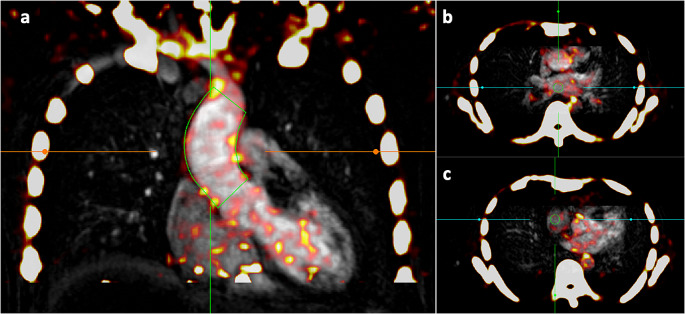 Figure 1
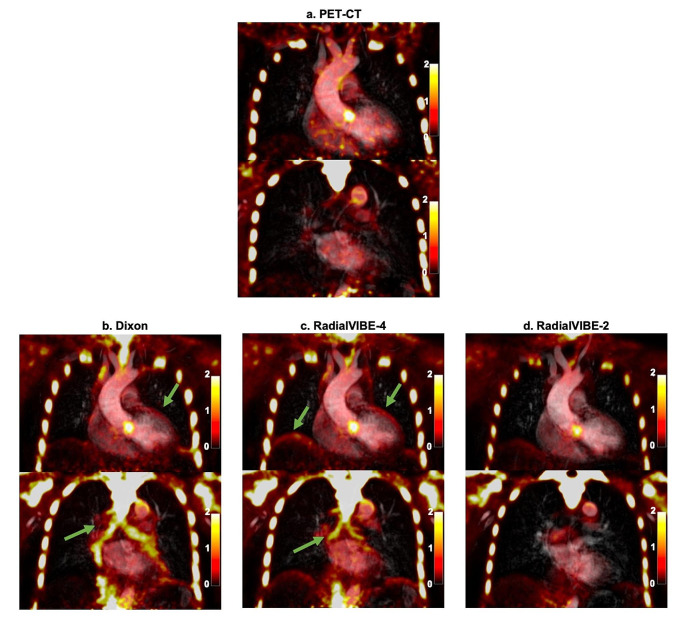 Figure 2
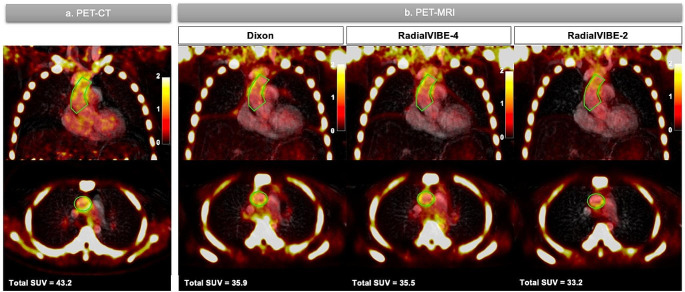 Figure 3
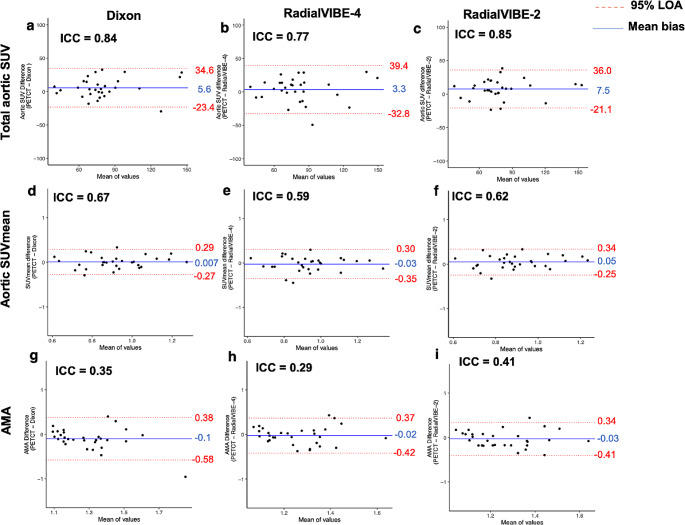 Figure 4
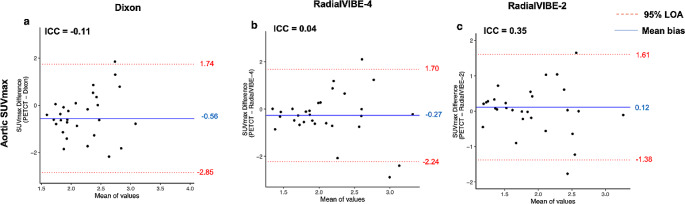 Figure 5
Peer Reviews
No public reviews on file for this paper yet. If you reviewed it on a platform where reviews are public (OpenReview, ICLR, NeurIPS, ICML), you can paste yours below so the community can read it here.
Videos
No videos yet. Explain this paper in a talk, walkthrough, or lecture? Add one.
Taxonomy
TopicsCardiac Valve Diseases and Treatments · Aortic Disease and Treatment Approaches · Cardiac Imaging and Diagnostics