A systematic screen identifies Saf5 as a link between splicing and transcription in fission yeast
Sonia Borao, Montserrat Vega, Susanna Boronat, Elena Hidalgo, Stefan Hümmer, José Ayté, Geraldine Butler, Anita K. Hopper, Geraldine Butler, Anita K. Hopper, Geraldine Butler, Anita K. Hopper, Geraldine Butler, Anita K. Hopper

TL;DR
This study identifies Saf5 as a key factor linking splicing and transcription in fission yeast, especially for highly transcribed genes.
Contribution
The novel finding is that Saf5 connects splicing efficiency with transcription rate, particularly under stress conditions.
Findings
Saf5 is essential for splicing highly transcribed genes but not for low-transcribed ones.
Cells lacking Saf5 show impaired growth and splicing defects under stress conditions.
Saf5's role is not determined by cis elements but by gene transcription rates.
Abstract
Splicing is an important step of gene expression regulation in eukaryotes, as there are many mRNA precursors that can be alternatively spliced in different tissues, at different cell cycle phases or under different external stimuli. We have developed several integrated fluorescence-based in vivo splicing reporter constructs that allow the quantification of fission yeast splicing in vivo on intact cells, and we have compared their splicing efficiency in a wild type strain and in a prp2-1 (U2AF65) genetic background, showing a clear dependency between Prp2 and a consensus signal at 5’ splicing site (5’SS). To isolate novel genes involved in regulated splicing, we have crossed the reporter showing more intron retention with the Schizosaccharomyces pombe knock out collection. Among the candidate genes involved in the regulation of splicing, we have detected strong splicing defects in two of…
Genes, proteins, chemicals, diseases, species, mutations and cell lines named across the full text — each resolved to its canonical identifier and authoritative record.
Click any figure to enlarge with its caption.
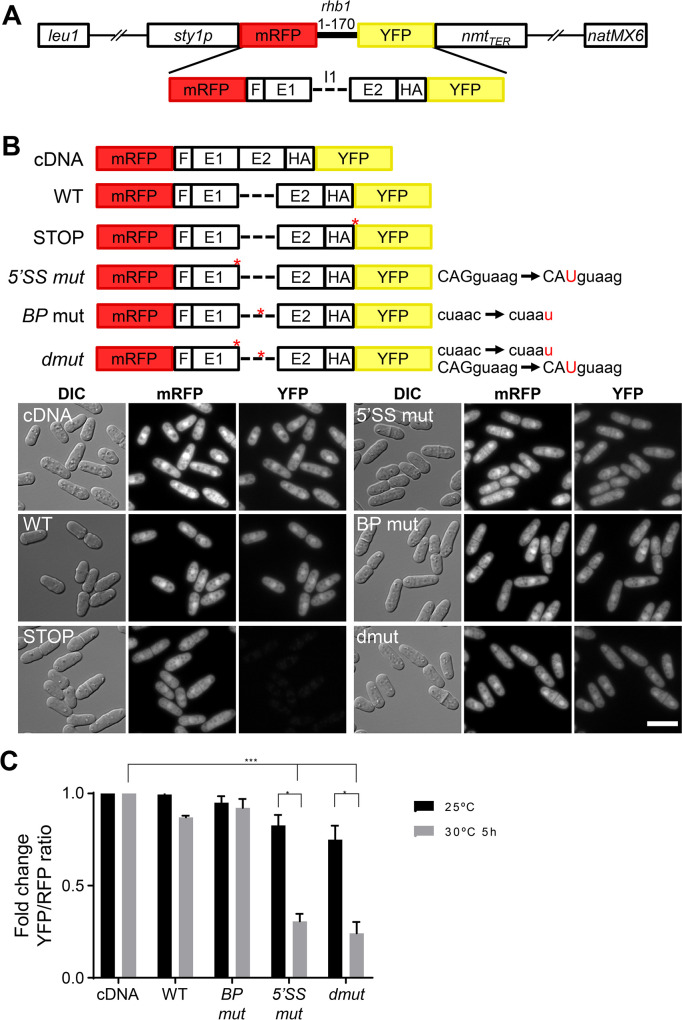 Figure 1
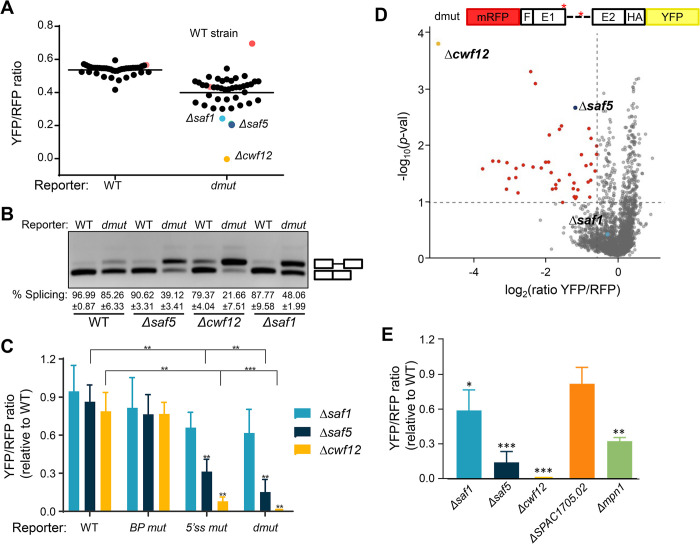 Figure 2
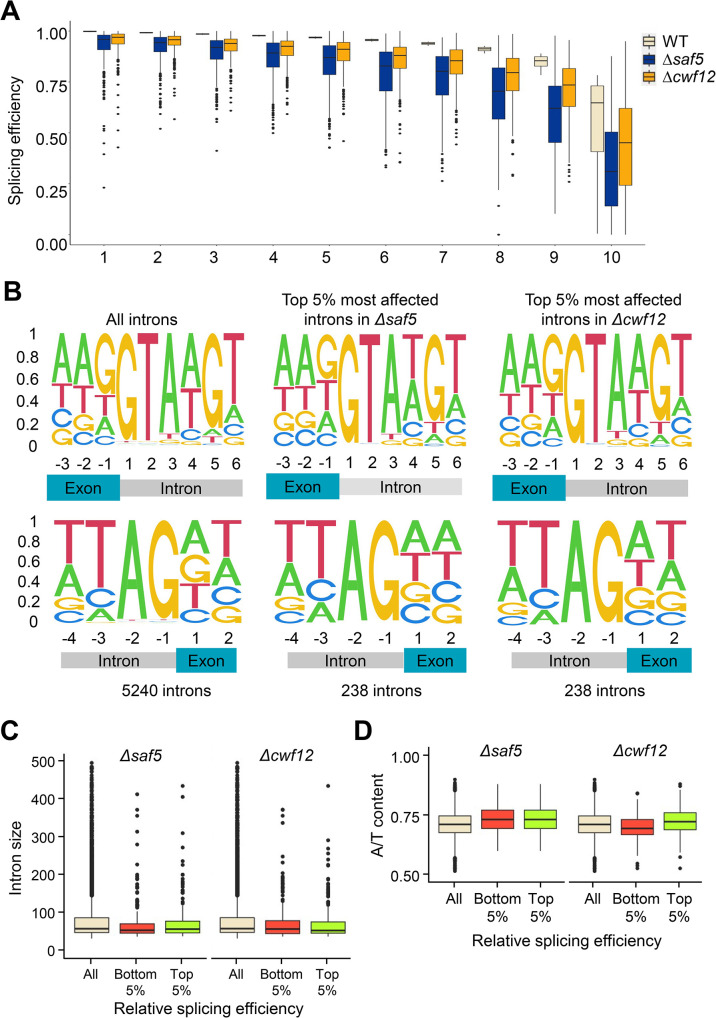 Figure 3
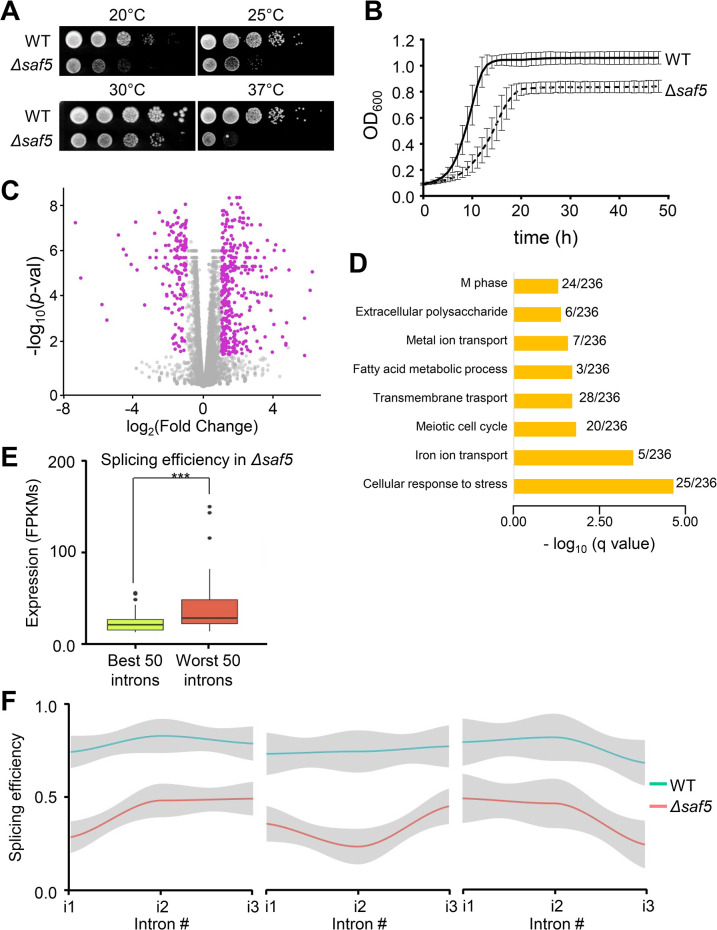 Figure 4
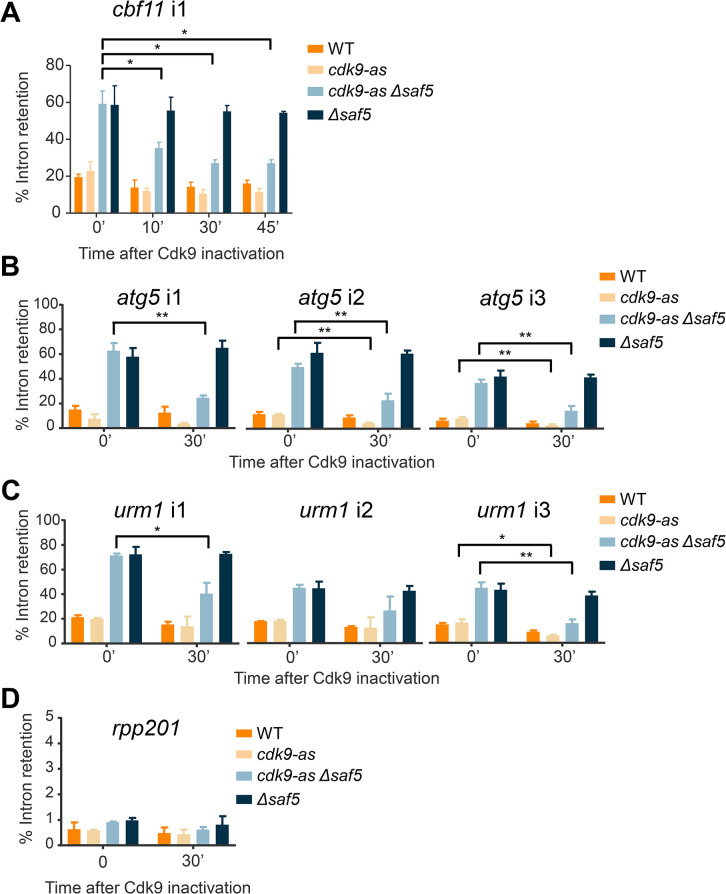 Figure 5
Peer Reviews
No public reviews on file for this paper yet. If you reviewed it on a platform where reviews are public (OpenReview, ICLR, NeurIPS, ICML), you can paste yours below so the community can read it here.
Videos
No videos yet. Explain this paper in a talk, walkthrough, or lecture? Add one.
Taxonomy
TopicsRNA Research and Splicing · RNA modifications and cancer · Genomics and Chromatin Dynamics