Intimate partner violence perpetration among veterans: associations with neuropsychiatric symptoms and limbic microstructure
Philine Rojczyk, Carina Heller, Johanna Seitz-Holland, Elisabeth Kaufmann, Valerie J. Sydnor, Luisa Berger, Lara Pankatz, Yogesh Rathi, Sylvain Bouix, Ofer Pasternak, David Salat, Sidney R. Hinds, Carrie Esopenko, Catherine B. Fortier, William P. Milberg, Martha E. Shenton

TL;DR
This study finds that veterans with mental health issues or brain injuries are more likely to commit intimate partner violence, and brain structure changes may be involved.
Contribution
The study identifies a link between psychological aggression and microstructural brain changes in veterans.
Findings
Veterans with PTSD, depression, or TBI have higher odds of IPV perpetration.
Greater war zone stress and symptom severity correlate with more frequent IPV.
Psychological aggression is associated with higher FA in the right amygdala-hippocampus complex.
Abstract
Intimate partner violence (IPV) perpetration is highly prevalent among veterans. Suggested risk factors of IPV perpetration include combat exposure, post-traumatic stress disorder (PTSD), depression, alcohol use, and mild traumatic brain injury (mTBI). While the underlying brain pathophysiological characteristics associated with IPV perpetration remain largely unknown, previous studies have linked aggression and violence to alterations of the limbic system. Here, we investigate whether IPV perpetration is associated with limbic microstructural abnormalities in military veterans. Further, we test the effect of potential risk factors (i.e., PTSD, depression, substance use disorder, mTBI, and war zone-related stress) on the prevalence of IPV perpetration. Structural and diffusion-weighted magnetic resonance imaging (dMRI) data were acquired from 49 male veterans of the Iraq and…
Genes, proteins, chemicals, diseases, species, mutations and cell lines named across the full text — each resolved to its canonical identifier and authoritative record.
Click any figure to enlarge with its caption.
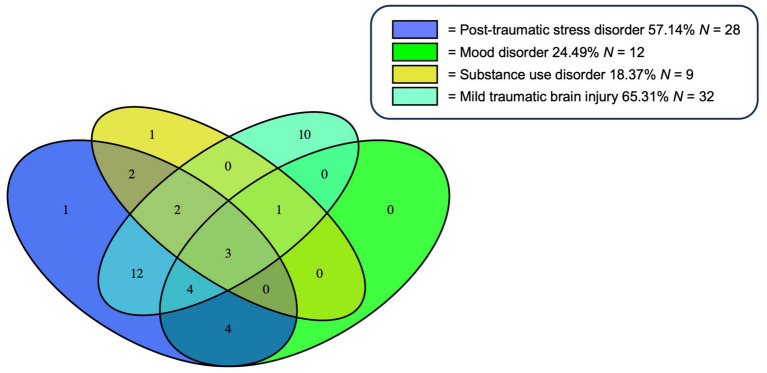 Figure 1
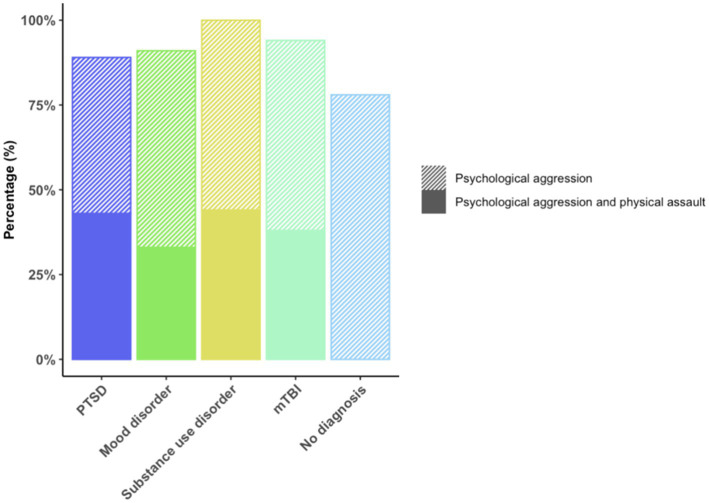 Figure 2
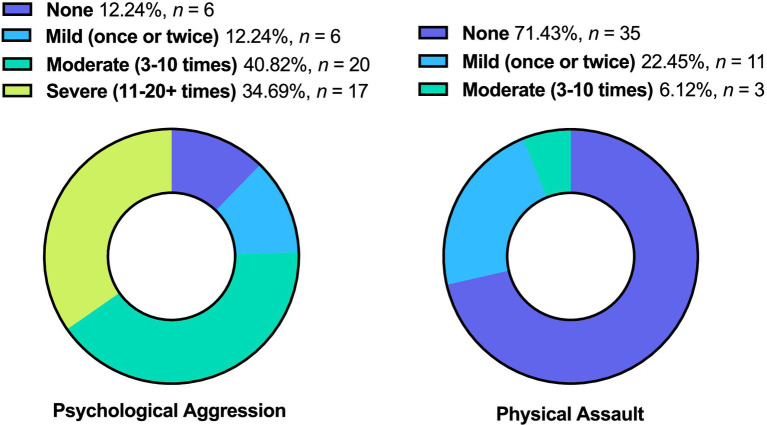 Figure 3
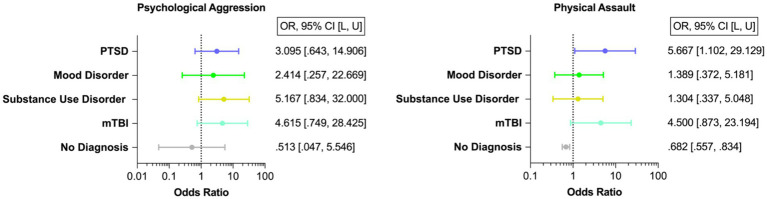 Figure 4
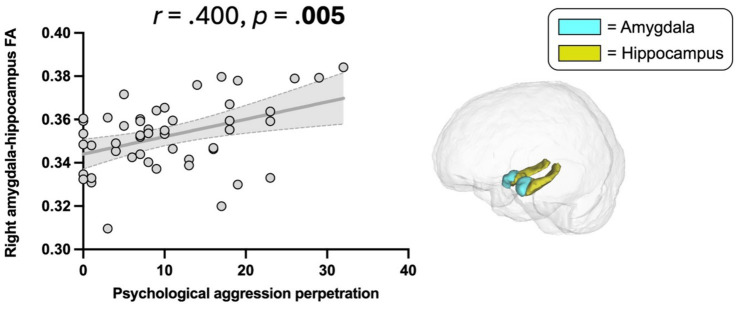 Figure 5
Peer Reviews
No public reviews on file for this paper yet. If you reviewed it on a platform where reviews are public (OpenReview, ICLR, NeurIPS, ICML), you can paste yours below so the community can read it here.
Videos
No videos yet. Explain this paper in a talk, walkthrough, or lecture? Add one.
Taxonomy
TopicsPosttraumatic Stress Disorder Research · Child Abuse and Trauma · Intimate Partner and Family Violence