Structures and Strategies for Retaining an International Pediatric Cohort from Birth: Lessons from The Environmental Determinants of Diabetes in the Young (TEDDY) Study
Patricia Gesualdo, Jessica Melin, Rachel Karban, Claire Crouch, Michael Killian, Diane Hopkins, Annika Adamsson, Joanna Stock, Suzanne Bennett Johnson, Judith Baxter

TL;DR
The TEDDY study outlines strategies to retain international pediatric participants from birth to age 15 in a diabetes risk study.
Contribution
The paper introduces unique retention strategies tailored to the developmental needs of children and real-time protocol adjustments.
Findings
Over 100 retention strategies were identified and categorized into four domains plus a TEDDY-specific category.
Unique strategies included adapting to developmental changes and real-time protocol adjustments.
TEDDY's success highlights the importance of integrating child and parent engagement in retention efforts.
Abstract
Retention of study participants in observational studies is essential to maintaining the representativeness of the population, minimizing selection bias, and assuring sufficient statistical power. The aim of this report is to describe the structures and strategies used to retain participants in The Environmental Determinants of Diabetes in the Young (TEDDY) Study, an observational study of children at increased genetic risk for type 1 diabetes followed in an intense protocol with frequent clinic visits from birth until age 15. A systematic review of methodologies used to retain research subjects identified four domains: barrier reduction strategies; community building strategies; follow-up/reminder strategies; and tracing strategies. Independent reviewers categorized the retention strategies implemented by the TEDDY Study into each of these domains. Strategies not fitting into any of…
Genes, proteins, chemicals, diseases, species, mutations and cell lines named across the full text — each resolved to its canonical identifier and authoritative record.
Click any figure to enlarge with its caption.
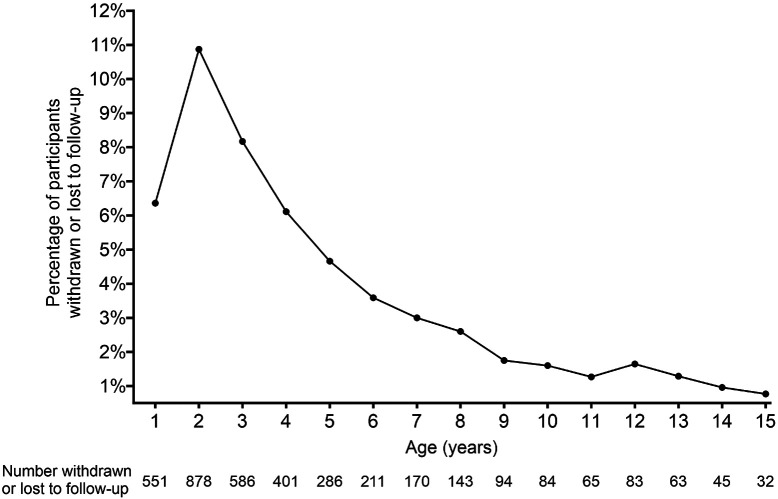 Figure 1
Peer Reviews
No public reviews on file for this paper yet. If you reviewed it on a platform where reviews are public (OpenReview, ICLR, NeurIPS, ICML), you can paste yours below so the community can read it here.
Videos
No videos yet. Explain this paper in a talk, walkthrough, or lecture? Add one.
Taxonomy
TopicsBirth, Development, and Health · Obesity, Physical Activity, Diet · Child and Adolescent Health